By Andrew Poretz . . .
Brazilian guitarist and composer Yamandu Costa is a seven-string guitar virtuoso. He first studied guitar at age 7 with his father, Algacir Costa, band leader of “Os Fronteiriços,” his first teacher. He later perfected his technique with Lúcio Yanel, an Argentine virtuoso who had settled in Brazil.
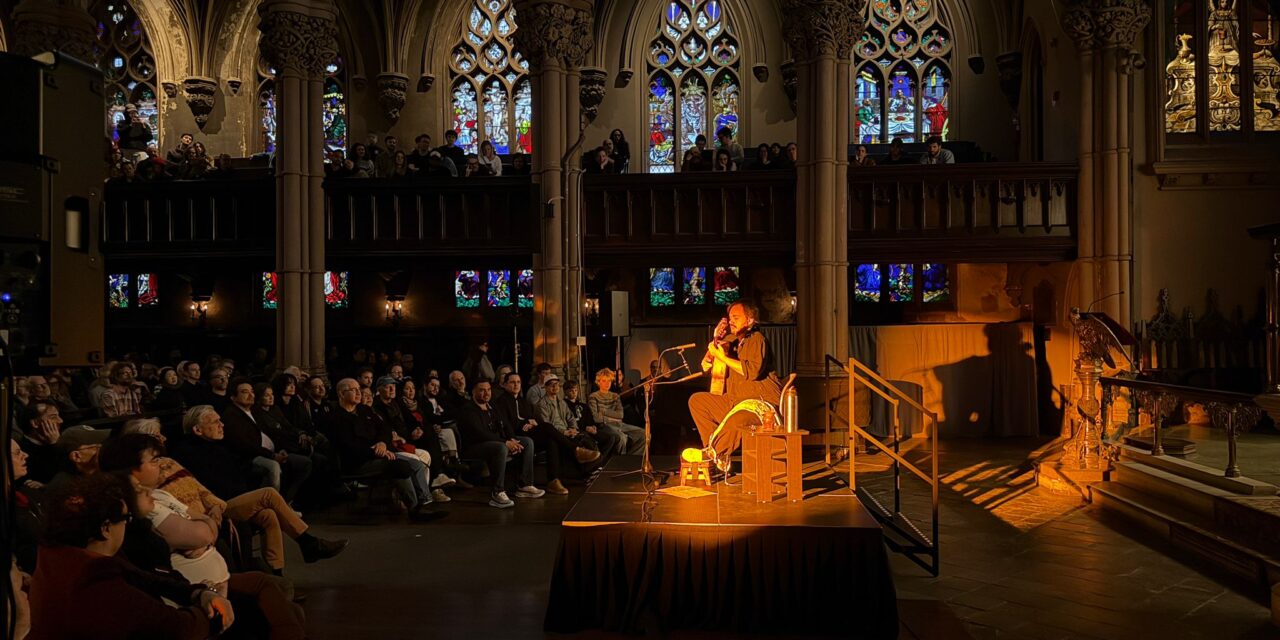
Costa first came to this writer’s attention when he appeared at Pat Harris & Associates’ Hilton showcase during the Association of Performing Arts Presenters (APAP) annual convention three years ago. It was instantly clear that this was not only one of the most gifted guitarists I’ve heard in a lifetime of listening, but one of the most emotionally connected to his instrument and his music. He has since appeared in New York at Joe’s Pub. When a friend who’d been a longtime fan informed me that Costa was making another (rare) appearance in New York, albeit in a 179-year-old church in the courthouse area of downtown Brooklyn, it was an easy decision to buy a ticket. It was well worth the cost and the schlep.
The concert, which concluded Costa’s American tour, was meant to be an easy evening of listening, not reviewing, but I felt compelled to write my thoughts about the evening, as it is essential that Costa and his music become household names. He is a humble man, but he does have a team and a recording contract.
It would have been easy to miss the church walking down Montague Street, but the long line outside, even early, made it clear this was the spot. The interior is stunning. Costa’s music is not “spiritual” or “religious” in the traditional sense, but evokes similar feelings. It has such beauty and shimmer that St. Ann & the Holy Trinity Church proved the perfect setting.
The sound technicians did half of a great job. Costa’s guitar volume and tone were perfect. However, he was often inaudible or indiscernible when speaking, whether announcing songs or telling stories about them. He occasionally sang, and while you could hear that he has a lovely, sweet singing voice, it was challenging to hear him. Early on, someone yelled out, “Louder!” Costa, whose English is rudimentary, did not seem to understand they meant his voice. Still, this was a minor drawback, as the magic was in his guitar playing, not his patter.
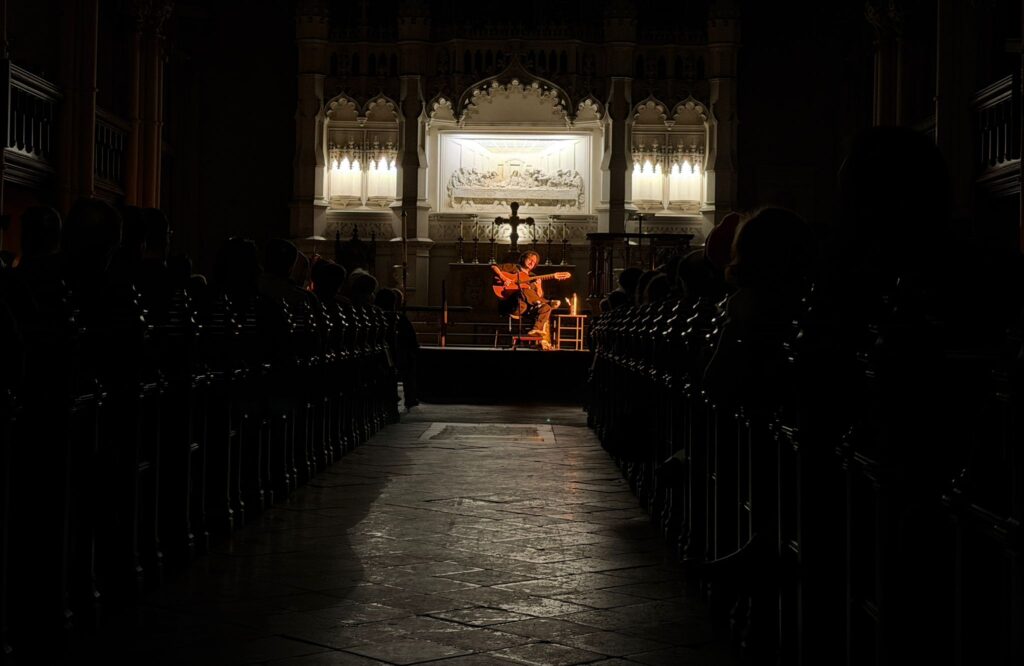
For his opening number, Costa played “La Reunión,” an original composition that showcases his signature rapid-fire improvisations and the percussive, syncopated Brazilian-influenced rhythms that at times evoked a heartbeat. At times, he sang softly and wordlessly. When he sings, it adds a sense of a choir. He occasionally doubled himself by whistling, reminiscent of the late Toots Thielemans.
Costa’s second number, “Odeon,” was recognized by much of the audience. With more of a classical feel, it had strains of what could have passed for a quote from the song “Jeepers Creepers.” Here, Costa at times seemed to have a third hand. He often plays with eyes closed, as if in a dream, taking the audience with him. Costa rarely looks at his hands. It is as if he is one with his instrument. When he plays, it’s as if each note started somewhere in his heart and soul before working its way down to his fingers.
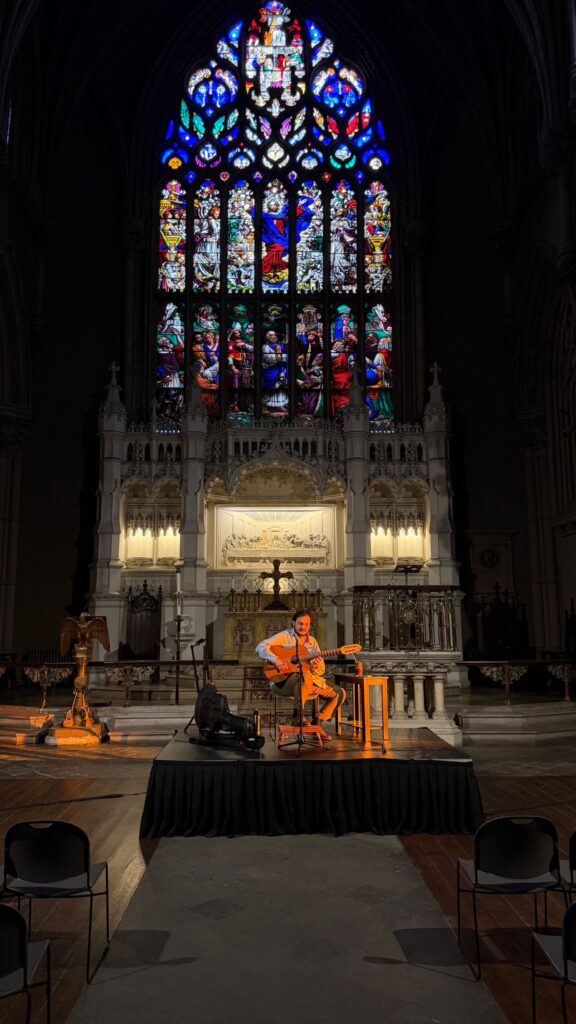
Throughout the set, Costa changed tunings, utilizing several tuning variations to suit the material. He even turned down his extra bass string by at least a whole step on several occasions. He made these changes on the fly, sometimes while speaking, and entirely by ear; not once did he tune with the aid of a tuning device. His ears never failed him. Occasionally he’d make adjustments while playing, without interrupting his song.
Here’s a video of Costa at this concert, playing with at least four hands on “Samba Pro Rapha.” https://www.youtube.com/watch?v=yVGIFDUNva0.
Costa also sang Portuguese lyrics to several songs. It was quite difficult to hear him well, but his voice is pleasant and earnest, in some ways similar to that of Antonio Carlos Jobim.
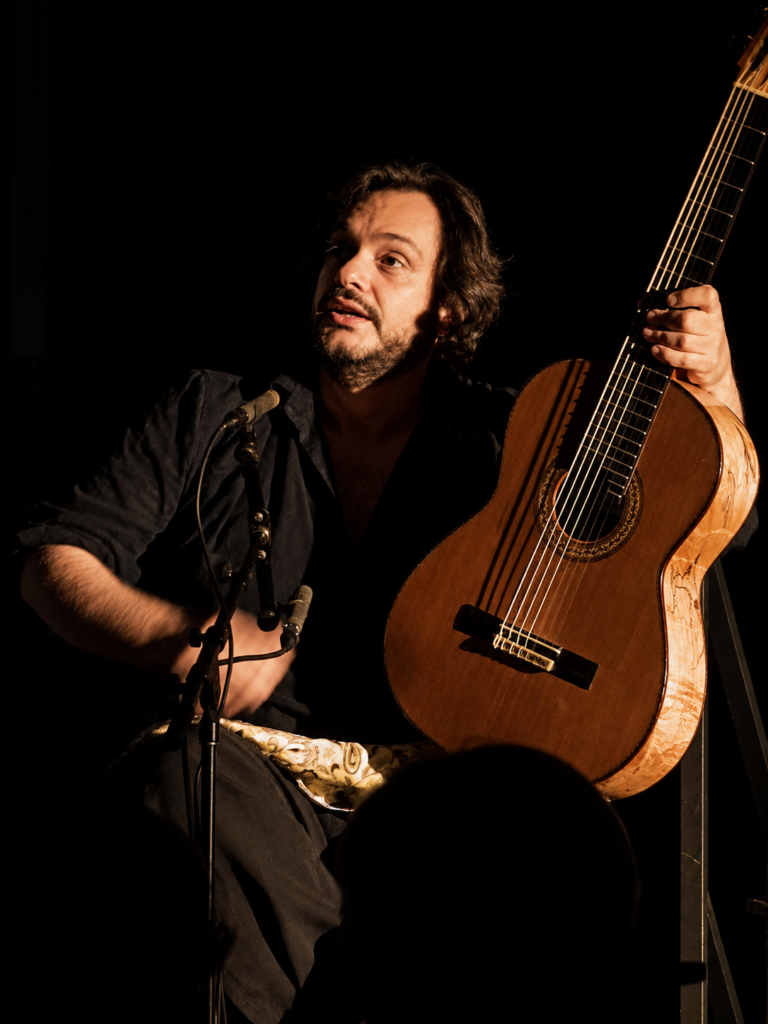
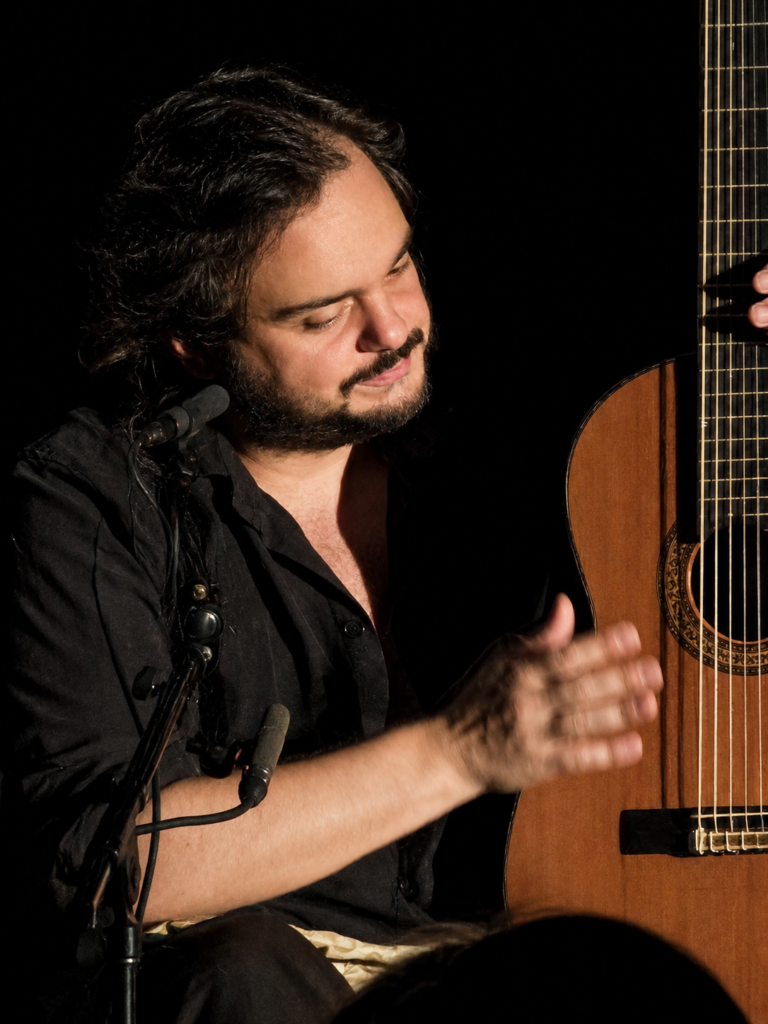
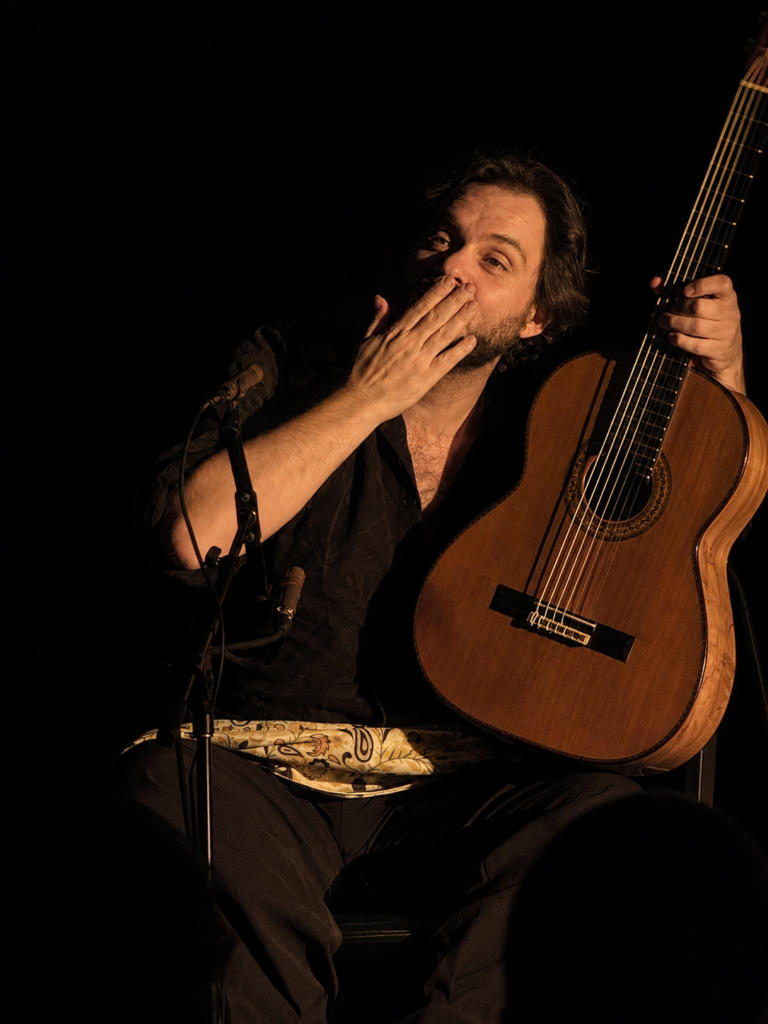
The rest of the set was simply spectacular. Costa occasionally sang, though without a proper set list or usable notes, further detail would be difficult. At the concert’s conclusion, Costa walked off the stage. He received a three-minute standing ovation, one that demanded a return. This was the kind of true encore that is quite rare today, not the de rigueur standing ovation given too often given at ordinary cabaret shows. At this concert, the audience would not take no for an answer, and Costa humbly returned for one more. He hugged and kissed his guitar, acknowledging its place as his true co-star.
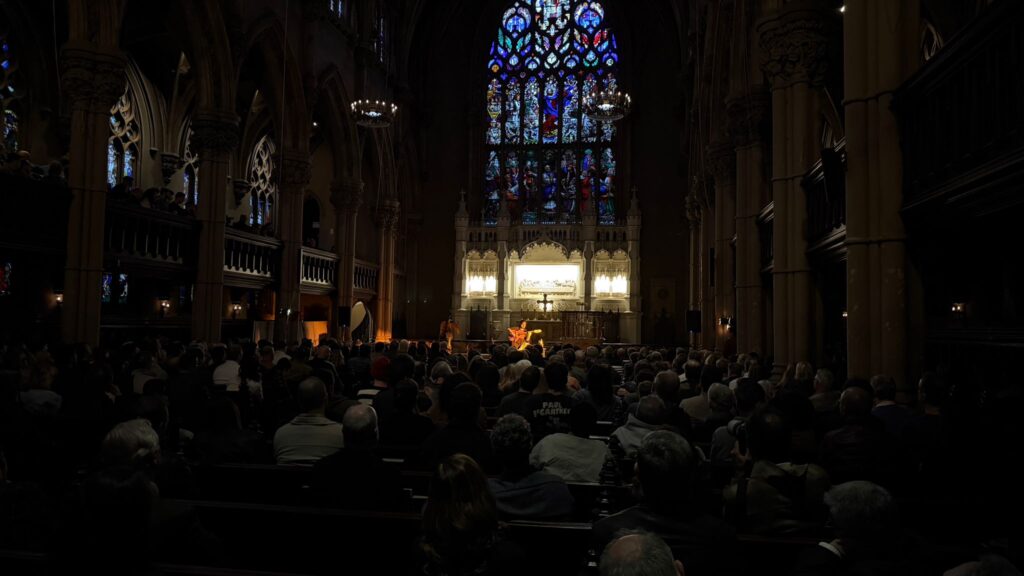
The exhilarating concert showed Costa’s breadth of talent and why he belongs on any list of the world’s greatest living guitarists. Consider yourself lucky if you have the opportunity to see him perform live. Until then, buy up all his music, whether online, on CD or on vinyl. You will not regret it.
For more information about this very special artist, visit https://www.savarez.com/yamandu-costa.
Photos courtesy of the artist management except close-up curtain call photos by Andrew Poretz