By Alex Eichholz . . .
Kenrex, created by Jack Holden and Ed Stambollouian (with an able assist from composer John Patrick Elliott), has arrived from England at the Lucille Lortel Theatre in the West Village with its two-person cast intact. What unfolds over the course of the evening is an ambitious, stylized, and gripping experience that merges true-crime storytelling with a distinctly theatrical sensibility. While not without its occasional structural unevenness, Kenrex succeeds as a bold and unsettling meditation on violence, media, and the stories about both which we tell ourselves. Dramatizing a murder case that occurred outside London in the early 1980s, it wisely avoids any sort of straightforward reenactment. Instead, Ken Rex McElroy’s real-life tale leans into a hybrid form–part docudrama, part psychological collage–with memory, testimony, and speculation bleeding into one another. This approach gives the piece a fractured, almost hypnotic pace, mirroring the instability of the central figure it examines. The result is less about reconstructing a timeline and more about immersing the audience in a state of unease.
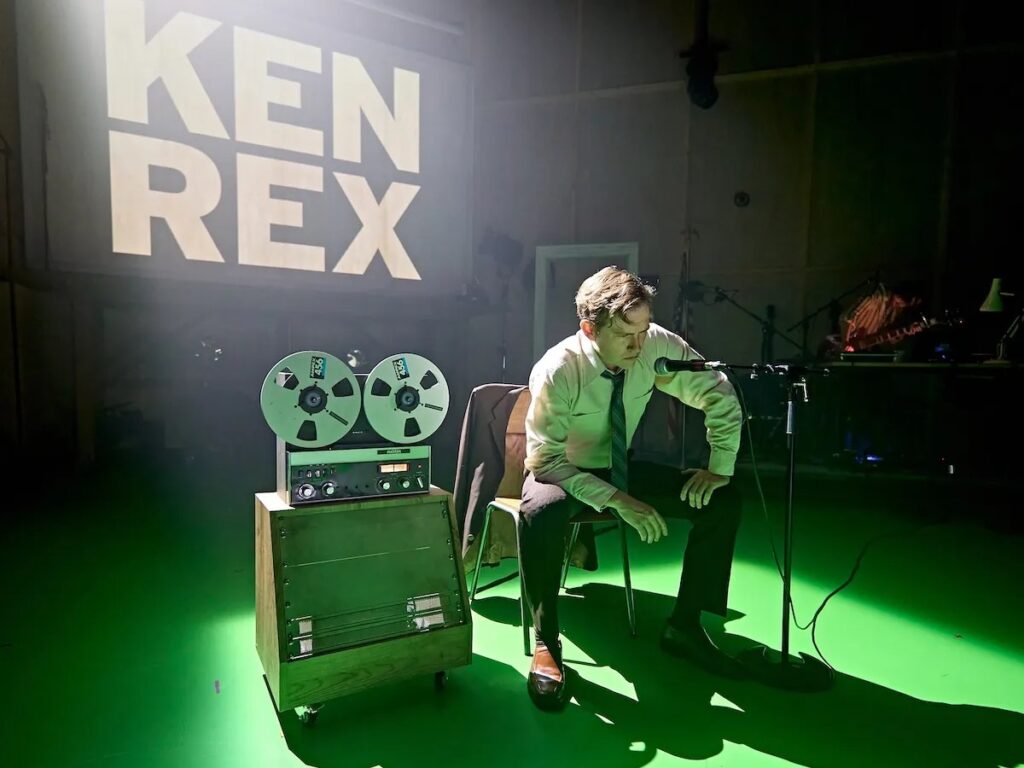
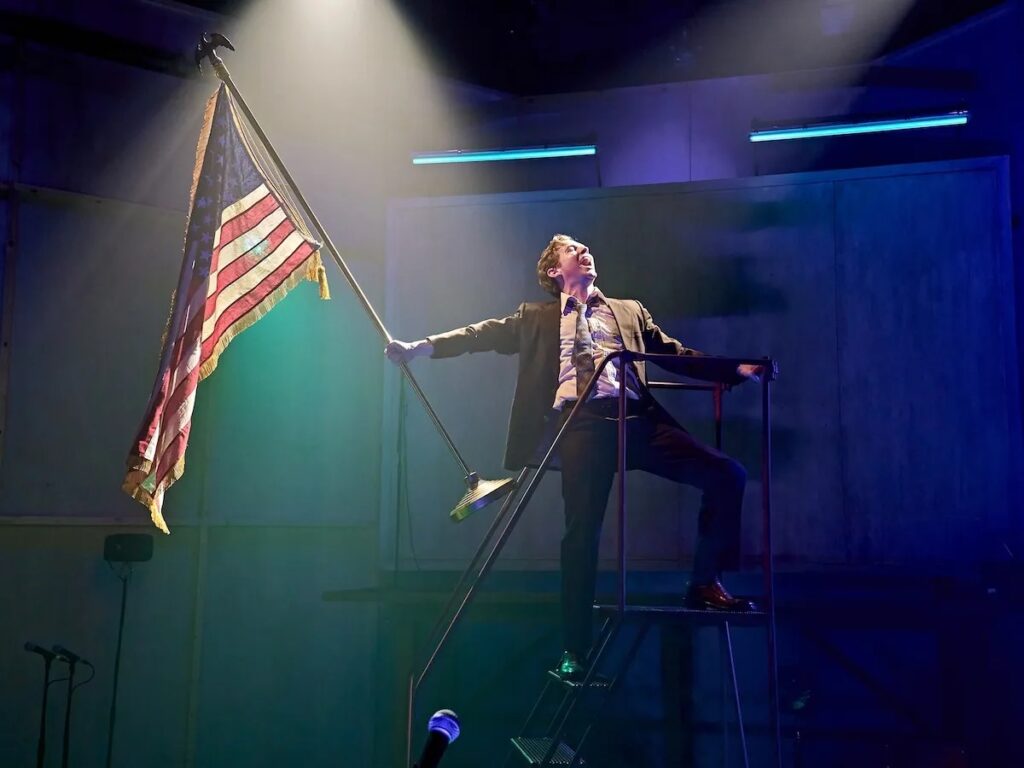
Besides his role as co-creator with Jack Holden, Ed Stambollouian’s direction demonstrates a confident restraint, allowing for moments of stillness to carry as much weight as its bursts of action. The staging is minimalist but intentional, relying on physicality, space, and rhythm rather than elaborate scenic design. This approach creates an atmosphere that feels both intimate and oppressive, as though the audience is trapped inside the collective psyche of a small town. All its denizens are portrayed with a tortured unraveling by Jack Holden, whose committed performance is the pulsing heart of the play. His animal-like body contortions, precision movement, and emotional control are astonishing. Driven by composer John Patrick Elliott’s music and onstage presence handling several instruments, Holden embodies multiple perspectives within the narrative constructing a fractured communal voice. This choice highlights one of the show’s most prominent themes; the complicity of community. Holden doesn’t just tell the story but rather inhabits all its contradictions as he becomes witnesses, participants, and silent perpetrators of justice.
Ambitious in scope, Kenrex weaves together fragments of reported dialogue, imagined interior monologues, and stylized repetition. It contains surprising lyricism, when the language transcends its documentary roots and becomes somewhat ritualistic and even hypnotic. However, the script occasionally struggles with pacing, particularly in the middle section, where certain sequences feel repetitive. While this may be a deliberate attempt to evoke the cynical nature of rumor and violence, it does risk slowing the production’s momentum.
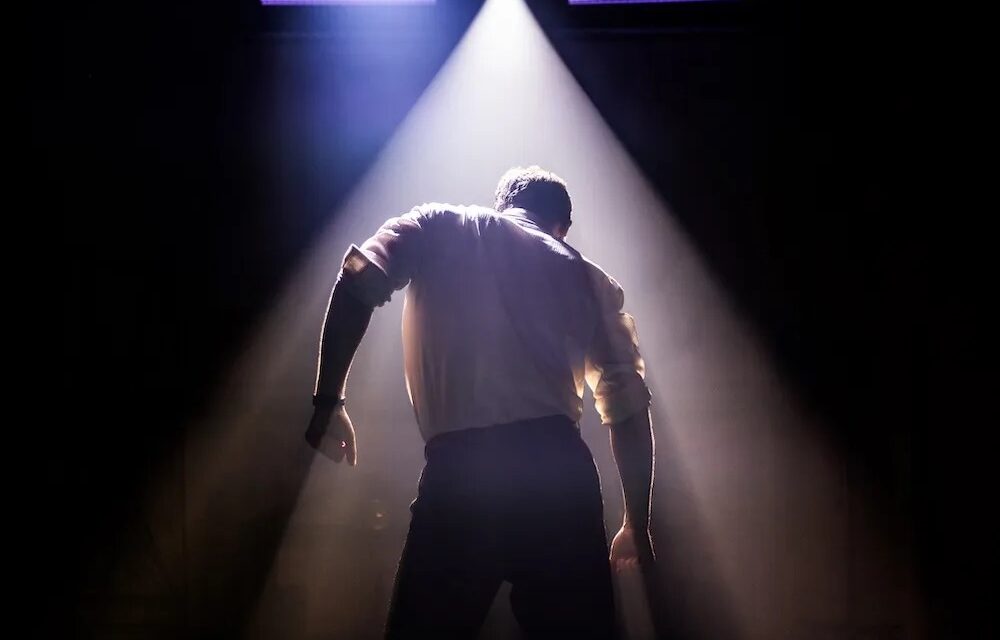
Giles Thomas’s sound design is one of the drama’s most impressive aspects, playing a critical role in continually shifting the atmosphere. The auditory landscape, subtle at first, gradually becomes more invasive as it blends ambient noise with more abstract elements. This layering creates a sense of unease that permeates the entire performance. Similarly, Joshua Pharo’s lighting design enhances the tension, using stark contrasts and sudden shifts to isolate characters and heighten emotional stakes. Along with the sparse set, designed by Anisha Fields, all these elements contribute to a sensory experience that feels immersive and, at times, disorienting.
Despite its many strengths, Kenrex is not entirely without flaws. Its abstraction and ambiguity, while often effective, can occasionally feel alienating. A handful of narrative threads are introduced but not fully developed, leaving the audience from time to time to piece together meaning. Additionally, viewers expecting a more traditional true-crime narrative may find the production’s experimental approach challenging. These shortcomings are ultimately outweighed by the production’s ambition and originality.
The play’s refusal to sensationalize its source material, saturated as it is with polished true-crime content, is admirable. Taking a more introspective and critical stance, it focuses less on the spectacle of violence and more on the social, psychological, and communal systems often responsible for it. By its conclusion, it leaves behind a lingering sense of unease rather than resolution. Seemingly intentional, it serves to reinforce the idea that some stories don’t follow the path to a tidy ending.
Kenrex stands as a striking example of what can be achieved when experimentation and risk are embraced. Through the combined efforts of Holden, Stambollouian, and Elliott, the production crafts an experience that is as thought-provoking as it is unsettling. Its bold vision and evocative execution make it a deeply memorable piece of theatre, one that lingers long after the final moment fades.
At the Lucille Lortel Theatre, 121 Christopher St., New York; https://kenrextheplay.com/
Photos by Pamela Raith.
Headline photo: Jack Holden in Kenrex.