Review by Ron Fassler . . .
In 1960, hot off staging Bye Bye Birdie, his first book musical for Broadway, former song and dance man Gower Champion found himself the newest director-choreographer on the block. The next year, he followed it up with Carnival, music and lyrics by Bob Merrill and book by Michael Stewart. Receiving rave reviews for his work, Champion nudged his way into territory formerly ruled by a trio of hyphenates—Bob Fosse, Jerome Robbins and Michael Kidd. With an adeptness that left critics stumbling over themselves with praise, Champion did away with an overture and instead created an opening that had audiences enter the Imperial Theatre with the curtain already raised (an uncommon choice back in the day). A small part of Walter Kerr’s description in the Herald Tribune goes a long way towards getting a sense of how things went from there: “From the time that Pierre Olaf’s accordion lets loose its first longing wheeze, while a straggle of tumblers and trumpeters make their way beneath two leafless trees, [Champion’s] paint-brush is unerringly in command . . . Carnival is something more than mere showmanship. It is painted on frosted glass, done with a hand that cares.”
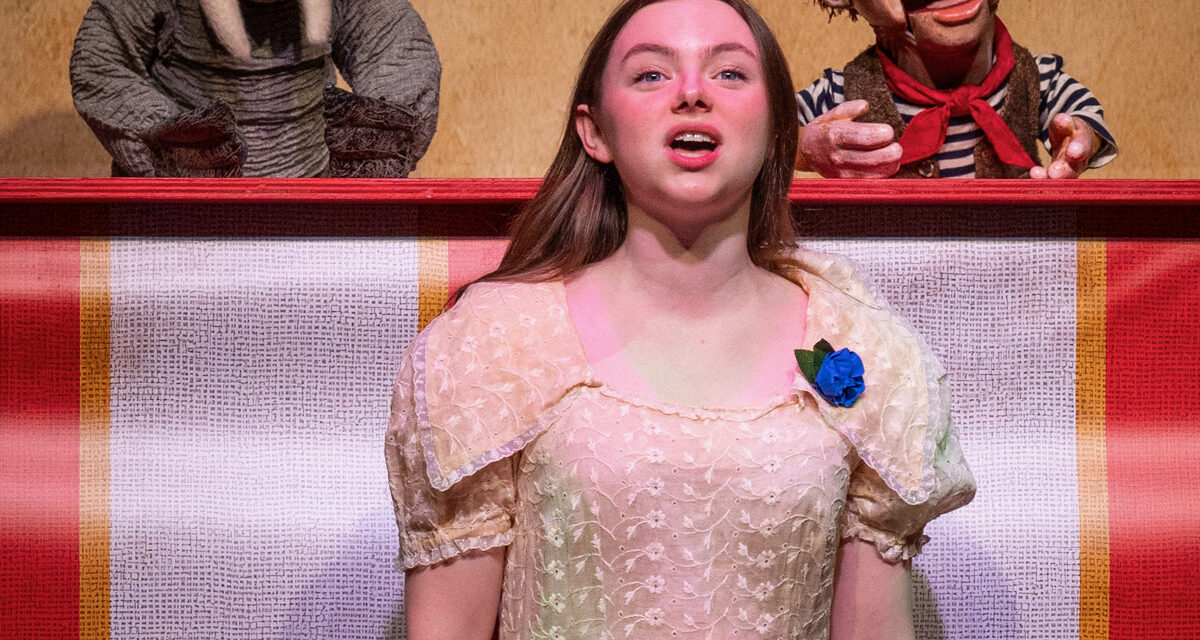
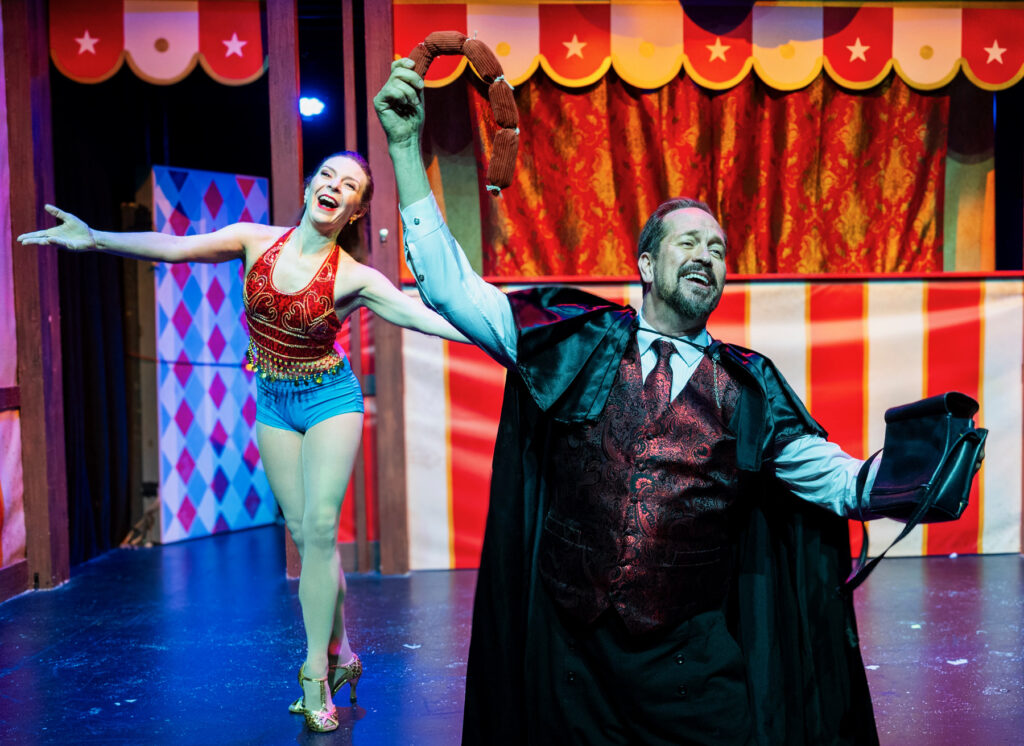
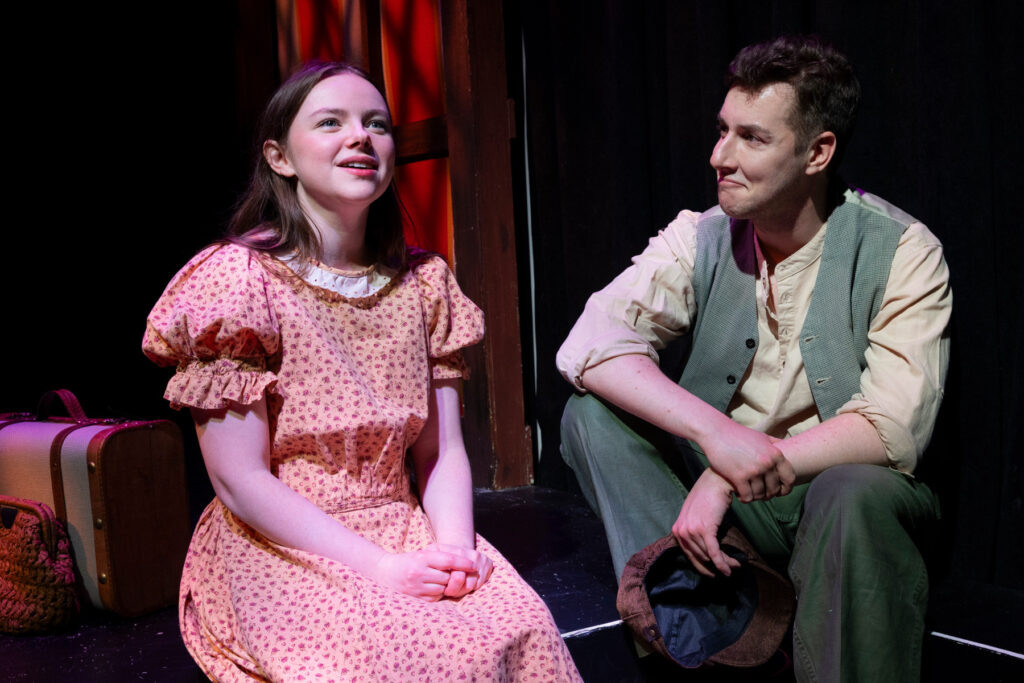
The story of Lili, a young orphan girl (she’s all of sixteen) who joins a traveling carnival in post-World War I France, first appeared in a short story by Paul Gallico, later adapted in 1953 by screenwriter Helen Deutsch for a dramatic film with music produced my MGM titled Lili. It starred a charming twenty-one-year-old Leslie Caron, and the Broadway musical employed Anna Maria Alberghetti, a twenty-four-year-old Italian opera singer. In the J2 Spotlight production, playing a limited run at the AMT Theatre in Hell’s Kitchen, we get young Bridget Delaney, who is just in between Caron and Alberghetti’s age. Pint-sized, she brings the necessary naivete and a lovely soprano to the role. Unfortunately, the way the show is written, Lili comes off as too naïve and borderline mentally impaired. She doesn’t understand a single thing that’s going on around her. And clearly, if you want to take in the reality of her situation, huge portions of France were devastated by the war, and Lili’s trauma (orphaned and alone) should be a profound one. But book writer Stewart never gets around to exploring anything in depth, eschewing backstories for nearly for all the characters. As one example, Paul the puppeteer, who is both Lili’s antagonist and protector, has suffered a leg injury that ended his fledgling dance career. Undoubtedly this is a war wound, but Stewart has no interest in the cause of his pain and suffering. As played by Mason Hensely, who possesses a strong singing voice, Paul’s sudden outbursts of self-hatred and even violence become hard to swallow as they are severely generalized by the writing. And the carnival’s magician, the egotistical Marco the Magnificent, who serves as the one Lili looks up to instead of the damaged Paul, is seriously grooming the young girl in an ugly fashion. This scenario is made all the worse by the casting of Gregory White as Marco, who is well into his forties and towers over the diminutive Delaney in a way that made me fear for her well-being.
Honestly, it’s a distasteful musical (there’s even attempted rape in it which, I imagine considering Lili’s age, is only one of the reasons why it isn’t produced anymore). It was done by City Center’s Encores! in 2002 with Anne Hathaway, all of nineteen and fresh off her film debut in Princess Diaries. Though New York Times critic Ben Brantley liked the guilelessness she brought to the role, he referred to the character of Lili as someone who “wears her innocence like a ‘kick me’ sign.”
Director Rob W. Schneider has directed Carnival the best way he can on such a small stage. His usual clever touches abound, but they are in service to a creaky vehicle. Of course, if you’re familiar with the enjoyable original cast recording, which feature not only Alberghetti’s winsome soprano, but a viral and youthful Jerry Orbach as Paul, you know that the show contains some wonderful songs. As this was my first time seeing it onstage, I was surprised to discover that many of the songs come one on top of the other with extremely short scenes in between. It’s a minimalist approach that requires a deft handling of the dialogue, something Stewart does not supply.
The band sounded terrific as led by Elizabeth Hastings on keyboard and conductor, alongside Luka Marinkovic (additional keyboard) and Nicholas Urbanic (percussion). What little dancing there is in this version, choreographer Josh Assor finds ways to utilize his tiny chorus nicely. I liked Dana Winkle’s Rosalie, Marco’s lover and assistant (played originally by Kaye Ballard), and Darrel Blackburn’s grumpy carnival proprietor, Schelgel. In addition, Collin O’Neill’s Jacquot, who also voices some of the puppets, does a lovely job.
The real stars of this Carnival are its puppets. They are, in fact, the same ones used in a 2007 production staged at the Kennedy Center by Robert Longbottom. Designed by Ed Christie and partly performed by puppeteers Richard Gomez and Clint Hromsco, Carnival really picks up whenever they’re onstage. I suspect that’s how it’s always been with this peculiar show. Nonetheless, it should still leave one grateful to see it after so many years and happy to support J2 Spotlight’s commitment to producing seldom-seen musicals. Next up and opening May 14th is the 1986 Tony Award winning Mystery of Edwin Drood, Rupert Holmes’s adaptation of Charles Dickens’ famous unfinished mystery novel.
Carnival is at AMT Theatre, 354 W. 45th St., New York, playing through May 10th; https://www.j2spotlightnyc.com
Photos by Russ Rowland.
Headline Photo: Bridget Delaney as Lili with puppets Henry the Walrus and Carrottop.