By Eyal Solomon, Publisher & Editor, Theater Pizzazz…
The New York Pops and Tony Award winner Lena Hall delivered a lively, stylish celebration of six decades of James Bond music, from orchestral classics to pop and rock hits.
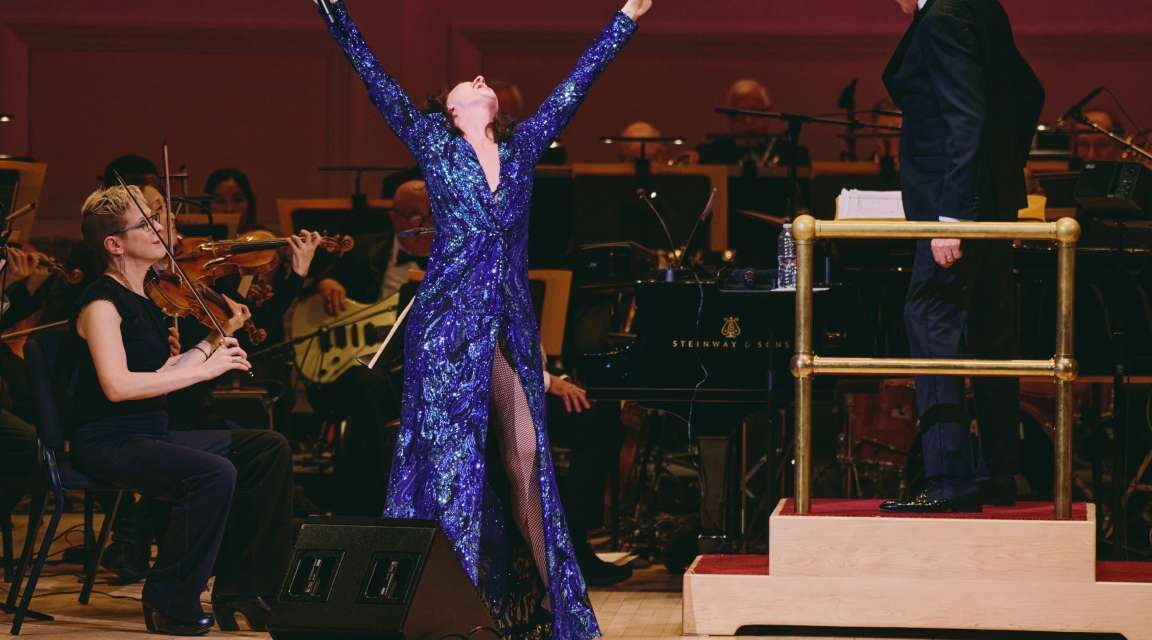
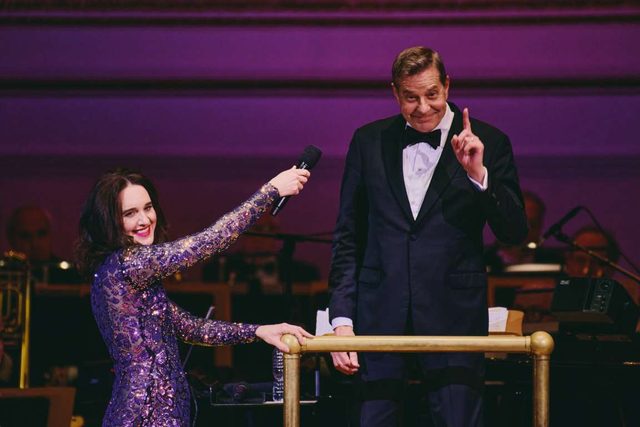
The New York Pops opened its 44th Carnegie Hall season on October 23 with 007: James Bond Forever, a musical journey through the franchise, conducted by music director Steven Reineke and featuring Tony Award-winning vocalist Lena Hall.
James Bond has survived changing fashions, villains, and actors, but one thing has remained consistent throughout the franchise’s six decades: the music. From the instantly recognizable orchestral hits and ominous chromatic undertones of the theme tune to the timeless songs, Bond’s musical legacy is every bit as memorable as the films themselves.
The New York Pops is no stranger to retrospectives devoted to a single composer, genre, or era. Bond’s songs, however, were written by different composers and performed by different artists in a wide range of styles over six decades, often with little more than their association with the franchise connecting them. Some, but not all, incorporated motifs from the original theme. In that sense, the evening was more a variety show than a retrospective. This writer is not complaining.
For the most part, the songs were performed in chronological order of their respective films. As Reineke pointed out, each song was unmistakably a product of its time, from the surf guitar of the original theme (written at the height of the surf craze) to the edgy new-wave beat of Duran Duran’s “A View to a Kill” (“Dance into the Fire”), the only Bond theme to reach No. 1 on the Billboard Hot 100. What began in 1962 with Monty Norman’s theme from Dr. No eventually embraced everything from symphonic romanticism to disco, hard rock, and contemporary pop. Yet somehow, these very different styles still sounded like Bond, thanks largely to composer John Barry, whose lush orchestrations and dramatic brass writing helped establish the series’ musical identity.
This is what the New York Pops does best: taking on different sounds and styles, incorporating electric instruments and rock drums when needed, yet retaining a strong musical personality. Reineke kept the orchestra tight and energetic, giving the big numbers plenty of punch without drowning out the melodies.

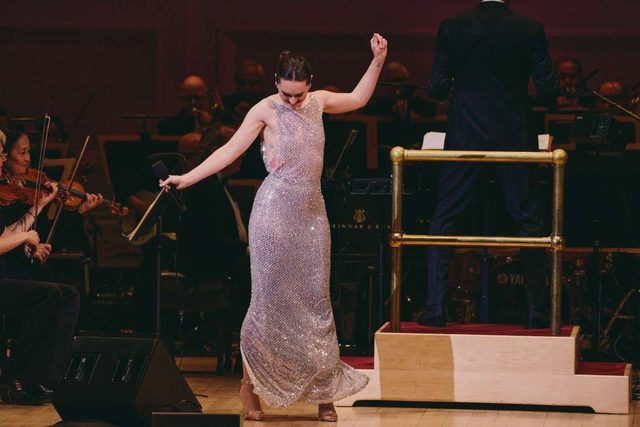
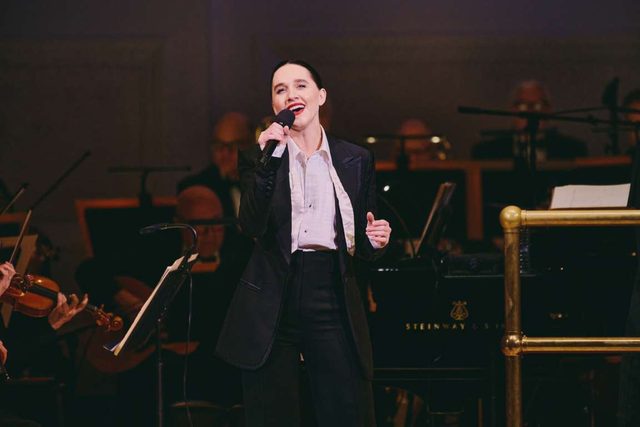
Hall, best known for her Tony-winning performance in Hedwig and the Angry Inch, had quite a job on her hands. The Bond songbook includes hits made famous by Shirley Bassey, Tom Jones, Carly Simon, Tina Turner, Adele, and Billie Eilish, singers with very different styles and instantly recognizable voices.
Instead of trying to imitate them, Hall made the songs her own while evocing each singer’s style. Her powerful voice and rock background were particularly well suited to the louder, more aggressive numbers, but she was just as comfortable dialing things back for the ballads.
Among the highlights were Paul McCartney’s “Live and Let Die,” Shirley Bassey’s “Diamonds Are Forever,” and Adele’s “Skyfall.” An interesting addition was Radiohead’s “Spectre,” a haunting song rejected from the 2015 film of the same name, proving that even Bond’s discarded music can be worth hearing.
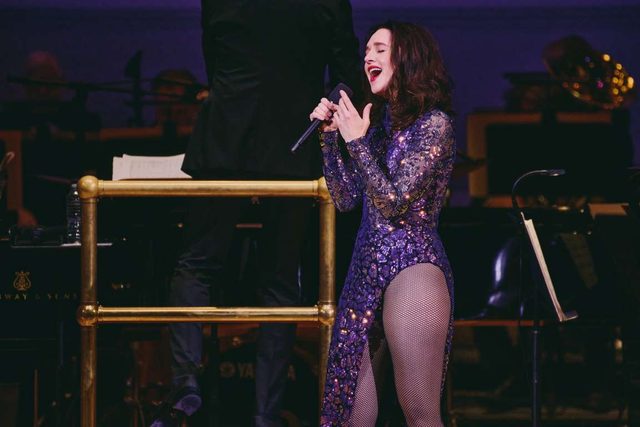
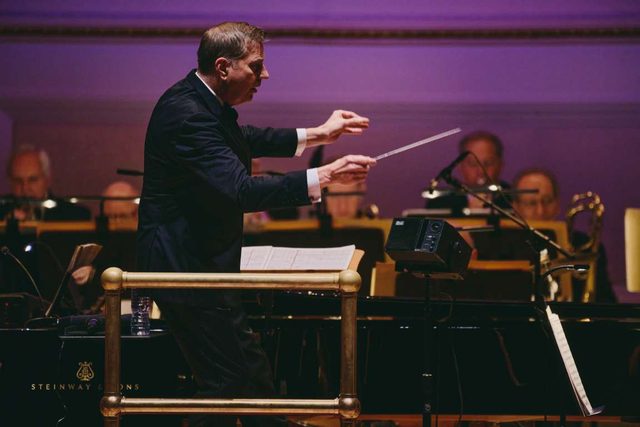
Hall also shared stories about the songs and their performers, along with several glamorous costume changes, very much in keeping with Bond’s extravagantly stylish universe. But what really made the evening work was her personality. Warm, funny, and completely at ease onstage, she wasn’t afraid to play the diva one moment and the goofball the next. She owned the Carnegie Hall stage that night. In fact, the whole program was her brainchild, a dream she’d nurtured for years, and her excitement was infectious. She was clearly having a great time, and so was the audience.
One of the evening’s pleasures was discovering how well the music held up without the movies. Take away the car chases, exotic locations, and gadgets, and the songs and orchestral arrangements still have plenty to offer. The instrumental selections, in particular, were a reminder of just how much John Barry contributed to the Bond sound, and made a persuasive case for his standing among cinema’s finest composers.
Ultimately, 007: James Bond Forever delivered what its title promised: an entertaining, stylish tribute to one of cinema’s most enduring musical traditions. You don’t have to be a Bond fan to enjoy it, although it certainly helps. The music is indispensable.