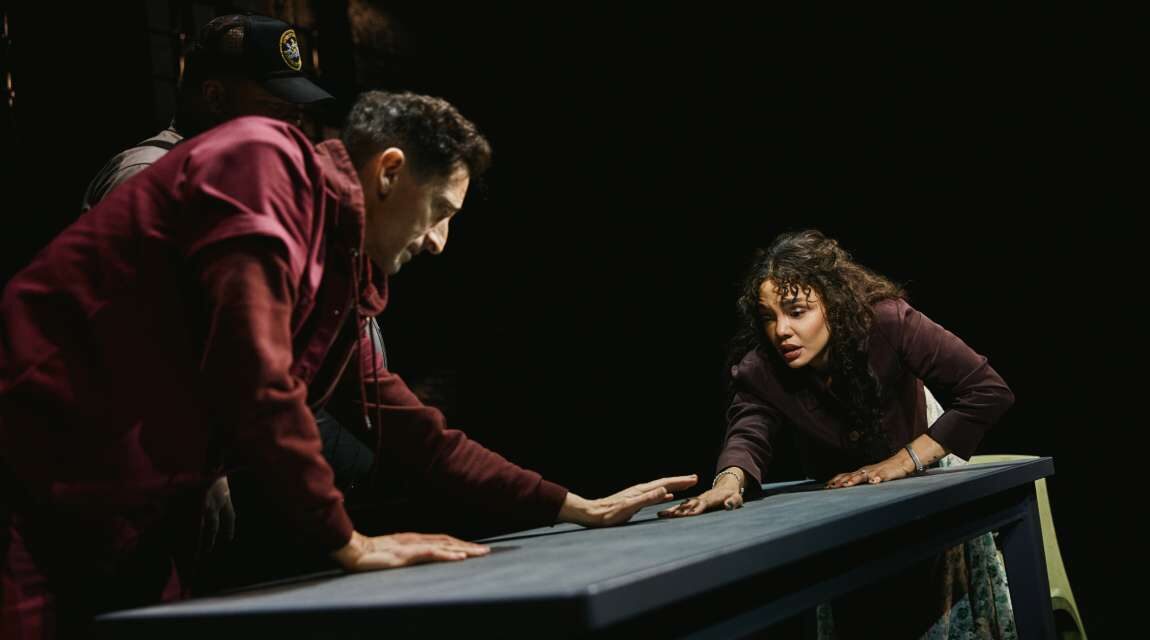
By Carol Rocamora…
Adrien Brody stars in this amazing, true life story of suffering and redemption
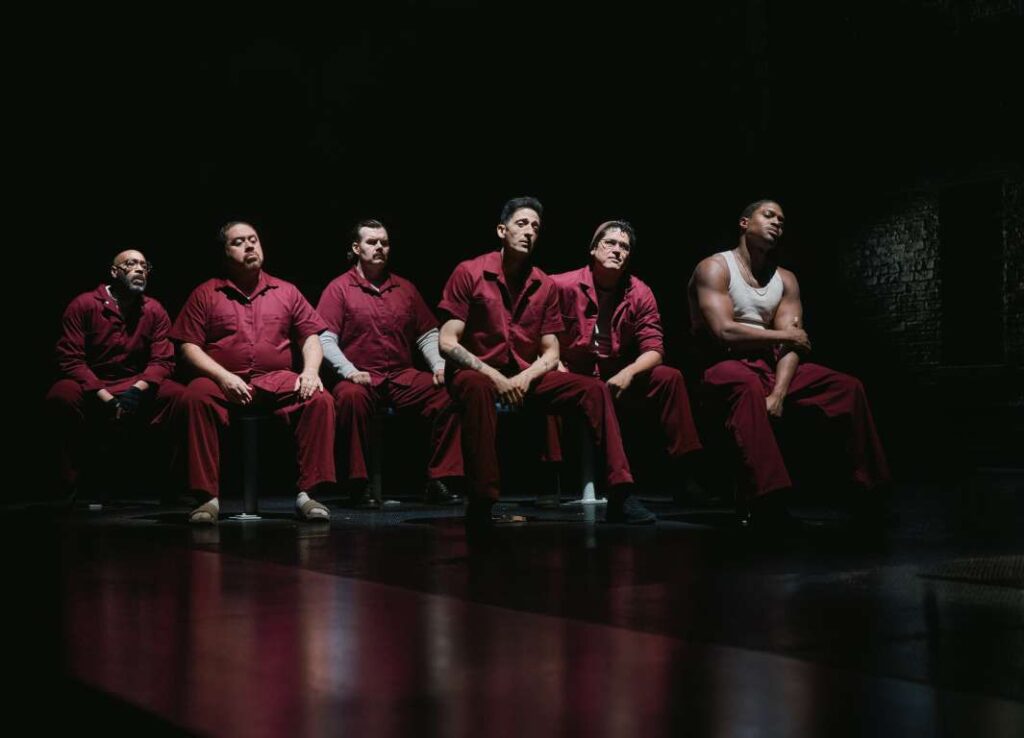
Sitting through The Fear of 13 on Broadway, there were moments when I felt I was watching a modern dramatization of The Last Judgment, Michelangelo’s famous, fearsome fresco. In this new play set in a Pennsylvania prison in the 1980s-1990s, the beaten bodies of condemned inmates on death row were writhing in agony. But then, suddenly, there’s a moment when these tortured souls unite and burst into a song so moving, so ethereal that it soars to the heights of the theatre, transporting us all with hope for humanity.
Such was the radical range of responses I experienced watching Lindsey Ferrentino’s overpowering new work, based on the true story of a man named Nick Yarris, who served twenty-one years on death row for a murder he didn’t commit. His life story is remarkable. Sexually molested by a man when Yarris was nine, he spent his teenage years taking drugs and stealing. His parents kicked him out, and Yarris was homeless for two years. At twenty, he was stopped in Delaware County, Pennsylvania by a policeman while driving a stolen car; they struggled, and Yarris was thrown into prison. There, he read a newspaper report of a recent, unsolved murder, and got an idea to approach the authorities with (false) knowledge that he knew who was responsible, hoping that he could make a deal to be freed. Instead, the authorities wound up convicting Yarris himself of that murder and sentenced him to death. At one point, he escaped on his way to an appeal of his sentence and fled to Florida, where he was arrested again, and returned to death row in a Pennsylvania prison.
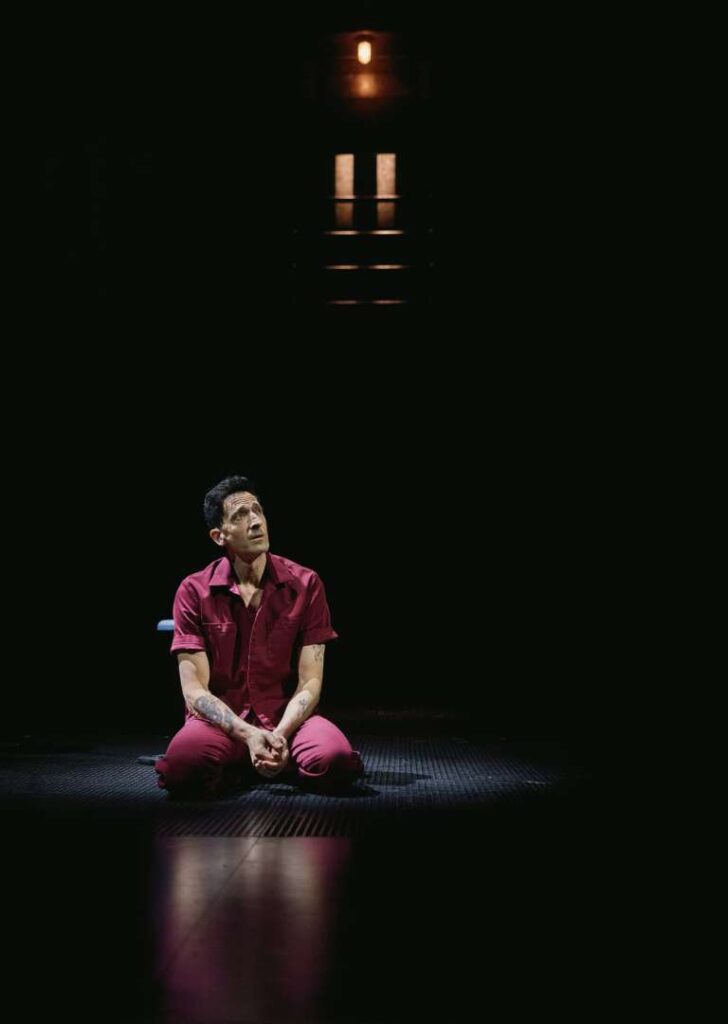
Ferrentino dramatizes Yarris’s story during the later years of his prison sentence, with flashbacks that fill in his early years. As played by the charismatic Adrien Brody, Yarris tells his mesmerizing story to Jacki Miles (a compassionate Tessa Thompson), a volunteer prisoner advocate who begins to visit him during his solitary confinement on death row and listens, enrapt, as Yarris tells his life story. We soon become deeply engaged in the growing relationship that develops between them during their one-hour weekly session together. He enchants her with stories of his life. He tells her how he’s replaced drugs with a new addiction to books. They begin reading and discussing classics together, including War & Peace (he declares that he wishes it were longer). Eventually, she stops visiting other inmates and focuses on Yarris, giving him her phone number so they can talk when they are apart. “We’re friends, aren’t we?” Yarris asks with a fervent hope. “Friends,” she confirms.
This unique relationship turns into a deep, shared love, and – remarkably – they marry while he’s still in prison, with her pledge to aid him in his appeal for release. But as years pass, Yarris and his attorney’s appeals for DNA testing to prove his innocence are thwarted by the justice system’s neglect and mismanagement. Losing hope, Yarris sets Jacki free, releasing her of her obligation to him. It’s his ultimate expression of gratitude. “She was a gift,” he explains to us, in a series of direct narrations. “She gave me back my voice.”
The Fear of 13 is based on the 2015 documentary of Yarris’s life by David Sington. Both the documentary – and Ferrentino’s dramatization – offer a strong condemnation of the inhumane conditions on death row, and the woefully dysfunctional justice system that thwarts the efforts of those who are attempting to appeal their wrongful convictions and incarcerations.
But Ferrentino’s play is about more than that. It’s a study in loneliness, the fundamental need for human connection. Above all, it’s about the triumph of the human spirit (Yarris claims to have read more than 1000 books during incarceration, and went on to write books about his own life). It’s also about discovering love and appreciating life’s essential moments – like the first day of spring and the first walk outside after decades in prison (I’ll save the final, special moment in the play for you to discover. ).
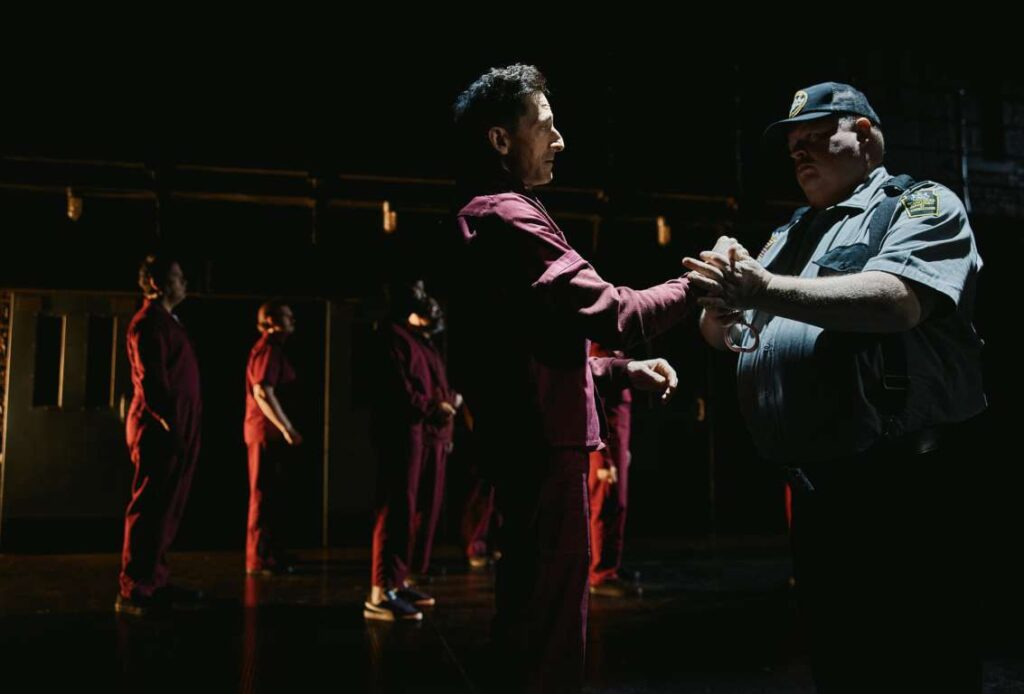
Both Yarris and Jacki capture our hearts, thanks to the actors who portray them so beautifully. Adrien Brody mesmerizes us with a shy, charming, self-effacing portrayal of Yarris, a complicated real-life figure (whom he evidently met in person while preparing for the role). Tessa Thompson’s Jacki is deeply moving with her vulnerability and sincerity. David Cromer directs a company of twelve with skill, vigor, and ingenuity. Notable performances include the cruel, punishing Guard played by Joel Marsh Garland (“Dead men do not speak in my prison!” he cries), and the lovely-voiced Ephraim Sykes, who leads his fellow prisoners in uplifting song at the play’s darkest moments.
Arnulfo Maldonado’s severe set features an empty stage, darkly lit by Heather Gilbert, backed by levels of haunting cell doors that intensify the feeling of isolation and hopelessness. The scenes of guards beating the prisoners are especially frightening (directed by UnkleDave’e Fight-House), and Lee Kinney’s deafening sound cues reinforce that violence.
(Note: The title of the play, The Fear of 13, is never clearly explained; but that does not lessen the impact of this powerful work in any way, in my view.)
Reportedly, Nick Yarris himself attended a performance of The Fear of 13 on Broadway. I wonder how he must have felt, seeing his extraordinary life story as retold on the stage before an awestruck audience.
The Fear of 13, by Lindsey Ferrentino, directed by David Cromer, at the James Earl Jones Theatre on Broadway, now through July 12.
Cover image: Adrien Brody and Tessa Thompson