By Andrew Poretz . . .
Where does one hear music by the likes of Sam Cooke, Scott Joplin, George and Ira Gershwin, Willie Nelson, Irving Berlin, Talking Heads and Brian Eno, James Weldon Johnson, and Michael Jackson in a single evening? At a New York Pops concert, of course.
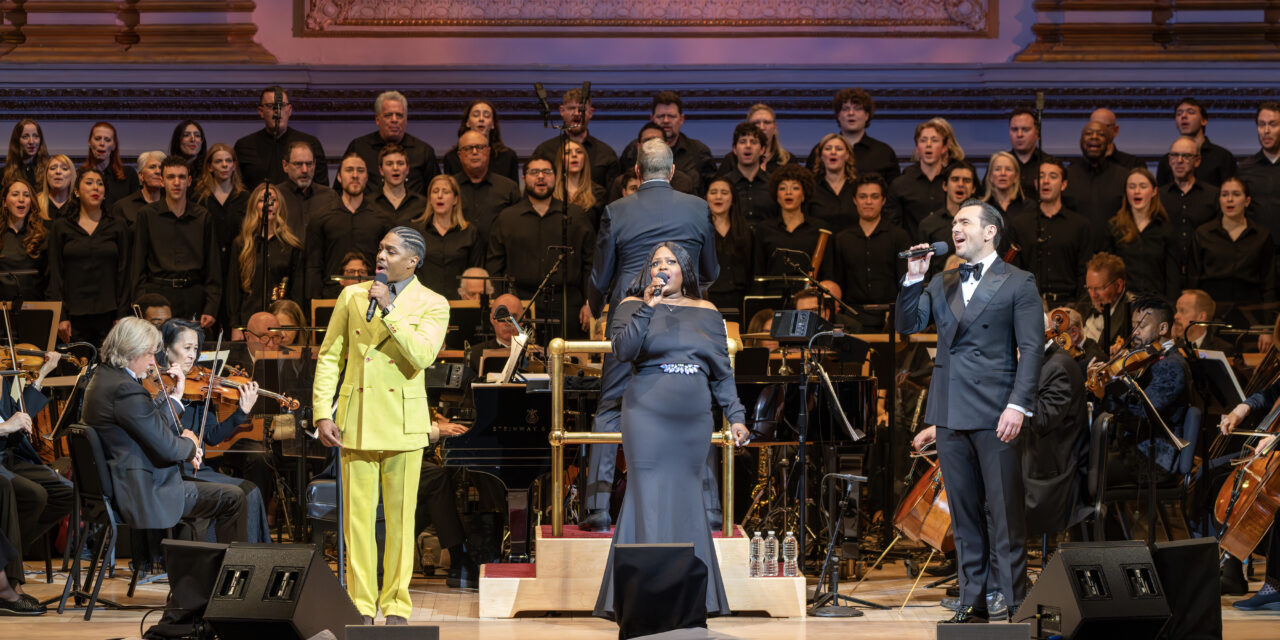
The New York Pops program for March was unconventional, even a bit of a gamble for a symphonic orchestra. Entitled The Music of US: From Then to Now, part of Carnegie’s United in Sound: America at 250, the Pops, under the direction of Maestro Steven Reineke, set out to pack as many distinct styles of American music as possible into a two-hour program. The goal, nothing less than telling the story of 250 years of the country through its music, from Indigenous traditions to spirituals, hymns, ragtime, jazz, blues, Appalachian folk, rock ’n’ roll, R&B, and rap.
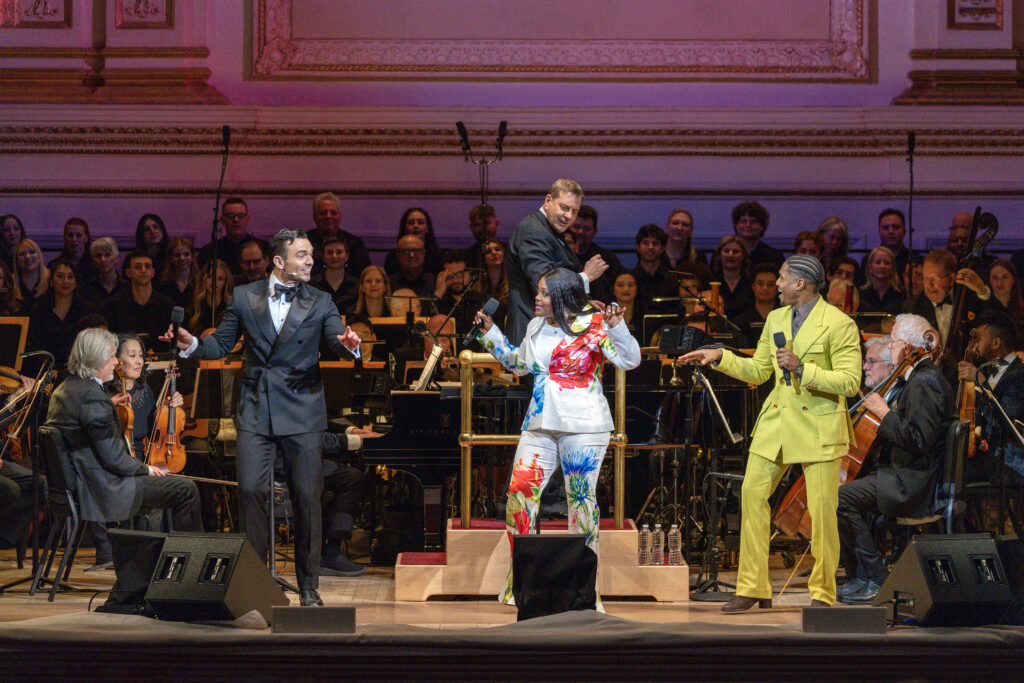
The program featured three guest singers, Broadway and musical theatre standouts Max Clayton, Nova Payton, and Ephraim Sykes. Also on hand were the Essential Voices USA (EVUSA) choral ensemble, stationed behind the orchestra whether singing or not, and consistently adding depth to the overall sound.
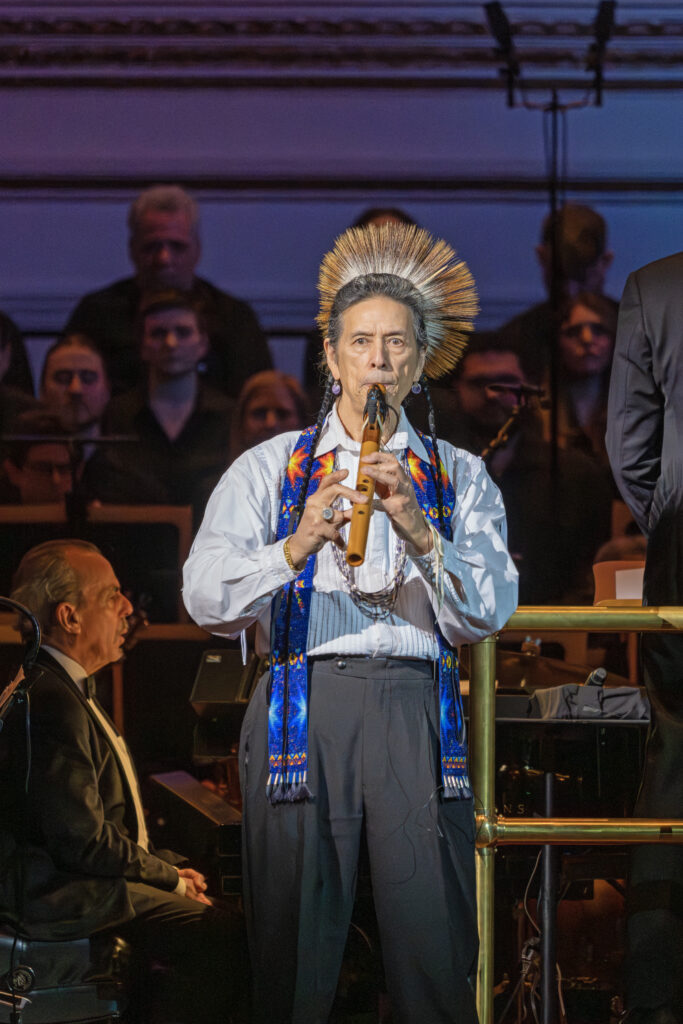
To set the tone, the evening opened with a musician named Tchin, playing an Indigenous American courting flute, unaccompanied, and wearing a traditional headdress. It had the feeling of a ceremonial invocation. Rather than a standard overture, the orchestra, joined by EVUSA, followed with “Chester,” from New England Triptych, based on the 1770 hymn by William Billings.
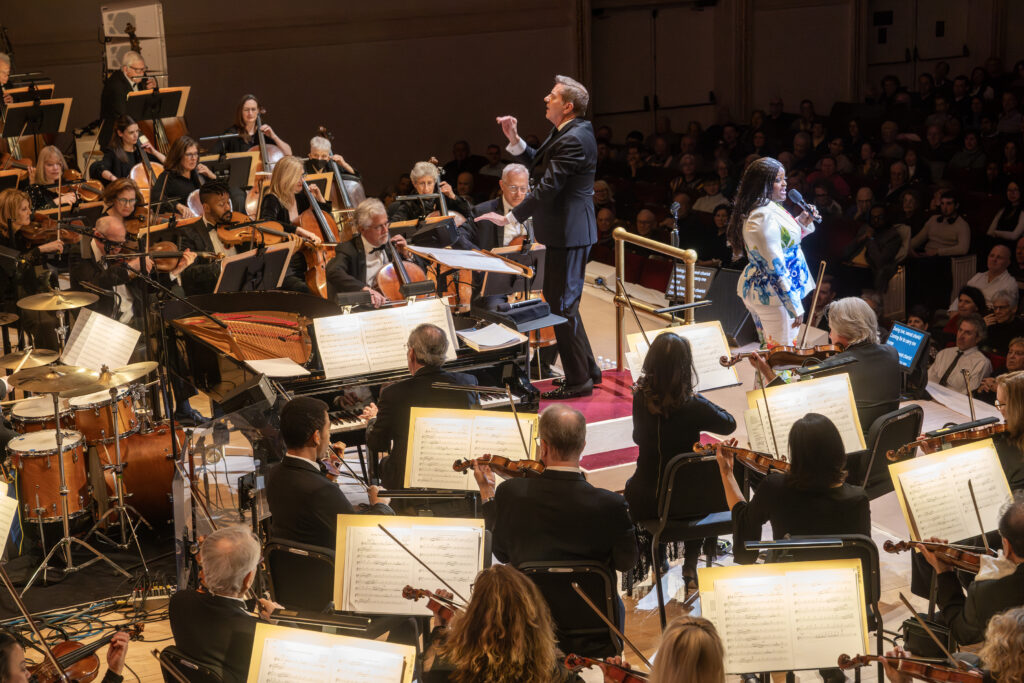
Reineke introduced Nova Payton, making her Carnegie Hall debut, for “Swing Low, Sweet Chariot.” The spiritual was deeply moving, buoyed by the tight ensemble voices. Payton also delivered “Lift Every Voice and Sing” (J.R. Johnson/J.W. Johnson), also known today as “the Black National Anthem,” with passion and verve. She has an impressive range and a pure, vibrato-free tone
Turning to Scott Joplin, the Pops, led by pianist Lee Musiker, performed “Maple Leaf Rag,” which Reineke noted was played in A major instead of A-flat, “for the sake of the violins,” though it made it more challenging for Musiker.
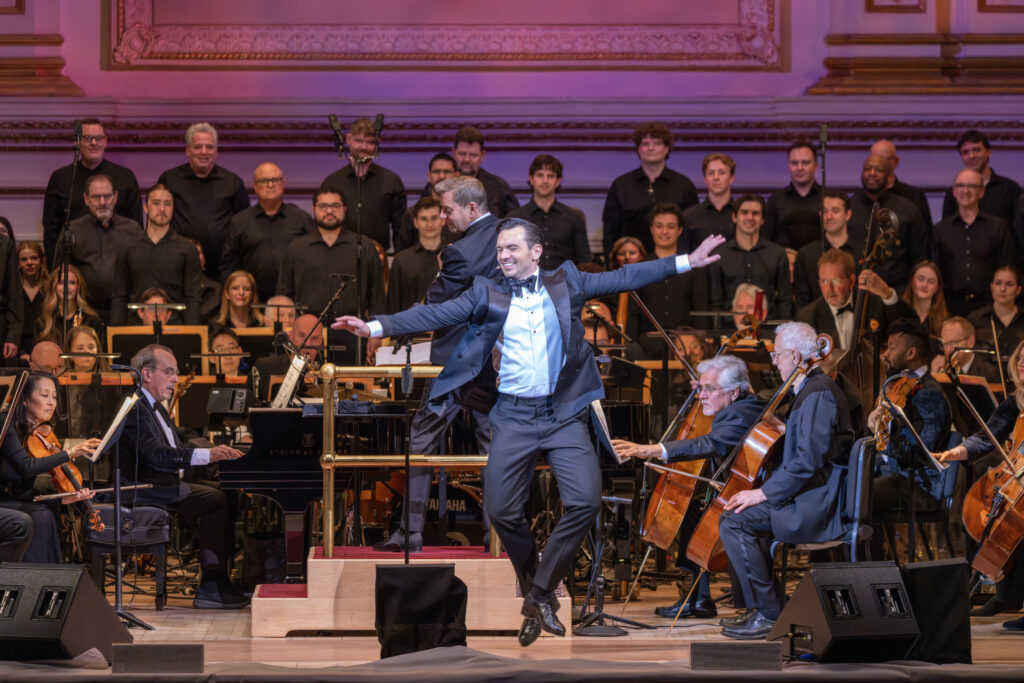
George M. Cohan helped define early Broadway, and Max Clayton, also making his debut here, brought plenty of energy to “Give My Regards to Broadway,” including its rarely heard verse, from Little Johnny Jones. Clayton is a natural showman, and later tapped his way through “I Got Rhythm” (George Gershwin/Ira Gershwin), complete with a playful call and response with the orchestra.
Ephraim Sykes, making his Pops debut, turned to the blues with “Nobody Knows You When You’re Down and Out,” a 1923 standard by Jimmy Cox. Its bleak story of a rise and fall from wealth still lands, more than a century later. It utilizes a repeating chord progression but no traditional bridge, which gives it a feel of never quite resolving until the arrangement’s “big band” finish.
In a twist, Sykes also took on “Summertime” (George Gershwin/Ira Gershwin) from Porgy and Bess. Men rarely perform the song, written as a lullaby for a mother to her child, but Sykes brought a fresh perspective to it.
The first half closed strong with Irving Berlin’s “Cheek to Cheek” from Top Hat, using Billy May’s chart from Sinatra’s 1958 Come Dance With Me, performed as a flirtatious duet between Payton and Clayton.
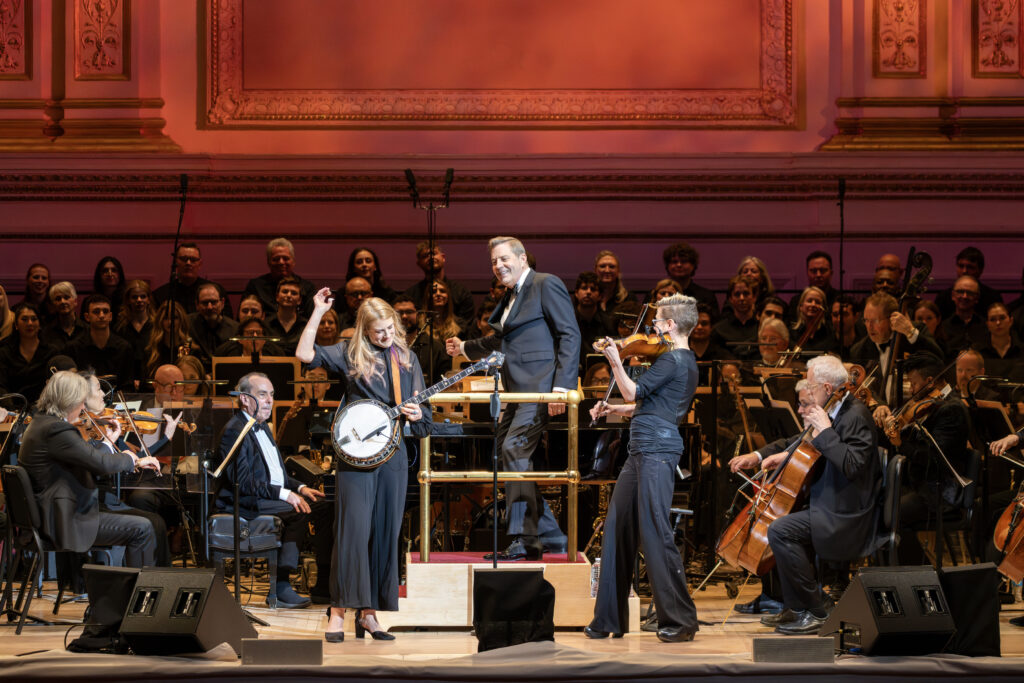
The second half returned to Americana with banjo legend Earl Scruggs’ “Foggy Mountain Breakdown,” performed by Hilary Hawke on banjo and Pops’ violinist Sara Caswell on “fiddle.” Woody Guthrie’s “This Land is Your Land,” featuring all three singers, included all seven original verses. Beginning simply, with Payton and guitar alone, it grew into one of the evening’s most affecting moments.
Carl Perkins’ “Blue Suede Shoes” leaned more Pat Boone than Elvis in Clayton’s hands, though the dancing helped sell it. Sykes followed with an soulful “A Change Is Gonna Come” (Sam Cooke), bringing the evening back to emotional center.
From there, the program took a few unexpected turns. Clayton tackled the talk-heavy “Once in a Lifetime” (the Talking Heads song, not the 1961 standard by Leslie Bricusse and Anthony Newley), which proved more curious than compelling. It might have landed better with Sykes, given his Hamilton credentials.
Michael Jackson’s “Beat It” came across like a marching band arrangement, with the snare drum driving a rigid pulse. The decision to assign the Eddie Van Halen guitar solo to a cellist and the vocal ensemble, despite a capable guitarist in the orchestra, was puzzling.
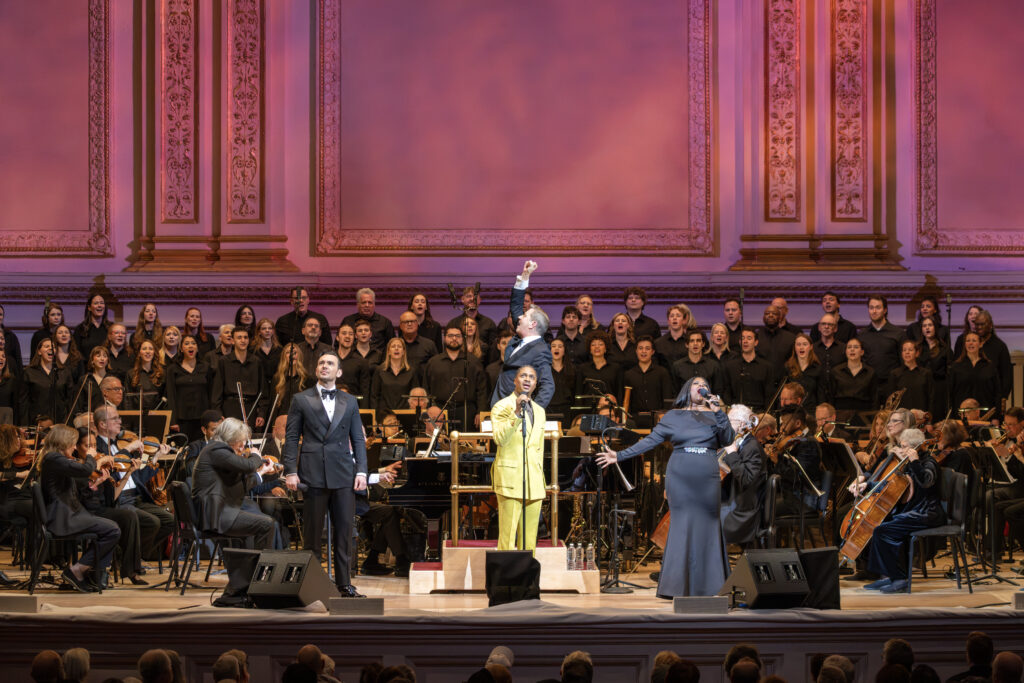
The finale, “Glory” from Selma, featured all three singers, with Payton singing and Sykes rapping. The final stretch did not quite match the strength of what came before.
As with most Pops concerts, there was the equivalent of a Marvel post-credits scene, an encore not listed in the program. Fortunately, the encore, “Think” (Aretha Franklin/Teddy White), sent the audience out on a high note, its “Freedom” refrain bringing the crowd to its feet, except for those who made the unfortunate decision to leave early.
The next New York Pops concert, on April 15, is its annual Gala, honoring composer-lyricist Stephen Schwartz, with a Gala party to follow for those so inclined.
For more information about The New York Pops, visit https://newyorkpops.org.
Photos: Richard Termine