By Carol Rocamora…
The current reincarnation of The Baker’s Wife is a musical gem, the fruit of decades of collaborative labor.
You don’t have to travel transcontinental to find the most charming village in France. It’s nestled right here just off East 13th Street, where The Baker’s Wife, Steven Schwartz’s enchanting musical, is playing at the Classic Stage Company.
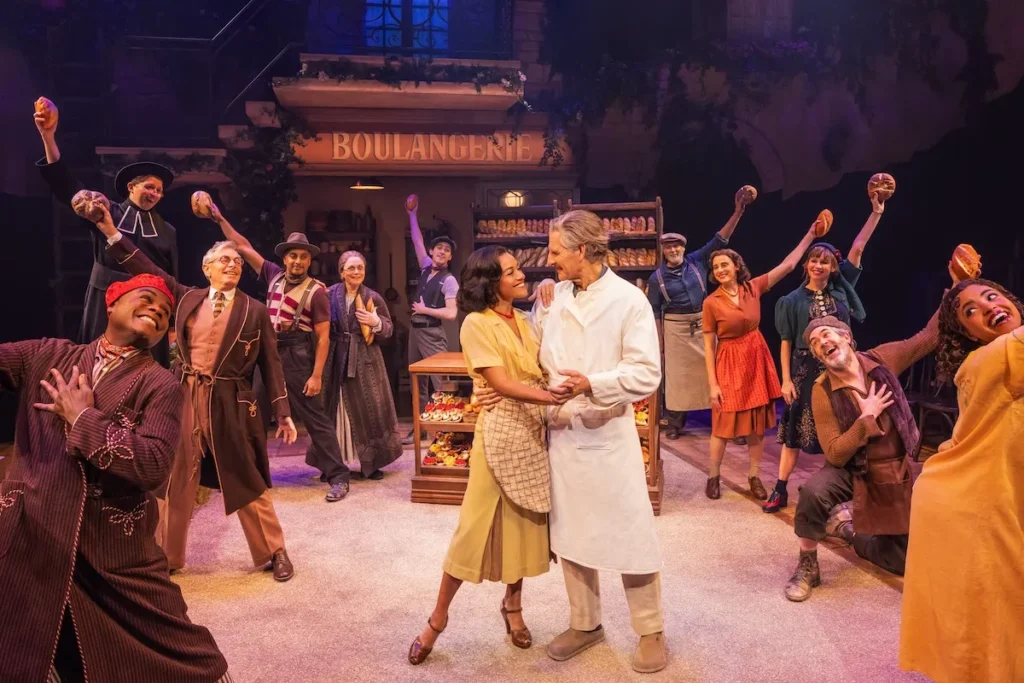
Upon entering the intimate CSC space, you’re enfolded into the arms of this welcoming hamlet even before the performance begins. You’re seated on the main square next to villagers at the tiny café, watching others playing boules, laughing and talking and arguing. A guitarist strums a French chanson nearby, in front of a sign saying “boulangerie” (bakery). Above you are balconies and windows of the surrounding buildings, where a villager waters her plants. It’s a total immersion into your fantasy French village (and you have designer Jason Sherwood to thank for the loveliest off-Broadway set so far this season).
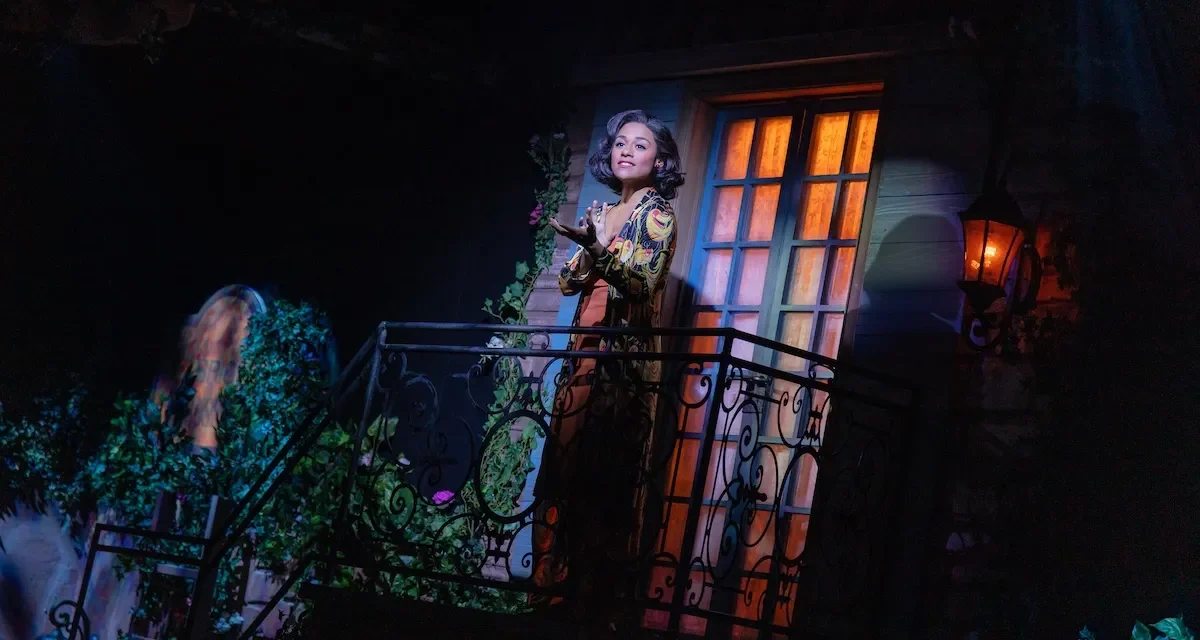
In this magical place, the story unfolds like a French fable, set in Province in the 1930s (book by Joseph Stein, based on Marcel Pagnol’s 1938 film, inspired by a Jean Giono Story). The baker of the boulangerie has died, and the village eagerly awaits his replacement. He appears, in the form of the middle-aged Aimable Castagnet (an endearing Scott Bakula) along with his very-much-younger wife Genevieve, played by the celebrated Ariana DeBose (of West Side Story film fame). The very next morning, in the play’s most delightful scene, they open the boulangerie and bring out the product that the villagers worship – namely, “Fresh Warm Bread” (as the song they sing is titled). So colorful is the moment, so ecstatic is the sixteen-member ensemble, that you can almost smell the fragrant aroma of the baguettes and croissants.
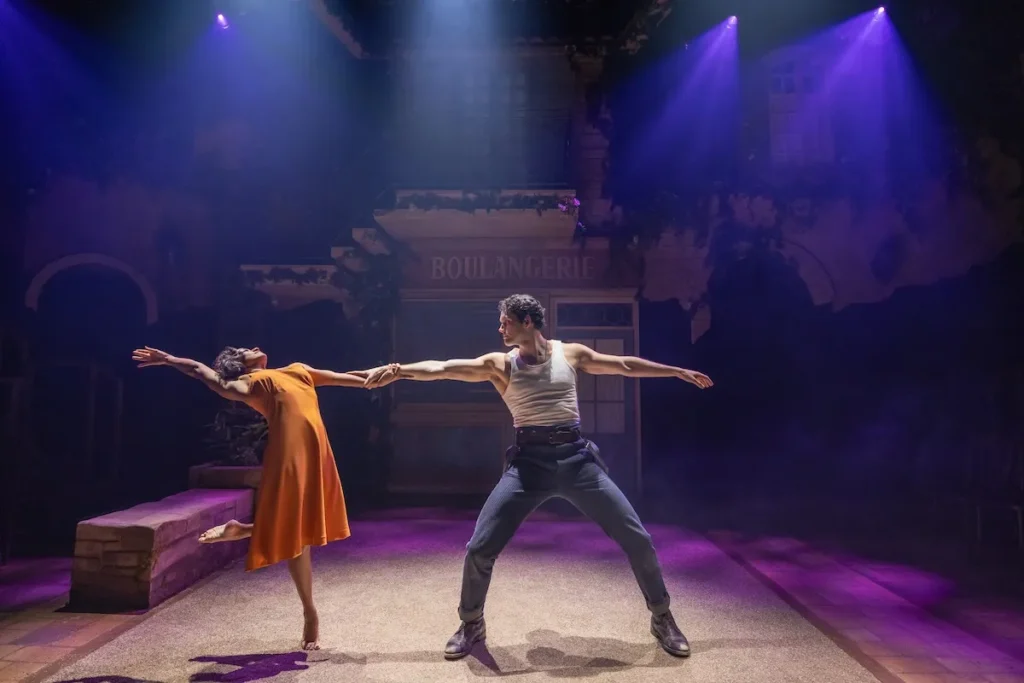
You can almost guess what happens next. One of the villagers named Dominique (Kevin William Paul), a handsome young aide to the mayor, falls passionately in love with the beautiful Genevieve and entices her to run away with him. After her stirring song called “Meadowlark” expressing her inner desires to fly away, they steal the mayor’s car, and they’re off.
The rest of the show deals with the ensuing trauma of the Baker’s loss, his breakdown, and the effect on the community. And indeed, that is what this lovely and loving show is about – community, coming together around bread and caring for one another, as expressed by this sixteen -member ensemble. And how colorful these characters are, under Gordon Greenberg’s skilled direction! They consist of village prototypes – including the school teacher (Arnie Burton), the priest (Will Roland), the café proprietor Claude (Robert Cuccioli), his waitress-wife Denise (Wendi Bergamini), the mayor Marquis (Nathan Lee Graham), and the town drunk (Kevin Del Aguila). Together they sing Stephen Schwartz’s tuneful chansons (music direction by Charlie Alterman) and dance with vitality and grace (choreography by Stephanie Klemons).
When we first meet them, however, it is not an entirely harmonious community. Claude and Barnaby (Manu Narayan) refuse to speak to one another (a tradition in their feuding families that went back generations). Claude bullies his wife Denise shamefully. The town teacher and priest argue incessantly, and Therese, the town’s spinster (Alma Cuervo) disapproves of everyone. In return, the entire village disapproves of mayor Marquis, who lives openly with his three so-called “nieces.”
But the ensemble effort for the Baker’s wife return brings them all together into a harmonious, joyous whole. The entire cast is superb, with standout performances by Scott Bakula as an affecting Aimable, as pleasing as his character’s name, and the lovely Ariana deBose, a Baker’s wife worthy of the admiration bestowed upon her.
There are also the more somber themes of marriage (love, longing, lusting, age difference, etc.) and proto-feminism, as expressed in the song “Romance” in Act II, that bring the female characters together,
As for the place of The Baker’s Wife in the current season, it’s a musical gem, the fruit of decades of collaborative labor. A promising new musical in 1976, it never made it to Broadway, after a rocky cross-country tryout that producer David Merrick ultimately shut down. Now, almost fifty years later (after a cast recording and a revival at Paper Mill Playhouse), it’s finally arrived in New York, in a lovely production that should make veteran composer Stephen Schwartz (Wicked, Godspell, Pippin) and librettist Joseph Stein (Fiddler on the Roof) proud. C’est si bon!
Photos by Matthew Murphy and Evan Zimmerman