Review by Carol Rocamora…
This raucous revival reaffirms Moliere’s immortality as a satirist of society and human foibles.
In the annals of Moliere revivals, the Tartuffe now playing at New York Theatre Workshop might very well be remembered as “Tar-TOOF.” Directed by Sarah Benson with a version by Lucas Hnath, it’s a raunchy, raucous rendition of this immortal classic, starring an outrageously droll Matthew Broderick in the title role.
You’re familiar with the story, of course. Set in France in the 1660s, a noble household headed by Orgon is taken over by a con man named Tartuffe (translation: imposter, hypocrite). Posing as a pious religious devotee, Tartuffe connives his way into Orgon’s home, where his host falls under the spell of his guest’s false devoutness. Tartuffe manipulates Orgon him into permitting him marry his daughter Mariane, who is already engaged to Valere. Convinced that Tartuffe speaks with divine authority, Orgon goes one step further – he signs over his world possessions to Tartuffe, disinheriting his own son Damis.
Consequently, Tartuffe orders Orgon and his family to leave the home that is now his. But, through a series of melodramatic plot twists, King Louis XIV intervenes and – having been informed of Tartuffe’s ignominious character and past crimes – arrests Tartuffe instead.
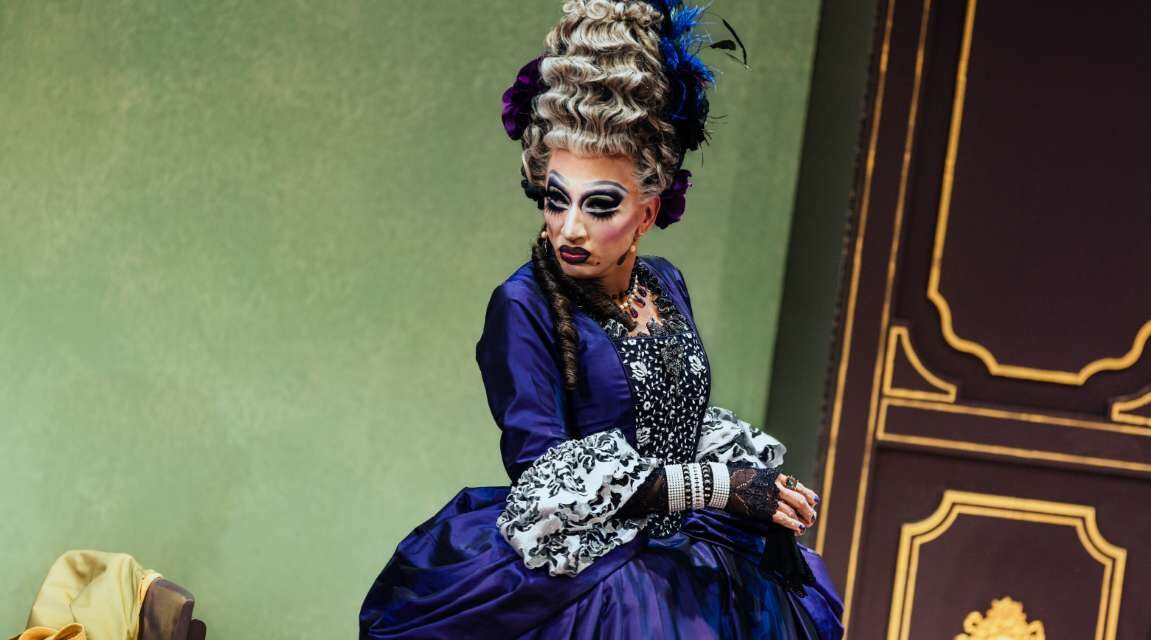
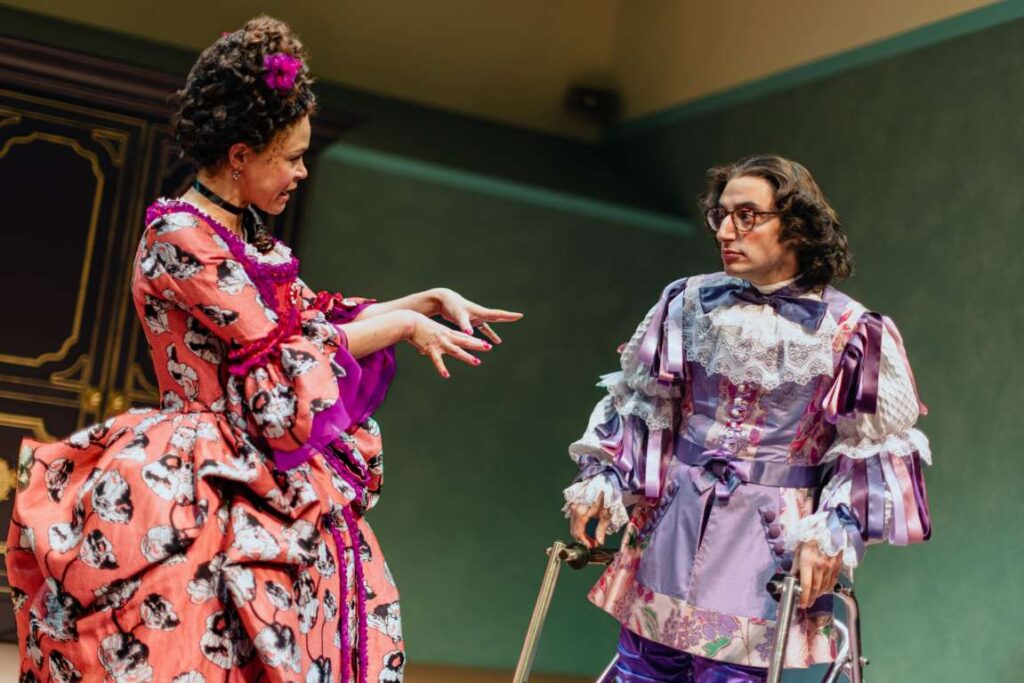
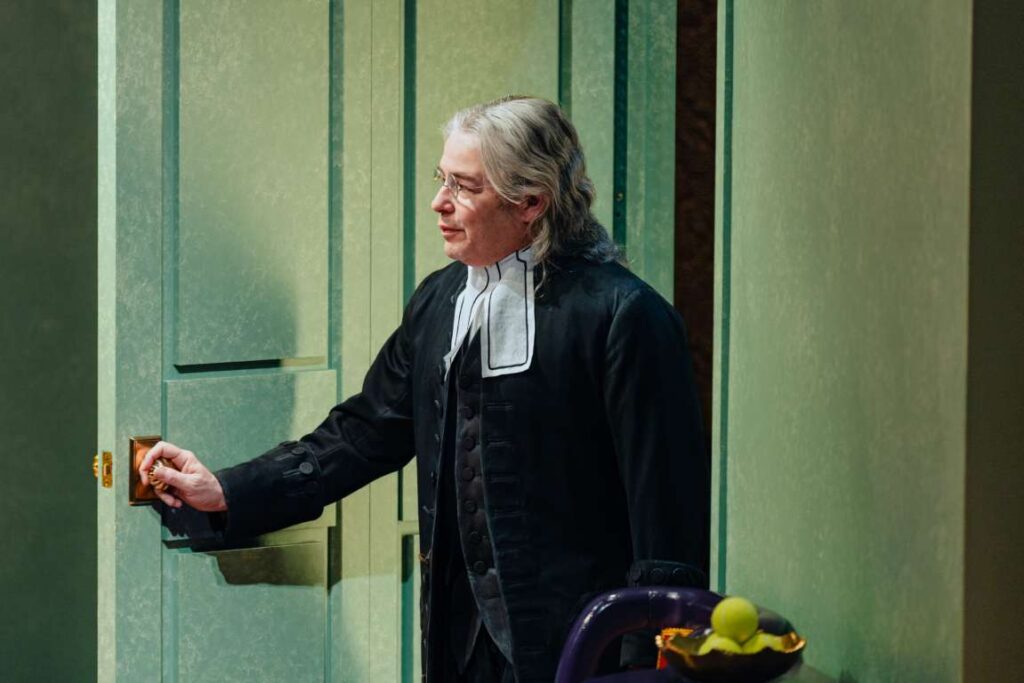
One of the play’s dramatic tours de force is that Tartuffe does not appear until roughly halfway into the play, allowing Moliere to introduce the cast of colorful characters in anticipation of his imminent arrival. Each one enters with a flamboyant flourish, sporting a variety of comedic styles that range from Saturday Night Live to vaudevillian to farcical to absurdist. There is Madame Pernelle (aka “maman”), Orgon’s mother, played by Bianca del Rio, a drag performer (as the role was played in 1664 when the play premiered). There is the gullible Orgon, played by David Cross with a clueless naivete that borders on goofiness. There is Dorine, the wise-alecky servant played by Lisa Kron. There is Mariane, Orgon’s daughter, played by Emily Davis as an over-the-top damsel-in-distress. Her fiancé Valere, played by Ikechukwu Ufomadu, sports a ridiculous grin throughout, even when he’s arguing with Mariane. Damis, Orgon’s son (Ryan J. Haddad) is always on the verge of hysterics. In contrast, Elmire (Amber Gray) and Cleante (Francis Jue) offer a melodramatic earnestness.
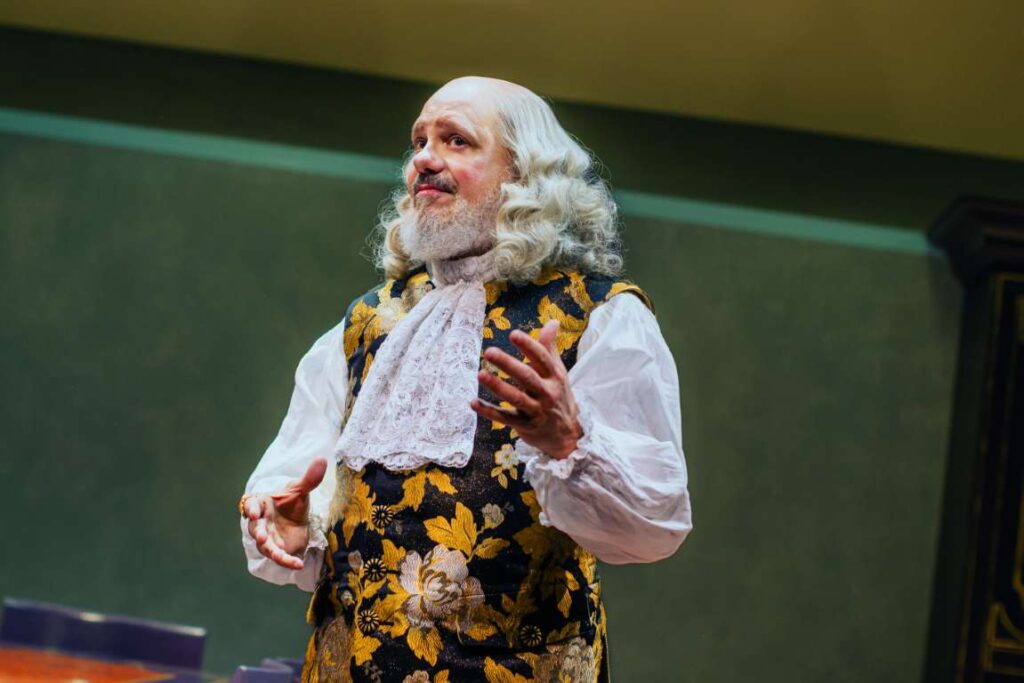
Into this colorful coterie comes the much-anticipated Tartuffe. To our complete surprise, Matthew Broderick plays the role with a light touch, undercutting the noisy antics that precede his entrance. With a lilting voice and ironic intonation, he gives a tongue-in-cheek delivery, making a feast of what Moliere has given him in terms of hypocritical self-deprecation and false humility. It’s a juicy role, and Broderick squeezes every delicious drop from it. Imagine Moliere played SNL-style with a nudge and a wink to the audience, and you’ve got Broderick’s wily, witty, winning performance. In short, it’s a priceless interpretation.
The entire company seems to delight in the many profanities (too numerous and too expletive to mention here) featured in Lucas Hnath’s contemporary, colloquial version, delivering them with relish and brio.
Sarah Benson’s production gains momentum until Tartuffe’s entrance, and thereafter takes off, running wild. In particular, Benson uses the scene changes on dots’ set to stage group movement that borders on the nonsensical (choreography by Raja Feather Kelly). Enver Chakartash’s colorful period costumes are elaborate, with particular praise of Madame Pernelle’s lavish gown in scene one. In the riotous penultimate scene when the tables are turned on Tartuffe, actor Ikechukwu Ufomadu plays two additional walk-on roles wearing different outrageous outfits that he changes in an instant.
Moliere (via Lucas Hnath) leave us with two morals. “People are horrible, they’re all just horrible!” proclaims Dorine, who has been trying to convince the Orgon household of Tartuffe’s hyopcrisy from the get-go.
The second moral is uttered by the clueless Orgon: “There’s nothing left to learn!” he proclaims. In terms of Moliere’s satirical insight into society and human foibles, however, this playful revival proves the contrary.
Tartuffe, by Moliere, in a version by Lucas Hnath, directed by Sarah Benson, at the New York Theater Workshop now through January 25.
Photos: Marc J. Franklin
.