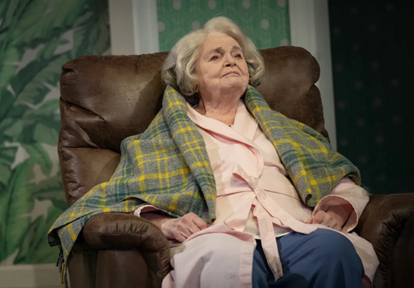
By Alix Cohen
When Jordan Harrison wrote Marjorie Prime, (a finalist for the 2015 Pulitzer Prize), the play emerged among a succession of dramatic pieces concerning analog vs. digital. A.I., Chat bots, humanoid robotics and lifelike holograms were a thing of the future. Today, most are part of our daily lives. Though not as advanced as the playwright’s scenario, it’s not difficult to allow for the possibility, perhaps inevitability of what we see.
85 year-old Marjorie has dementia. Memory unpredictably fades in and out. A thirty year-old facsimile (Prime) modeled after her late husband, has been acquired to keep her company.
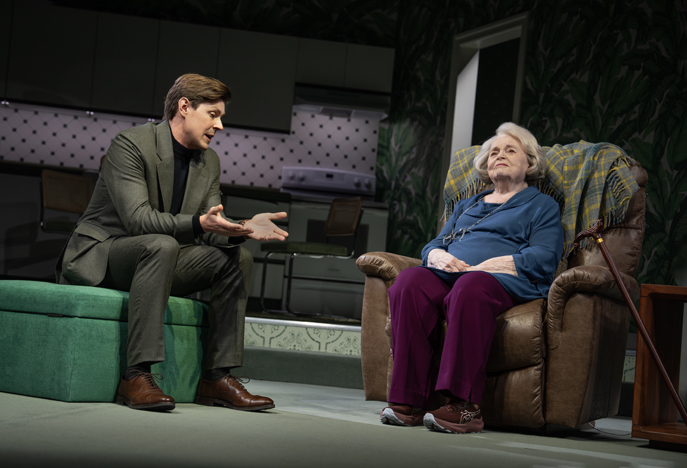
Christopher Lowell (Walter Prime), June Squibb (Marjorie)
In the role, Christopher Lowell is sufficiently stiff and expressionless to seem credible, yet not so much that we’re always conscious of his not being human. Walter Prime utilizes family recollections to increasingly reflect his namesake. He’s attentive, supportive, and caring. Character, of course, is something else.
96 year-old June Squibb is captivating; Marjorie’s aphasia tangible. Aware of differences between the Walters – “I’m not that far gone yet”- she’s caustic and bemused when ‘present.’ Talk encompasses pets, suitors, marriage. Mortification of aging emerges nuanced, authentic.
Occasionally Marjorie breaks silence with irrelevant thoughts or verses from songs like an unattended Furbie.* “If you like it, you should put a ring on it…” (Audience chuckled) Despite serious subject matter, the play evinces humor throughout.
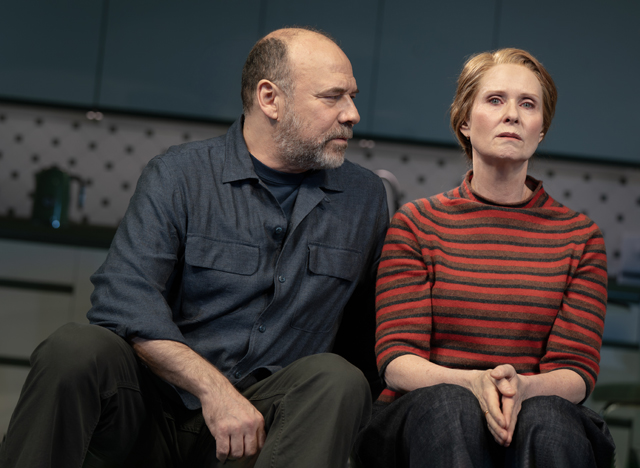
Danny Burstein (John), Cynthia Nixon (Tess)
Daughter Tess (Cynthia Nixon), with whom Marjorie lives, is against a tech solution. She’s short tempered, sarcastic, and possessive – jealous of Walter Prime. Her husband Jon (Danny Burstein), on the other hand, is tender with the octogenarian and as helpful as possible to her computer caregiver.
Chemistry between Nixon and Burstein is pitch perfect. Tess’s bitter, resentful withdrawal and Jon’s emotional intelligence realistically grate. Both accomplished actors inhabit their roles. Jon’s gentle, exhausting attempts at helping the anxious woman he loves are painful to watch. Burstein is a master of understatement. As Tess, Nixon unravels so vividly, we can practically see her nerve endings.
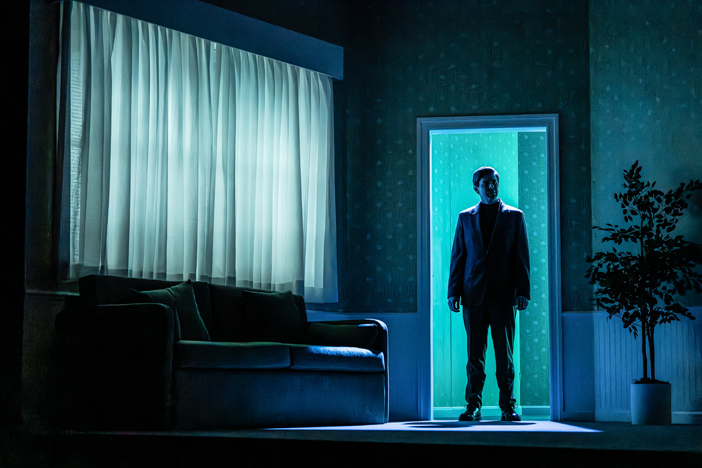
Christopher Lowell (Walter Prime)
When her mother dies, Tess is shattered. The cycle continues as she (or Jon) acquires a Marjorie Prime. The ‘women’ have a push/pull relationship. “I have trouble pretending you’re her. You could smile less. That would be more her … Do you have emotions or do you just remember ours?” Tess asks
“I like to know more…it makes me better…more human,” Marjorie Prime responds, expressing aspirations of a century of literary androids. As written and superbly played by Squibb, she’s warmer, more yielding than her predecessor. Still, Tess can’t forgive perception of a lifetime of slights.
Jon does everything he can to get his wife back out in the world, but depression keeps her from leaving the house or interacting with others. Tess dies on a long planned trip meant to reignite the marriage. Time passes. The playwright’s ending is as clever as it is unnerving.
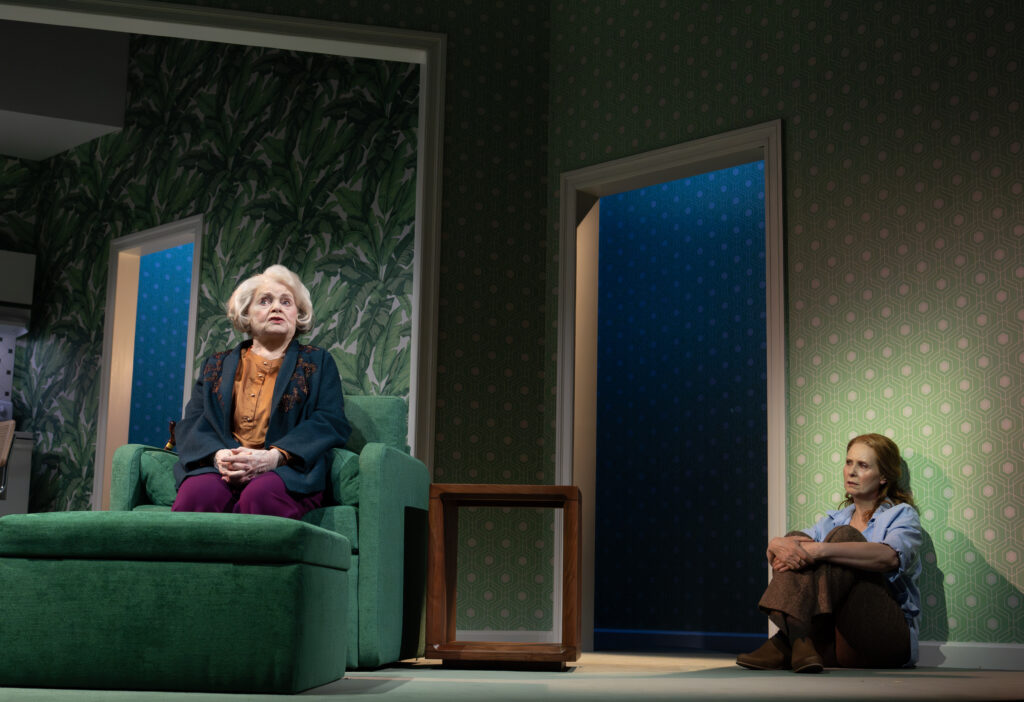
June Squibb (Marjorie Prime), Cynthia Nixon (Tess)
Marjorie Prime is more about human connection or lack of it than it is about technology. It’s about what we choose to remember, share, or erase. We live in an era when people form relationships with A.I. doctors, lawyers, life coaches, friends, even romantic partners. Do these entities salve, solve, absolve, avoid?
A growing trend called “Grief Tech” features companies that create interactive avatars or “grief-bots” that allow families to talk to deceased loved ones whose thoughts and answers have been prerecorded. Subjects are “replicated” in video or holograms with voice, expression, and speech patterns enabling real time A.I.-driven conversations.
Robots are learning, interacting with the physical world. Their thinking is in development. By 2030, A.I. is expected to have transformed daily life with agents and humanoid robots in the workspace. By 2040-50, widespread consumer adoption of versatile, affordable household robots may become a reality.
When you combine the evolution of both, Jordan Harrison’s framing is not so farfetched.
The Second Stage production is excellent, the play moving and discomfiting.
Director Ann Kauffman, with this play from its inception, deftly adds a layer of the unnatural with parenthetic freeze frames of Primes observing. Adroit pacing allows for naturalistic thought and consideration.
Lee Jellinek’s Set is so mono-color/coordinated it looks as artificial as Prime
Lighting (Ben Stanton) adds eerie focus.
Sound Design by Daniel Kluger is outstanding; music especially evocative.
Photos by Joan Marcus
Opening: June Squibb as Marjorie
*Furbies were 1998, interactive, robotic toys that learned words, responded to voices, sang, and chatted. The creatures independently ‘came alive’ when left alone too long.
Second Stage presents
Marjorie Prime by Jordan Harrison
Directed by Anne Kauffman
The Helen Hayes Theater 240 West 44th Street
https://2st.com/