By Carole Di Tosti
Nurses Seek Comfort in an ICU Break Room
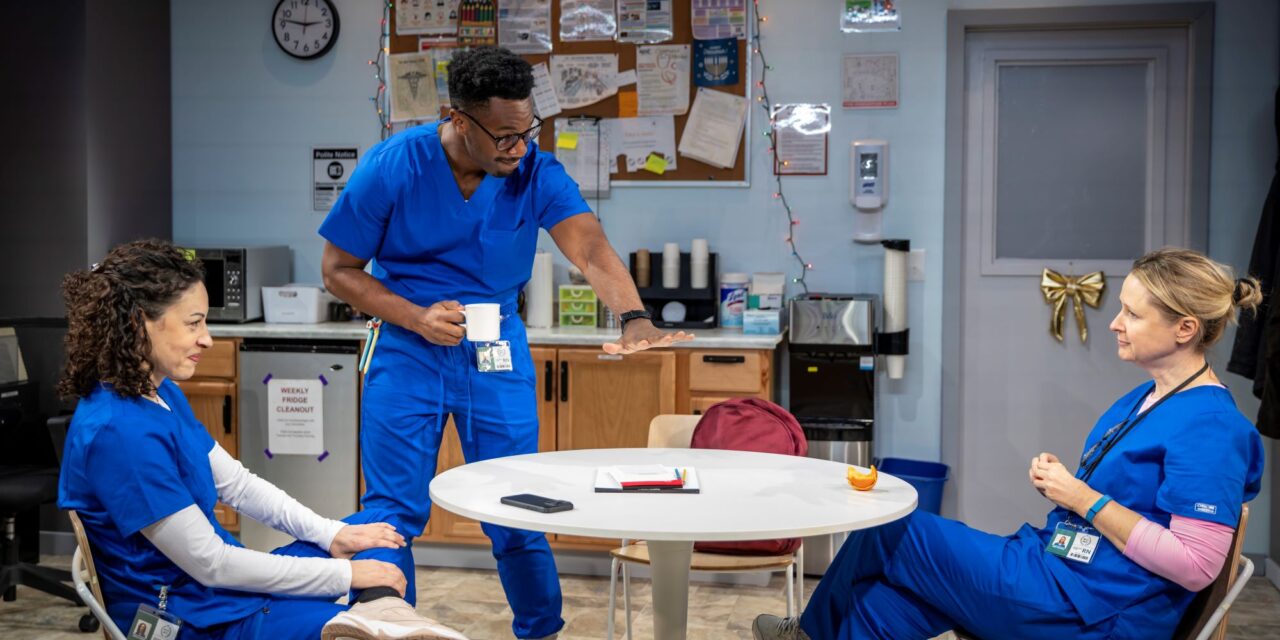
In Scott Organ’s Diversion, staff lets off steam in the break room of a hospital intensive care unit. The break room is also the location where crimes happen and perps use the opioids they’ve stolen. Organ cleverly uses this setting for his 90 minute play in an extended run at the Barrow Group’s Studio Theater until December 21st.
The play’s tensions increase after Organ introduces us to four nurses who we later discover negotiate their own personal traumas, while helping others live or die. Though we don’t see their problems, we hear about them. We also note how they may attempt to overcome their pain with opioids. When their own supply runs out, one or more may have stolen the hospital’s medications to satisfy their addiction. However, the program monitoring the opioids can’t be bypassed if drugs are diverted.

The conflict
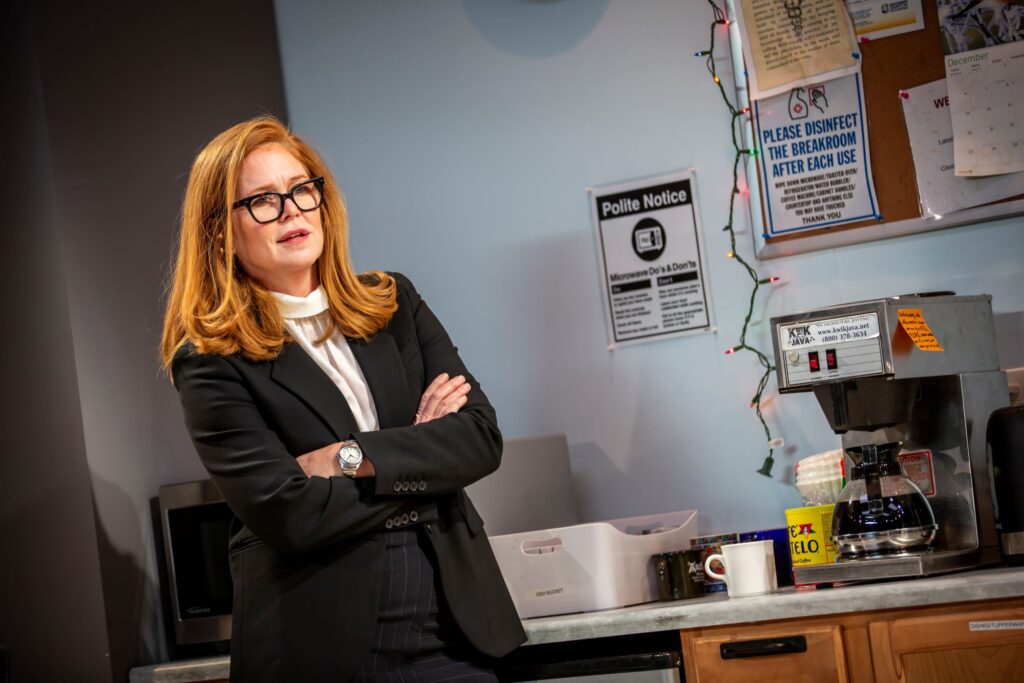
We learn of the conflict when the head nurse Bess (Thaïs Bass-Moore) tells the staff that their unit has been targeted. One or more of the nurses or doctors have diverted drugs. Bess offers to get the individuals into a program to clean up. However, they must quietly come to her first before the company investigator, Josephine (Colleen Clinton), discovers their identity and turns them over to the police.
Having been through a disruptive investigation 8 years before when medications were taken, Bess shares her distress with the closest members of her staff. She looks to Emilia (Tricia Alexandro) as her “eyes and ears,” since Emilia went through the experience with Bess.
Josephine, a former nurse herself, attempts wisdom and a friendly approach to glean proof she refers to as “data,” by conducting informal conversations with staff members. From her perspective, all are suspects. Each may have diverted. She will not stop until she catches the thief or thieves.
The suspects
The youngest and least experienced nurse, Mandy (West Duchovny) keeps late hours. Always exhausted, she naps in the break room. The only male of the group, Mike (Connor Wilson), shows his hand when he discusses the street value of a fentanyl patch. The edgy, angry Amy (Deanna Lenhart), insults Josephine publicly to her face. Hypocritically, she shares the compromising life problems of other staff members with Josephine behind their backs.
Emilia, the kindest, most compassionate of the group recently negotiated a divorce. Recovering from the psychological stresses of working through COVID’s long hours and extraordinary emotional demands, she never complains. However, Emilia tells Amy that Josephine’s presence adds to their stress, when they should be able to take their breaks from ICU high anxiety in peace.
The playwright reveals the addict
Time passes and no one confesses. However, Organ reveals the addict at the end of Act I. Instead of judgment, Organ’s sympathetic characterizations and the actors’ acute ensemble work create empathy. We easily identify with the individual. In Act II, when they still do not confess, we understand the great cost to their career. Suffering regrets and self-recrimination, they try to handle their addiction on their own, unsuccessfully. When Josephine closes in to identify the culprit/culprits, Organ allows us stand in their shoes as a good person, stuck in a tunnel of pain and darkness with no way out.
Scott Organ’s poignant, suspenseful and humanly engaging drama has strong elements of comic relief. We appreciate the relationship dynamic among the nurses which is both tense and humorous.
The subject matter is current
Importantly, the play’s topical subject matter reminds us that these vital caretakers face their own traumas. It focuses on nurses as the heroes of healthcare. They have been underestimated, underappreciated and, like military veterans, ill-used without proper support. Of course, whether we acknowledge it or not, the opioid epidemic remains front and center in light of our failing healthcare system. Sadly, the broken system cannot endure more impactful cuts to Medicaid and possibly Medicare.
Though the production might have run without an intermission to heighten the suspense, director Seth Barrish incisively shepherds the excellent cast for maximum understanding and empathy. The set, costumes, props and lighting cohere with what one imagines of a hospital ICU break room for staff, who seek its respite without gaining comfort, especially since they are suspects of an investigation that can have no happy outcome.
Diversion
The play runs 95 minutes with one intermission through December 21, 2025 at The Barrow Group Performing Arts Center, Studio Theater (520 8th Ave, 9th floor). Barrowroup.org