By Stuart Miller…
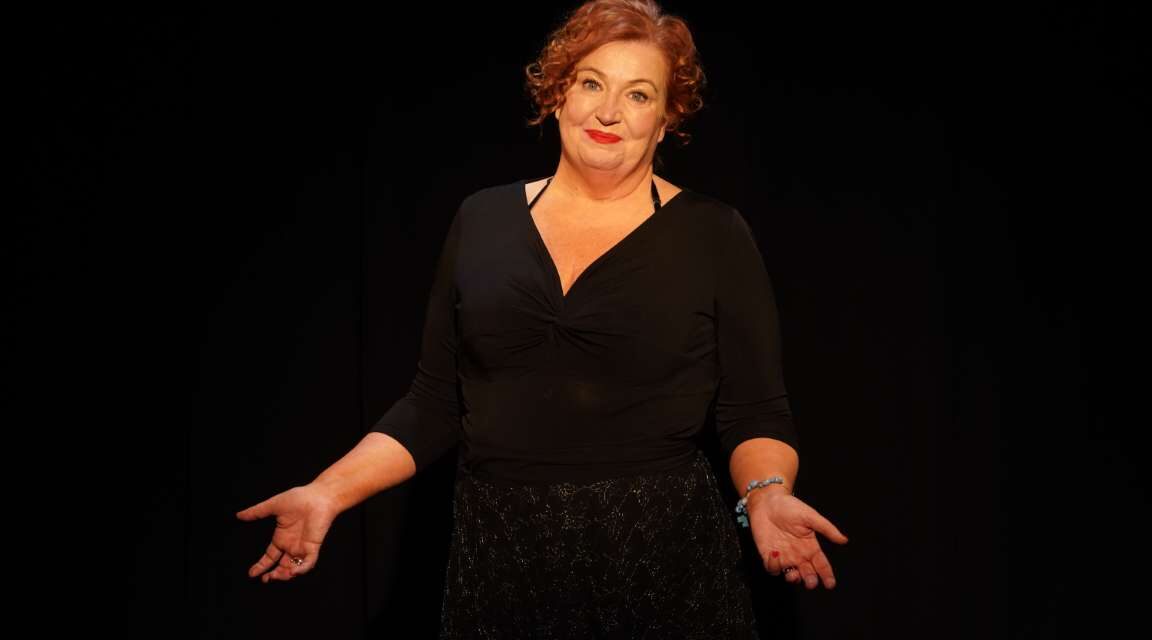
Storyteller Mary Kate OFlanagan shares her life and her love of storytelling in a memorable one-woman show
In “Making a Show of Myself” Mary Kate OFlanagan walks onstage and jumps right into a story of dating disasters, starting with her ex, who’s an expert in insensitive behavior. She regales us with her first try at internet dating back when she was in her 30s: there’s the 18-year-old who swears he’s mature enough but says he just wants loads of sex and then the man she falls for… only to have to investigate her own values when she learns he’s wheelchair bound… only to fall for him and have him ghost her after he learns who her best friend is… only to find out from her best friend that the man was married.
It’s an amusing anecdote that’s well told which is no surprise since the Dublin-born OFlanagan is a Grand Slam Champion Storyteller at The Moth in both Ireland and Los Angeles. But OFlanagan is after more than laughs and empathy. For her the tale is not just comedy gold but is ultimately about the unwavering support of her best friend on her journey through life.
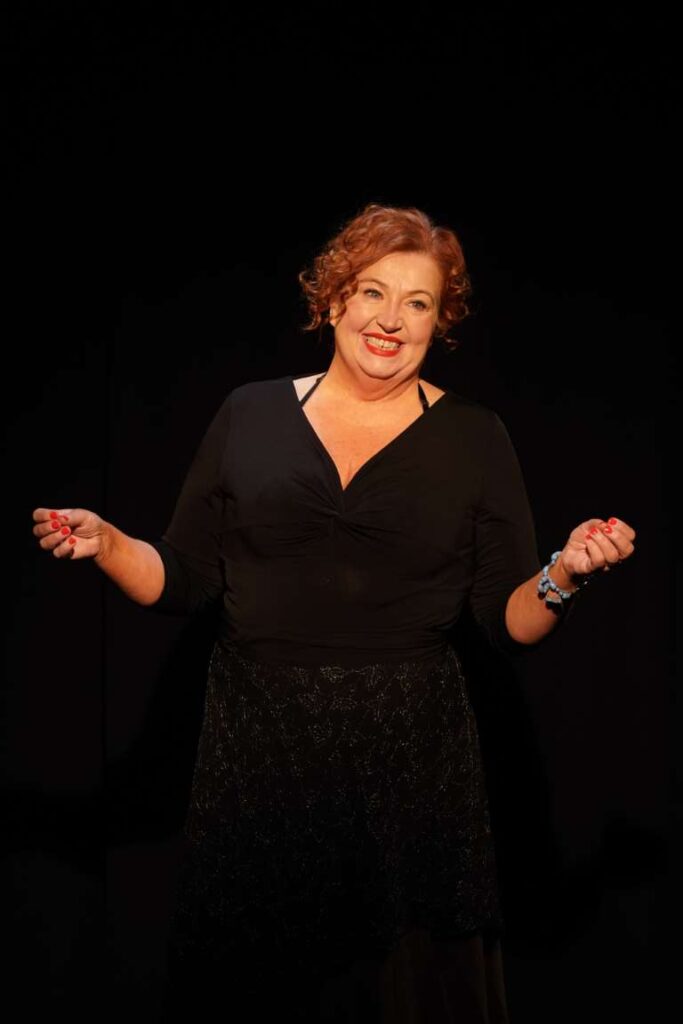
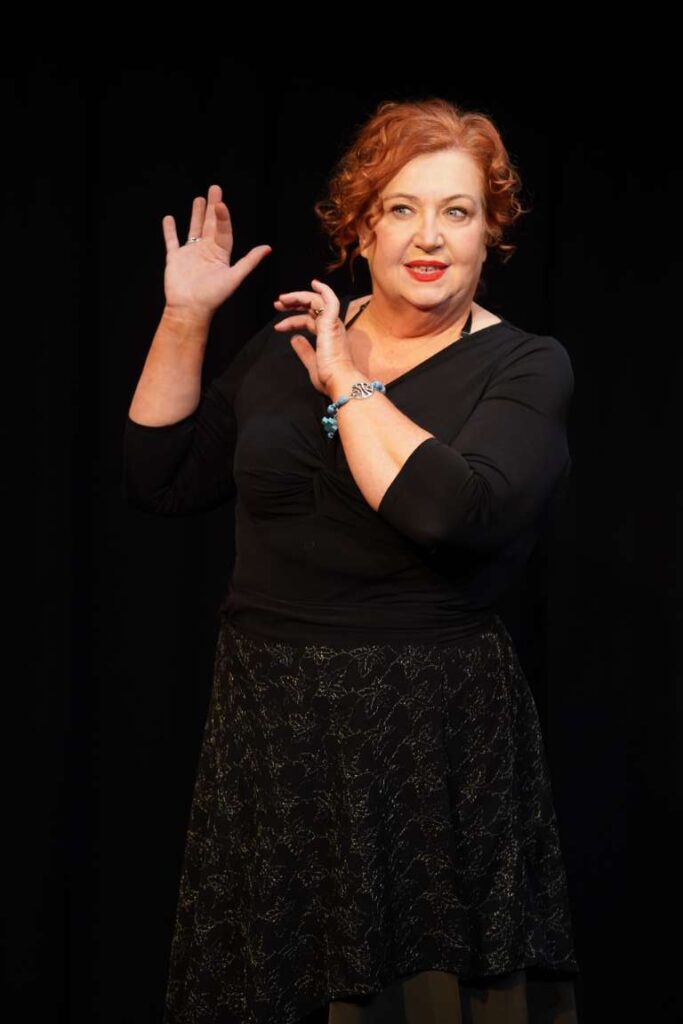
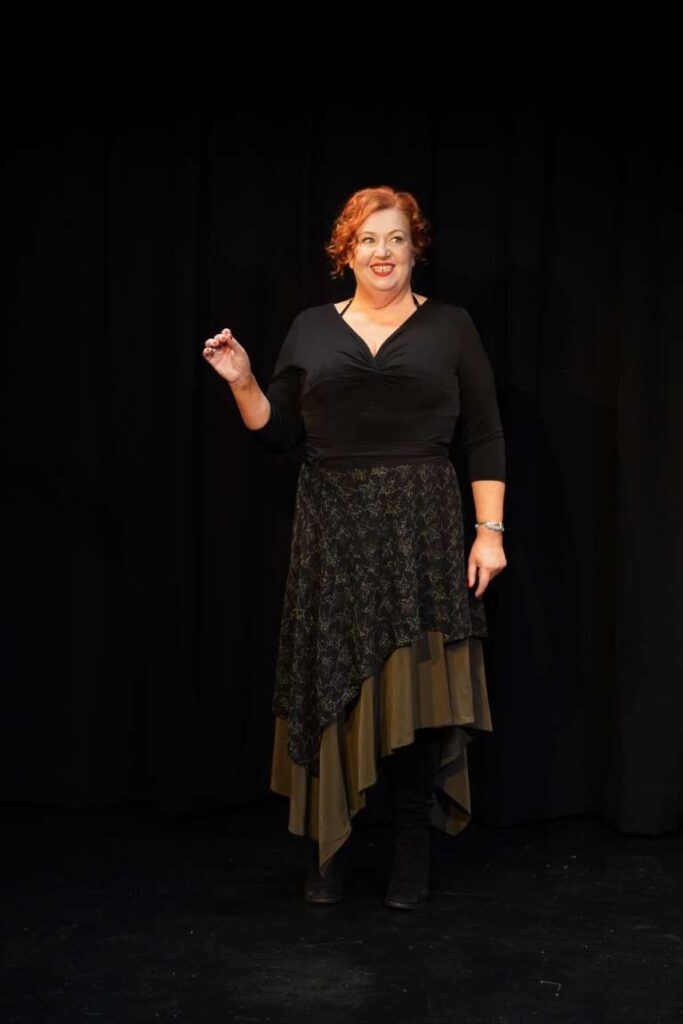
“Making a Show of Myself,” which played all over Ireland before earning acclaim at the 2025 Edinburgh Fringe, is set on a bare stage in the intimate W. Scott McLucas Studio Theatre downstairs at Irish Rep. But with her words, OFlanagan builds a full, richly textured world, filled with laughter and tears, struggles and success, nimbly carrying us through her life experiences.
And what makes this a play, not just a half-dozen memorable life experiences is the way OFlanagan weaves those moments together with musings on the nature of storytelling itself. OFlanagan, who teaches screenwriting and works as a script doctor, tells us storytelling is her religion. And she wants us to understand why stories matter to humans, how they create connections and forge a sense of compassion, which is perhaps needed more than ever right now. Everyday life always yields stories, but especially our struggles, she says, noting that extreme pressure can yield diamonds.
She also wants us to see the way we shape our stories and the way the stories we tell others and ourselves shape us, our lives and our sense of self.
The stories were shaped with director Will O’Connell, who is also credited as a dramaturg; OFlanagan has said the show was never written out, allowing her to feel more in the moment as she goes– a more polished, actorly delivery would serve the material better but the naturalistic approach preserves a sense of conversational intimacy.
Her stories bend towards the positive, the hopeful, a triumph of spirit, which is clearly how she sees–and wants us to see– life in general and her life in particular. Her story of moving to London to find work starts with a poor and lonely young woman struggling to fit in but as she takes chances and handles her disadvantages and blunders with moxie and grace, she finds her way. Between stories she also breaks down the way we structure our telling of stories and hers are expertly crafted, as is the night as a whole.
That London story is framed by a letter her father writes to her upon her departure from Ireland and her eye roll reaction and ends with her gratitude for that letter as she steps out into her life.
But that glimpse of her father also echoes later on when she tells the story of her father’s sudden death, and the huge void it left for her and her five sisters; one highlight of that story is how the traditional Irish undertaker was mortified at the idea of six sisters acting as pallbearers but the women, raised by their parents to be independent and strong, refused to budge.
There’s a moving story about her grandmother befriending a young German prisoner-of-war in England during World War II, a bond that continued through letters for decades after; that story ends with a teenage OFlanagan on a family trip in Germany finding the former soldier’s home and forging a new connection. That story and the lessons OFlanagan learned from her grandmother and mother, resonate with the show’s centerpiece, a long story that starts with her trip as a volunteer to help in French refugee camps a decade ago. While there she teaches an African teen with no family and forms her own special bond. The story features dramatic twists and turns en route to a surprising ending. The long and winding road it takes reflects her philosophy that if “it feels like you’re suffering needlessly. I’m here to tell you that’s because the story isn’t over yet.”
The only story where OFlanagan falters is the finale, in which she reveals that she lost her voice in her twenties and was told by a speech therapist that the physical issues were ultimately brought on by trauma. OFlanagan makes clear she was sexually abused without saying it explicitly or providing any details or context. But she also tells us she rejected the idea of talking it through in therapy and instead embarked on a lifetime of alternatives, from yoga to tree-hugging.
That refusal to honestly confront her own story is strange for a woman steeped in story but especially because while she is now thriving and happy, she justifies her decision from decades ago in a way that doesn’t quite ring true. Still, that sense of denial reveals something about her, proving her own point about the way we shape ourselves through our stories and the way our stories shape ourselves.
“Making a Show of Myself” is playing at Irish Rep, 132 W. 22nd Street, through March 1st. It runs 75 minutes
Photos by Carol Rosegg.