By Carol Rocamora….
Zieger’s adaptation is a great surprise: entertaining, arresting, intense, and deeply moving.
Rarely have I encountered an adaptation of a theatre classic, wherein the playwright/adapter has actually grabbed hold of the play, embraced it, and made it their very own.
Such is the striking case of Anna Ziegler’s modernization of Antigone, now playing at the Public Theatre. Ziegler performs the double feat of telling Sophocles’ story and her own at the same time. Her intent is right there in the title: Antigone (This Play I Read in High School). For Ziegler, this effort is more than theatrical – it’s personal.
Yes, Ziegler preserves the spine of Sophocles’ story – or most of it. In the original, Antigone is the daughter of Oedipus and Jocasta, both of whom have died tragically. Her brothers, Polynices and Eteocles, have just killed each other in a fight over who will succeed their father as the ruler of Thebes. To fill the power vacuum, Creon (Jocasta’s brother and Antigone’s uncle) becomes ruler, and his first act is to bury Eteocles in a royal ceremony. But because he considers Polynices to be a traitor, he refuses to give his body a burial, and leaves it to rot in the open air. Horrified at the injustice, Antigone proceeds to bury it herself. Consequently, Creon punishes her for breaking the law and seals her in a cave to die.
Thus, the body of Polynices is the central symbol of Sophocles’ original.
That’s where Ziegler makes a definitive change to the story in her modernized version. As the Chorus tells us in the opening scene of Ziegler’s adaptation: “I’m going to tell you a different story… about Antigone’s body … and also your own.”
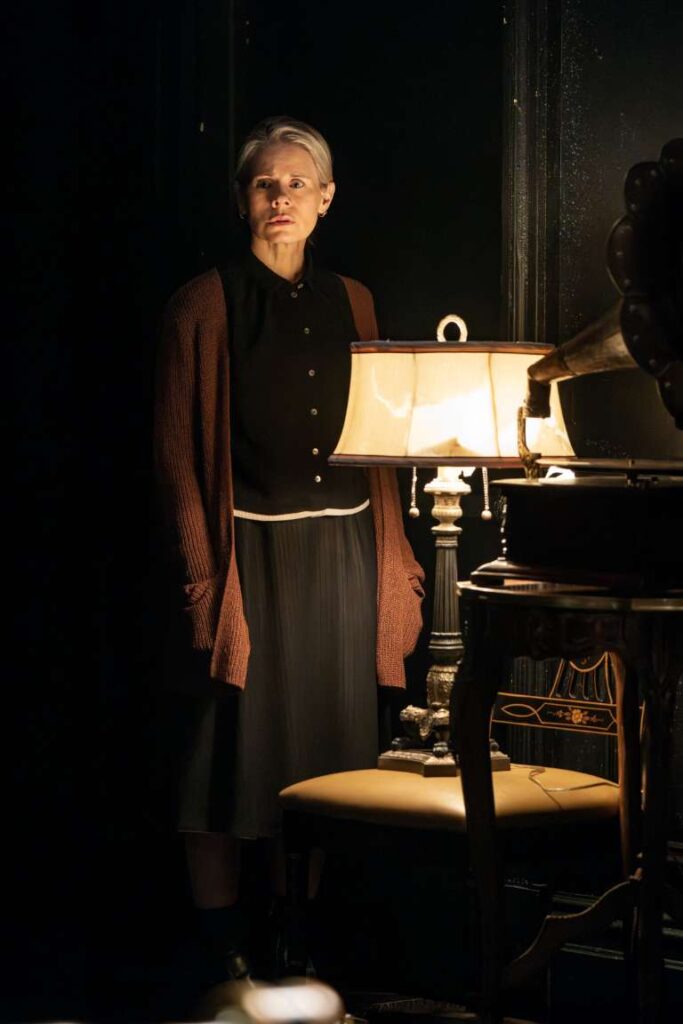
Then comes the next striking change in Ziegler’s adaptation. The Chorus is not a group of voices, as it was in ancient Greek drama; it’s one character (played by Celia Keenan-Bolger) and it’s the voice of the playwright herself.
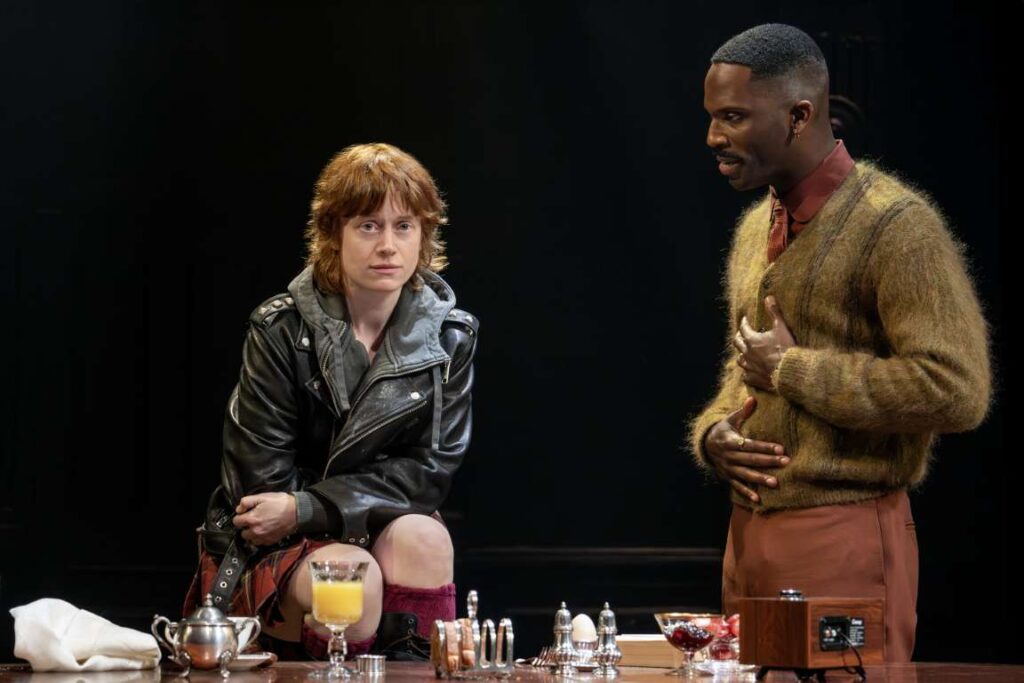
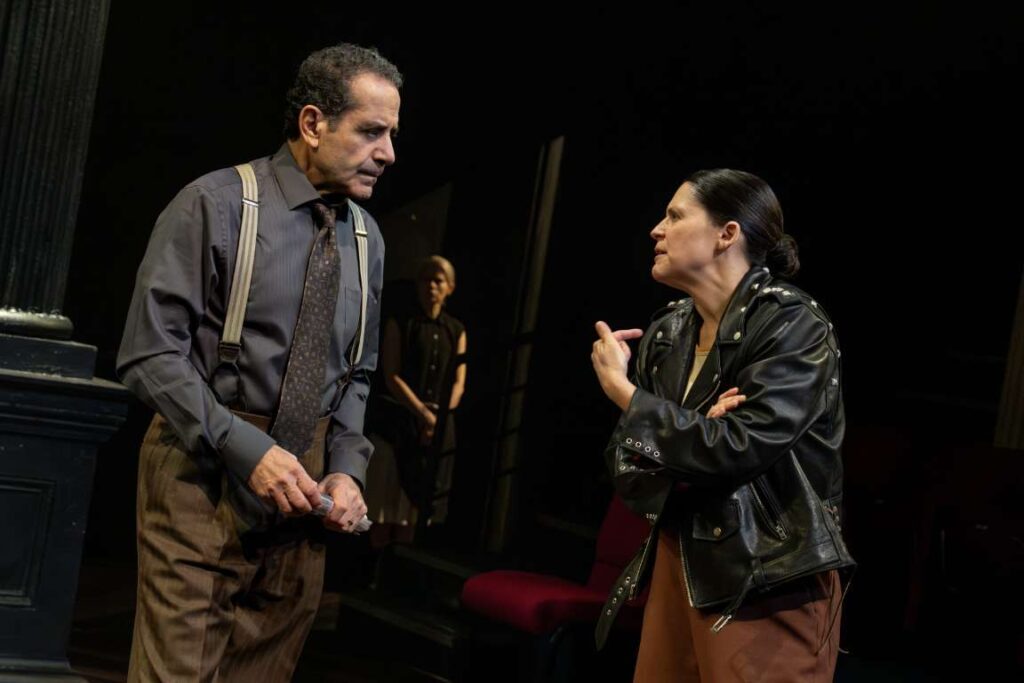
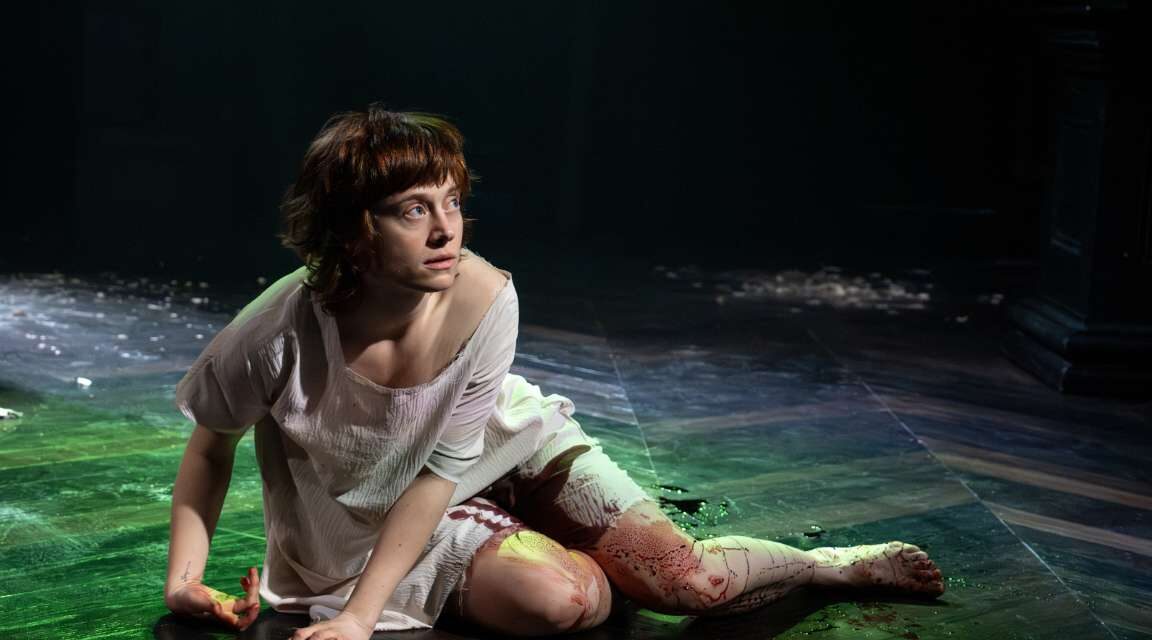
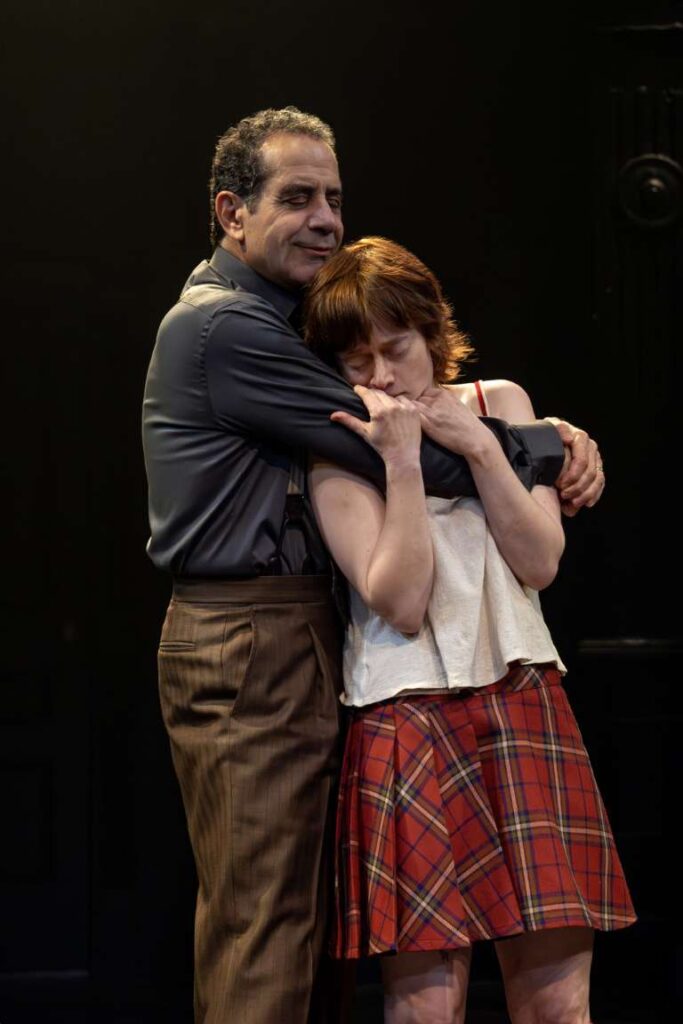
In Ziegler’s modernized Antigone, the title character, as played by Susannah Perkins, is a feisty, free -thinking spirit. She’s engaged to Haemon (Calvin Leon Smith), Creon’s son, and unlike Sophocles’ version, has affection for her uncle, who calls her his “favorite niece”. But when she discovers that she’s pregnant with Haemon’s child, she feels that not only is she unworthy of the kindly Haemon, she’s also not ready for motherhood. So she visits a clinic in Thebes, where she has an abortion. When Creon (played by Tony Shalhoub) finds out, he becomes enraged, and (back to the original story) punishes her with death.
What’s so engaging about this adaptation is the intense, genuine, personal investment that Ziegler makes in telling the story. From the very first scene, Ziegler speaks through the character of the Chorus, describing the first time she read Antigone in the 10th grade. “Here was this girl who says whatever she wants, does whatever she wants, on pain of death,” says the Chorus (Ziegler) with astonishment and admiration. Thereafter, the Chorus (Ziegler) describes the numerous times she encountered Antigone over the decades. “She took my hand and never let go,” she says, describing how she read the play again in college. It kept reappearing in her life – in her twenties, when she found a copy in a pile of free books, and in her thirties, when she saw it in an amateur production. Then, in her forties, pregnant, on a plane, the Chorus (Ziegler) found herself sitting next to a teenager reading a copy of the play. “It seems like it’s all about her brother’s body, a man’s body,” said the girl. “Is it even about her?”
That did it. Ziegler found the essential question to pose in her version of Antigone: namely, who controls a human body? The state, or the human being? (In Sophocles’ version, it’s Polynices’s body; in Ziegler’s version, it’s Antigone’s body… a woman’s body).
Clearly, Ziegler’s adaptation has a strong feminist agenda. I’m not a fan of didactic plays, but this one is different. It is truly heartfelt. Indeed, the sincerity and intensity of this playwright’s feelings seem to justify her owning it.
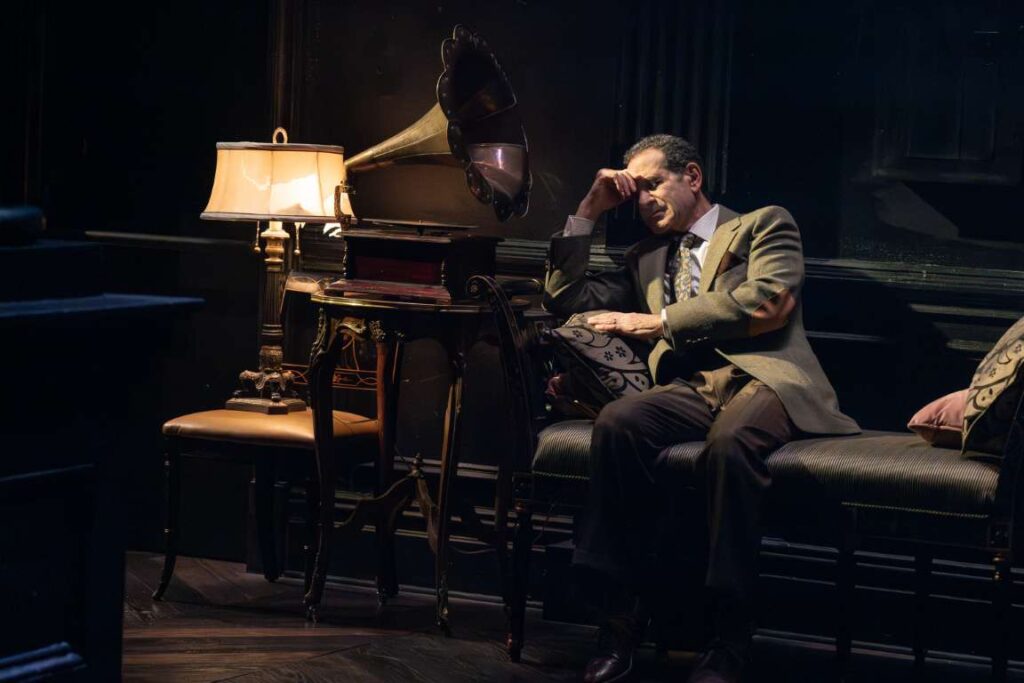
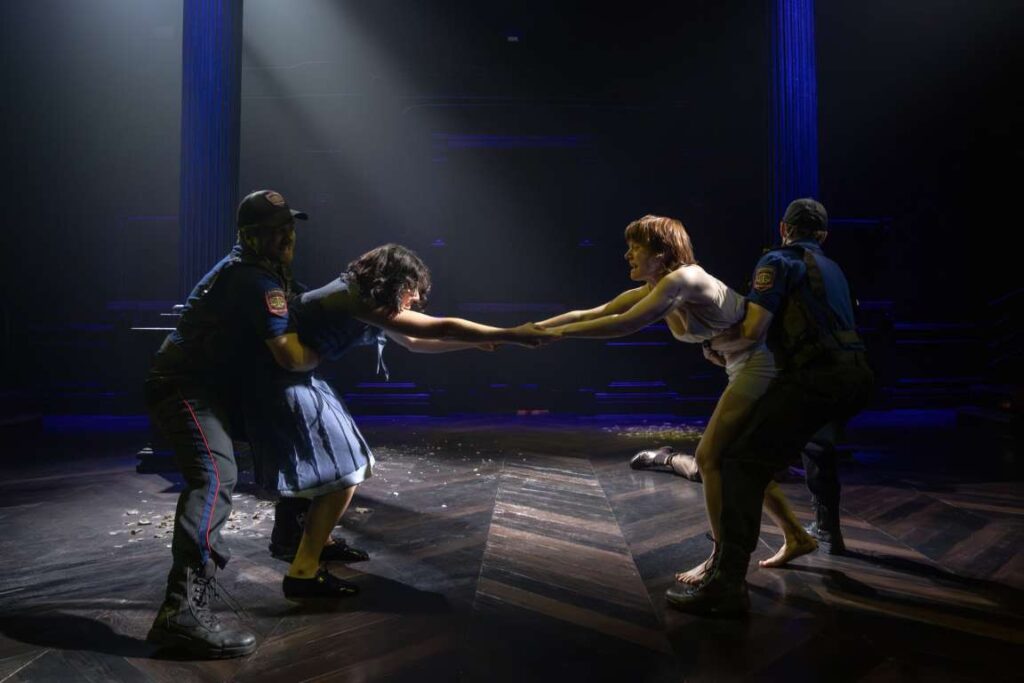
Moreover, – and here’s the surprise – Ziegler’s modernized adaptation is tremendously entertaining. The actors have great fun with the roles they are given. As Antigone, Susannah Perkins is tattooed, pot-smoking, profane, and promiscuous. The charismatic Tony Shalhoub brings his celebrated comedic skills to role of Creon, a new leader who takes his job seriously but suffers from insecurity and awkwardness at the outset. He can’t even figure out how to manage his bodyguards, the so-called Three Cops (aka “three stooges,” played by Katie Kreisler, Dave Quay, and Ethan Dubin). There is humor in the most unlikely scenes, including the exchange between Antigone and the wise-cracking manager of the abortion clinic (also played by Katie Kreisler):
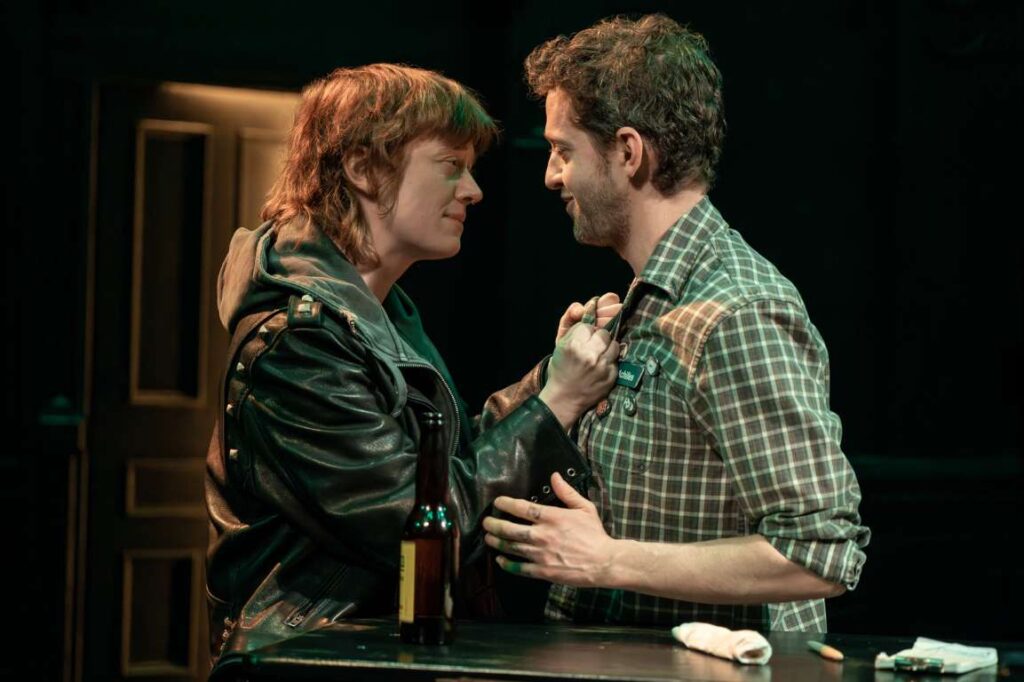
Ziegler’s dialogue is relaxed, colloquial, and filled with disarming, playful references – to literary works like Jane Eyre and Death of a Salesman, and quotidian elements like pilates classes and Uber drivers. It’s directed expertly and briskly by Tyne Rafaeli on David Zinn’s spare stage.
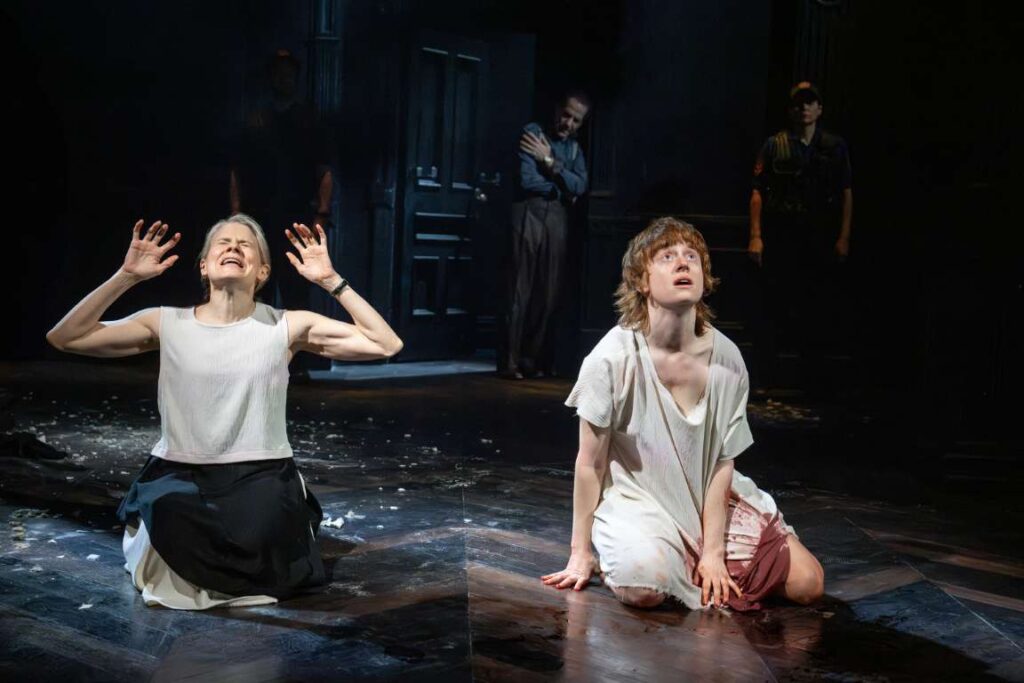
Ultimately, Ziegler’s adaptation turns serious. At the top of Act Two, Antigone has had the abortion, and Creon sends his Cops out to find her. “If I can’t control my own niece, I cannot – and should not – be trusted with a city,” he declares with new-found confidence. In a high-stakes confrontation between Creon and a blood-drenched Antigone, the core theme of Ziegler’s adaptation is stated; namely, the laws of the state vs the freedom of the individual (again, echoing Sophocles’ theme). Creon offers Antigone a “deal”: apologize publicly, admit wrongdoing, and she’ll be free. But Ziegler’s Antigone won’t, claiming that her body belongs to her, not the state (indeed, just as Sophocles’ Antigone fought for the dignity of Polynices’s body.) “If there can’t be fair laws, let there be no laws at all!” Ziegler’s Antigone declares. In this definitive moment, she’s supported by Ismene (Haley Wong), her gentle sister, declaring: “I won’t let my body be a stage on which men wage their wars or forge their laws” (echoing a line from Ruined, Lynn Nottage’s 2008 play on the similar theme of men in power and their treatment of women).
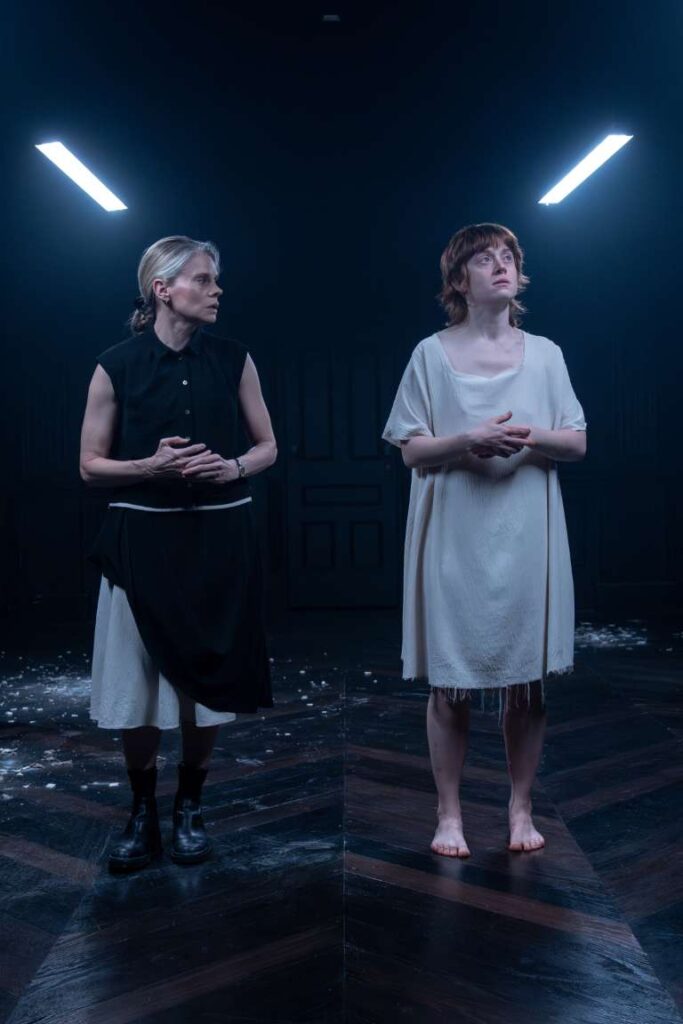
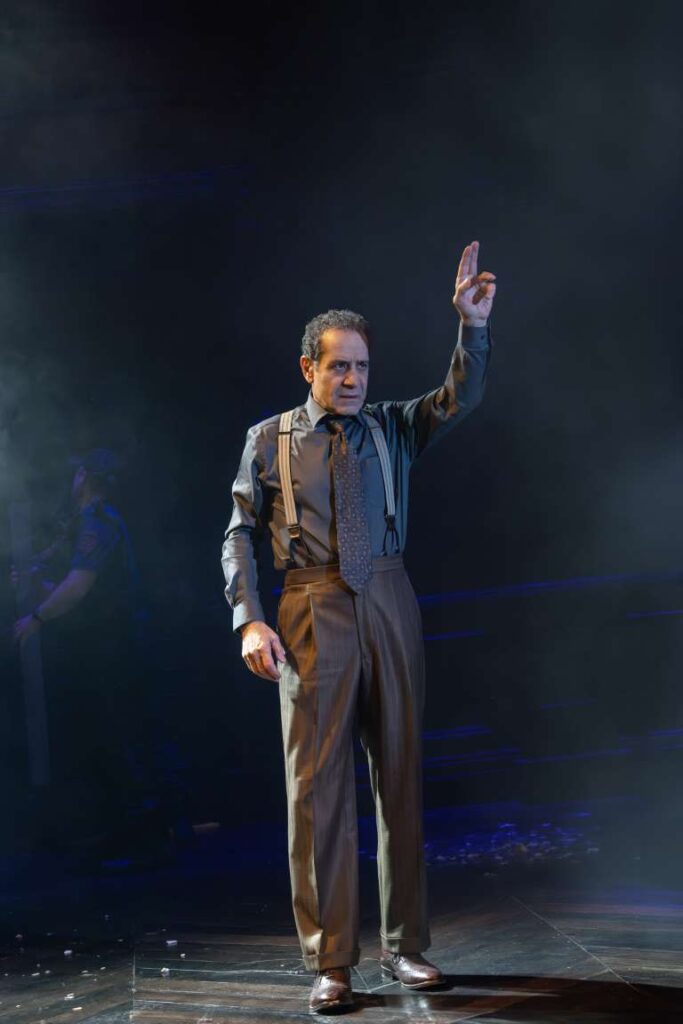
Ultimately, the tragic denouement of Ziegler’s Antigone echoes Sophocles’ own. Like Sophocles, Ziegler offers a message. In the words of Antigone: “I only wanted to make a difference. I’d like to make a difference now. My suffering has to have meant something.”
In the end, to her credit, Ziegler acknowledges the huge risk she took in writing this deeply personal adaptation. As all the characters gather on stage in the final moment, Creon asks: “I don’t understand what story this is.” One of the “Cops” replies, articulating Ziegler’s intent: “Now you know how it feels. To be a girl in the world.”
Antigone (This Pay I Read in High School), by Anna Ziegler, directed by Tyne Rafaeli, now playing at the Public Theater until April 5.
Photos: Joan Marcus