By Stuart Miller…
This play by two deaf actors finds creative ways to tell its story even when the protagonists can’t reach each other.
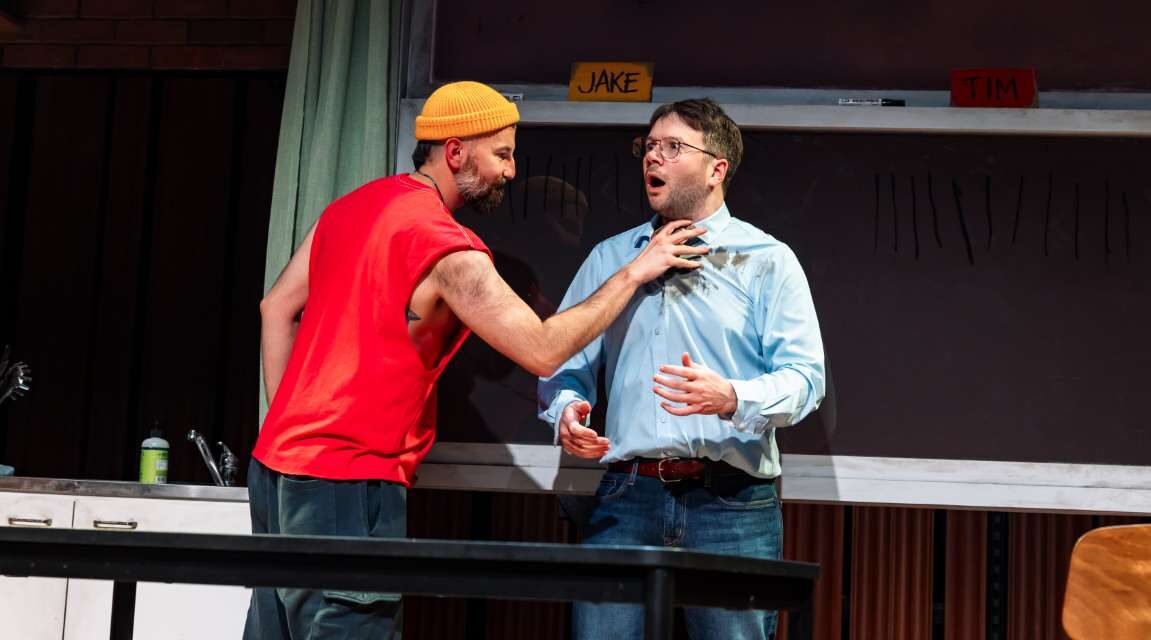
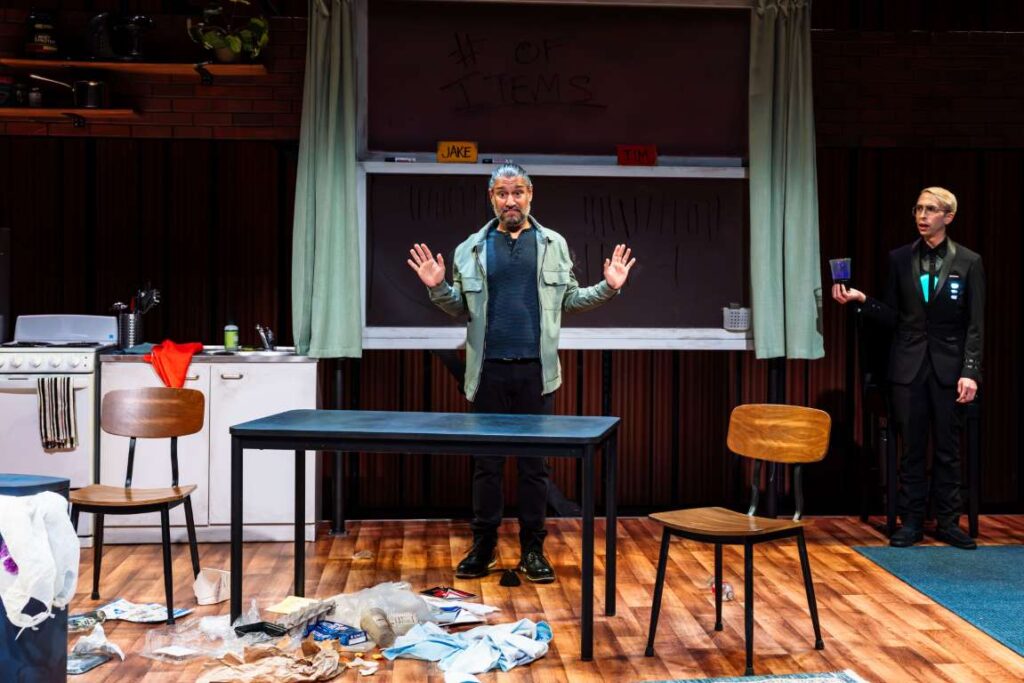
In the early moments of “Trash,” two roommates, Tim and Jake, bicker about Jake’s eating habits before moving on to their bigger argument– who is supposed to take out the trash. This proxy war for all their differences may seem like a classic “Odd Couple” setup but there’s more beneath the surface than Oscar against Felix antics.
The plot of “Trash” is fairly mundane on paper. Jake, who has a corporate job, sneers at Tim’s “hustle” mentality and at the idea of Tim doing chores in order to pay less than full rent. Tim looks with disdain on Tim’s penchant for fancy shirts and playing by wider society’s rules and he also bears resentment toward Jake for getting him in trouble with the police. Meanwhile, Jake is pining after a woman named Carly (Rebecca Spiegelman) with whom he had a fling and Tim is hiding the fact that he’s sleeping with the landlord (Vishal Vaidya) in exchange for covering his share of the rent. (That started as a hustle but has developed into a full-fledged but fraught relationship.)
But what makes this play sing is not the story. It’s that while Tim (Morrill) and Jake (Joey Caverly) never stop talking throughout the 100-minute play, they never utter a word.
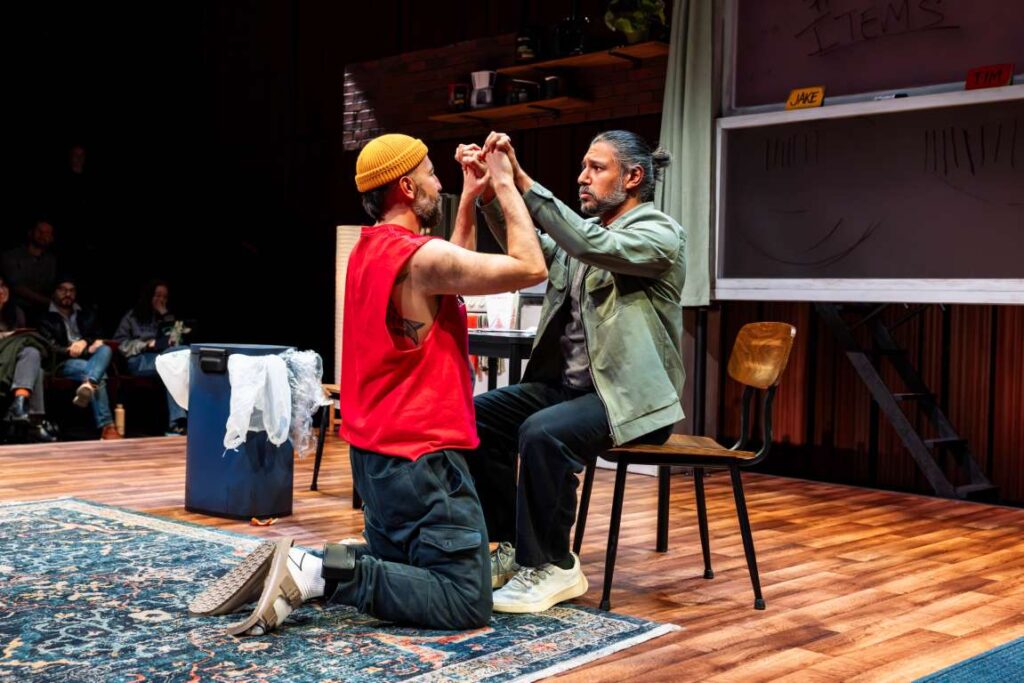
Both characters are deaf and speak to each other using American Sign Language. And the show immerses us in Tim and Jake’s world, the traumas they have suffered, the wounds that linger and the different ways they do or don’t engage with hearing society.
There are plenty of moments of dialogue that fly past those of us who don’t understand ASL (the audience seems to be fairly mixed), but the play, co-written by Caverly (best known for acting in “Only Murders In the Buildig”) and Morrill, has several ways of ensuring we understand what’s happening.
For starters, the two actors and ASL itself are so expressive that we often read the emotions even if we don’t get the words. Certain ideas– especially sexual ones– are also easy to understand. Also, the characters often write on whiteboards or a window or a phone (with supertitles on screens for the latter)– they do this to communicate with the hearing people in the play and also to interact with the audience, who is often asked to referee between the two by holding up signs to vote Yes or No or, at one point, Tim or Jake.
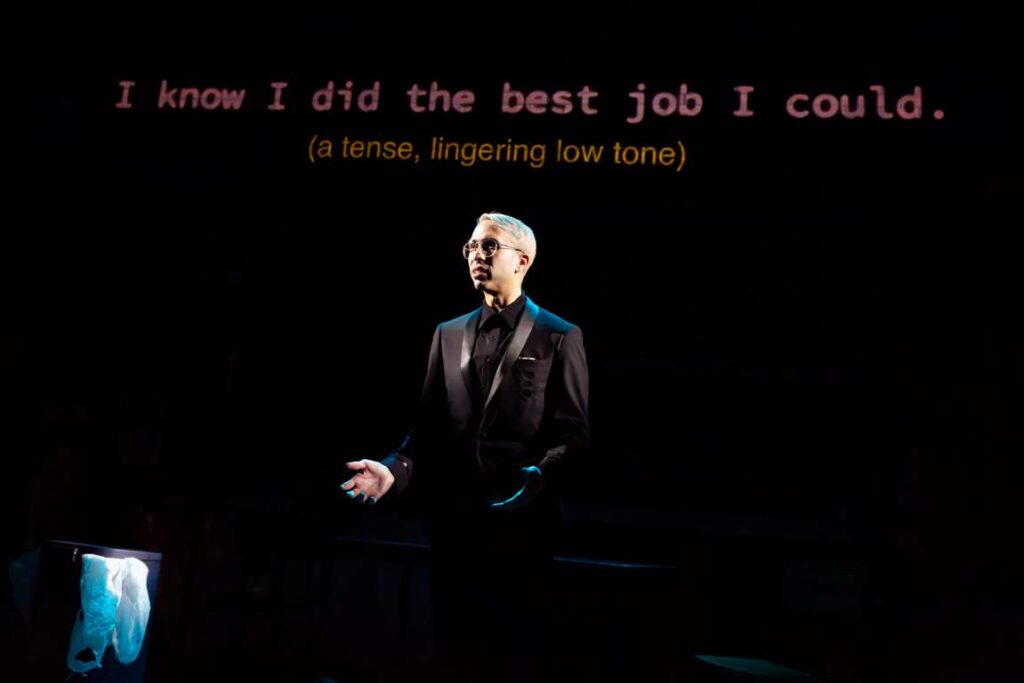
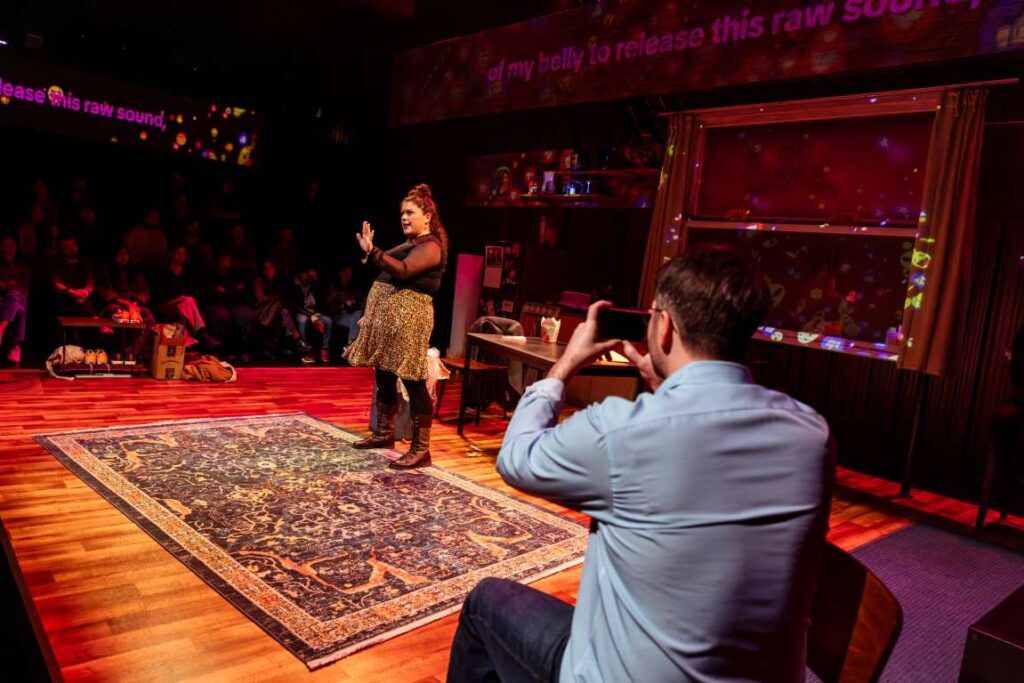
But the most ingenious invention is a jukebox Chris Ogren) that sits in the corner. Put a dollar in and this old machine that Jake saved comes to life; to the hearing characters it’s playing– actually blasting– music, but for the audience, Jukebox speaks what is being signed so we hear the most crucial moments of conversation.
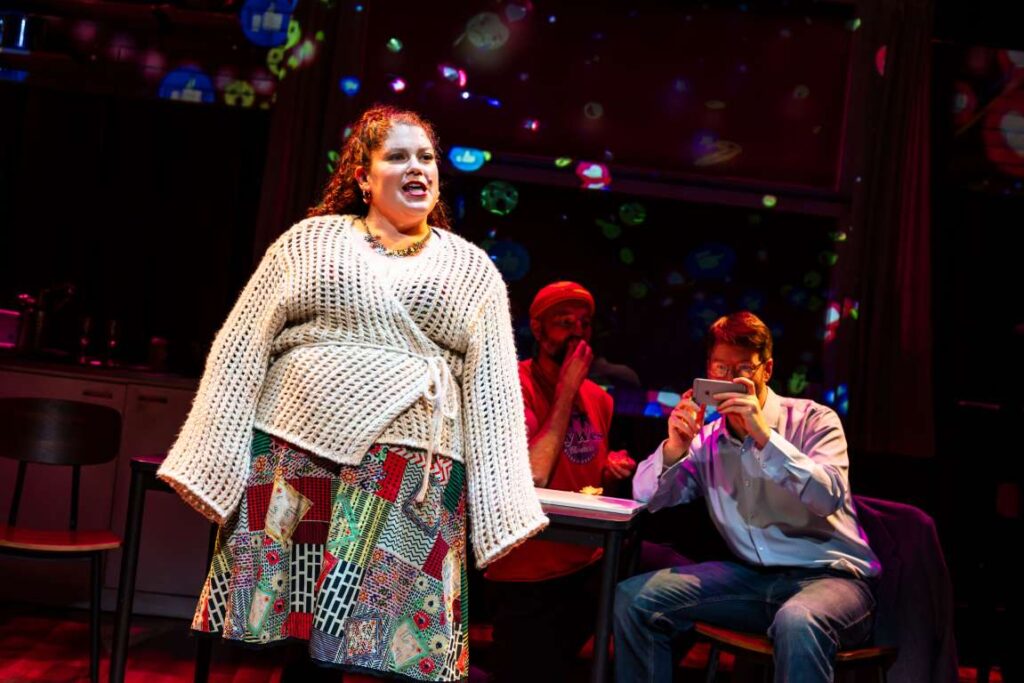
(Both Carly and the landlord are hearing; while Nicholas, the landlord, is fluent in ASL, Carly is a beginner and a social media influencer, who loves having sex with deaf men so she can scream as loudly as she wants without feeling embarrassed.)
There’s also a reveal at the end about how Tim and Jake perceive the audience, an “Inside Out” sort of moment that packs an emotional punch and adds extra heft to everything that came before it.
Morrill and Caverly are excellent, as is Ogren, who is largely deadpan but plenty expressive when the moment calls for it. (Spiegelman overplays a bit too much.) The show is repetitive in parts and too long by perhaps 10 minutes, and there are certain inconsistencies or plot holes (for instance, a finished book doesn’t get published and have definitive sales numbers within a month).

Credit Morrill and Caverly also for not selling out with a pat, happy ending. When the show ended there was only a smattering of people clapping– not for a lack of enthusiasm but because we all joined in with the deaf audience’s way of applauding, waving our hands in the air to show our appreciation to the two writer/actors for inviting us into their world.
“Trash” is playing at PAC NYC, 251 Fulton Street, through March 28th. It runs 100 minutes with no intermission.
Photos: Rebecca J Michelson