By Andrew Poretz . . .
Gabrielle Cavassa is an intriguing young singer with a unique style and repertoire. Though formally trained, she is largely self-taught, and her blend of traditional jazz, introspective pop originals and jazz/pop fusion is quite distinctive. She was recommended to this writer by my brother, Jonathan Poretz, who sang with her when she lived in the Bay Area. She now resides in New Orleans, and the influence of the city’s vibrant jazz scene is quite present in her music.
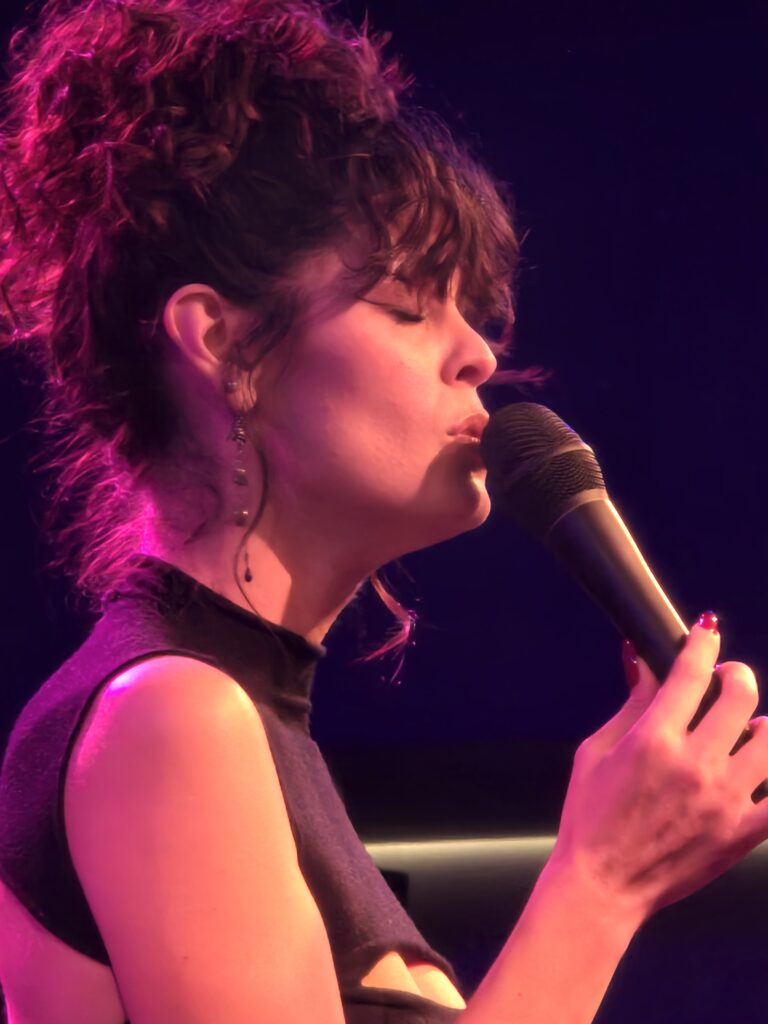
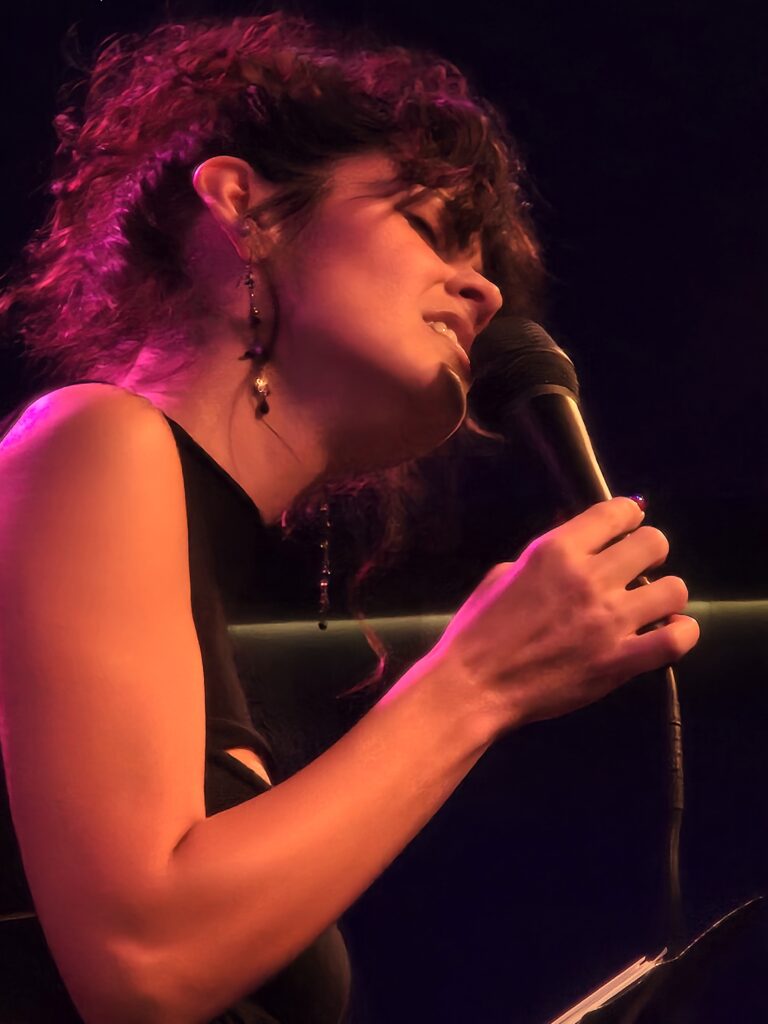
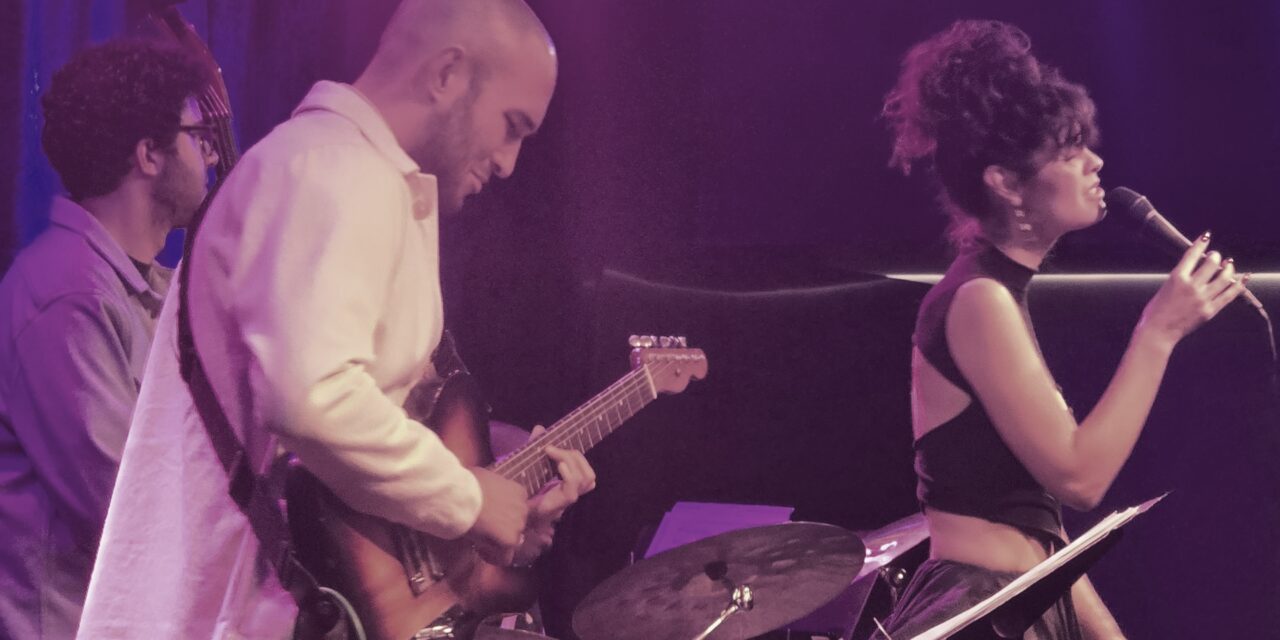
To debut her new album on Blue Note Records, Diavola, Cavassa appeared at Birdland Theater for a packed three-night, six-set run. (Theater Pizzazz was on the scene for the penultimate set.) The tall, stunning Cavassa has a “hippy chick” vibe and a wild spirit edge, with an appealing quirkiness. Combined with her choice of attire, it brought to mind a Gen Z “Annie Hall.” Like any rising star, she had her own merch available after the show.
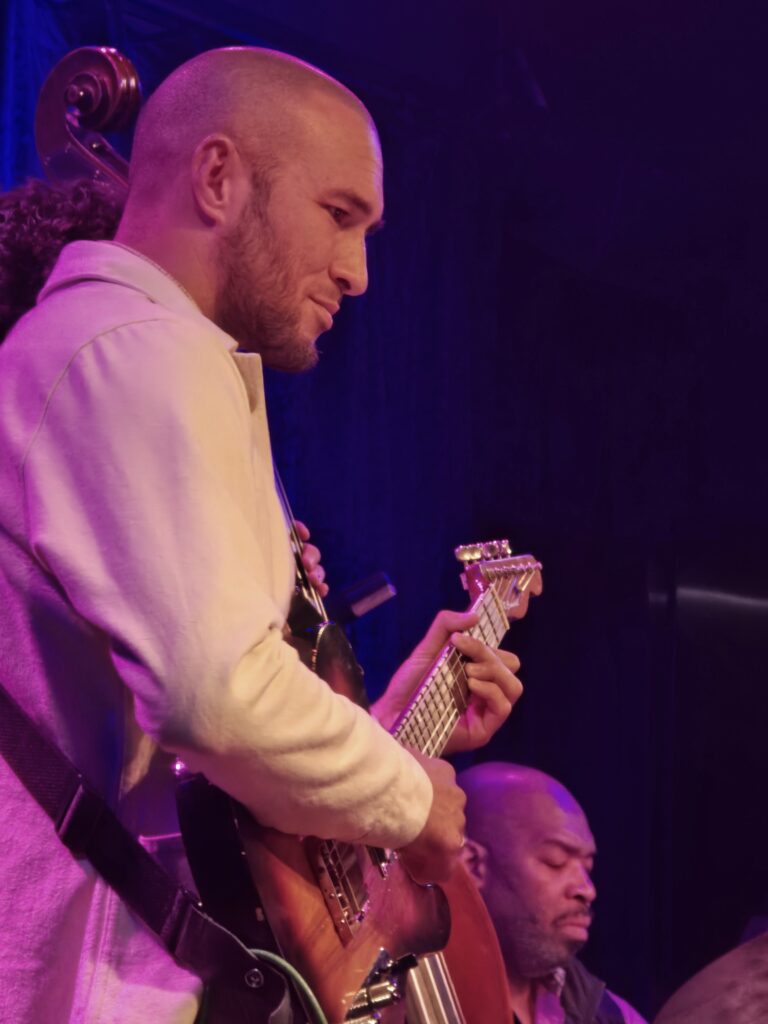
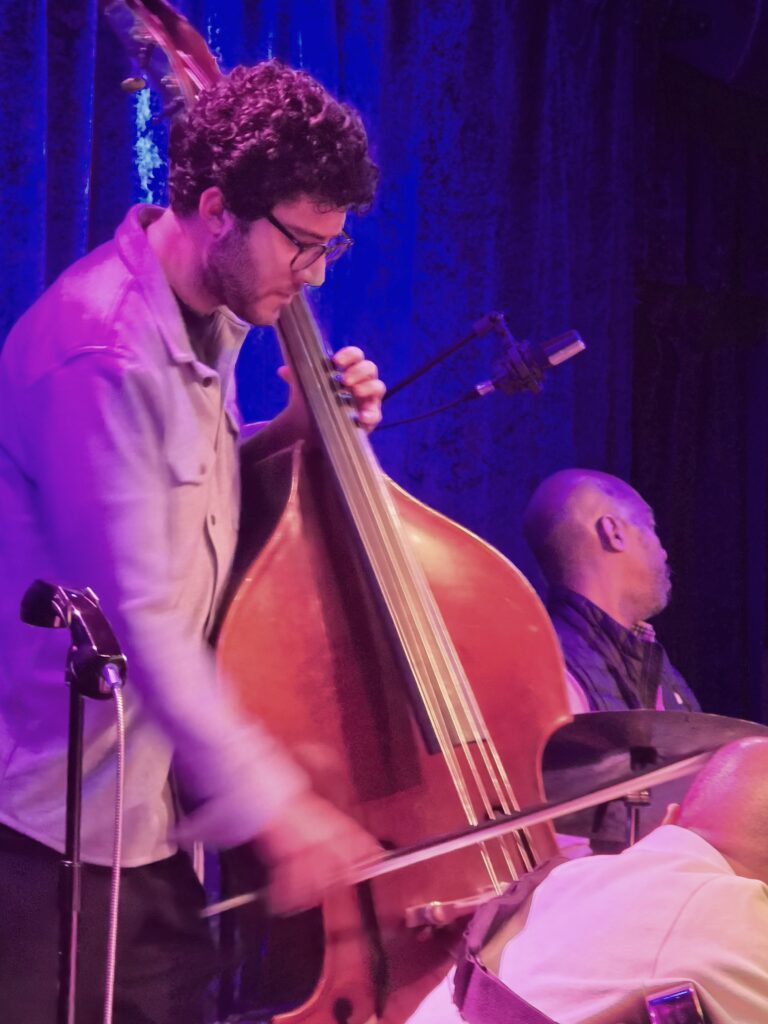
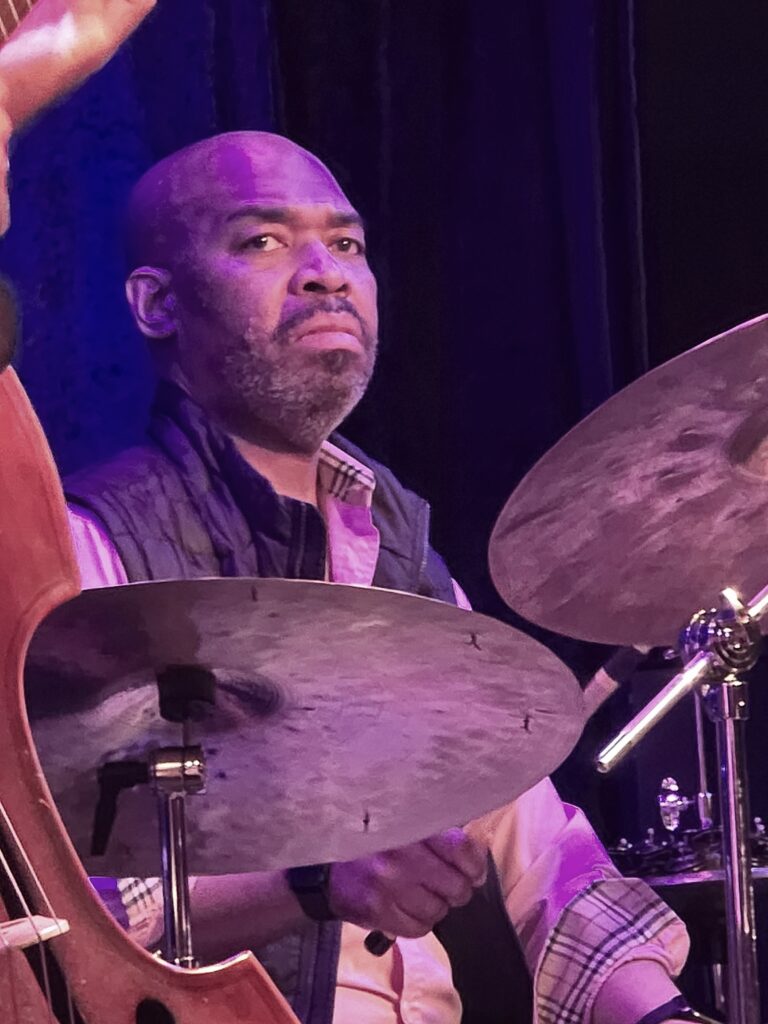
Cavassa’s voice is warm, and has an emotional fragileness to it. She was accompanied by guitarist Gabe Schnider, bassist Lex Warshawsky, and drummer Eric Harland. The set, with very good material and performances, was marred by the amplification of the bass, in particular, and the guitar to a lesser extent. At times, the booming bass amp, apparently set to “11,” made it painful to listen to, at least from the area near the stage wall where this writer was seated. (A friend seated at the high tops near the bar found the volume totally acceptable.) When Schnider and Warshawsky were in bass/guitar duels early in the set on “Bossy Nova,” along with some powerful drumming, I was thisclose to paying my tab and leaving. Sticking it out proved fruitful, as the rest of the set was compelling. (It should be noted that these musicians are top notch; it was only the volume that was an issue.)
The set opened with a long solo guitar piece before Cavassa and the other players kicked in for “Could It Be Magic” (Barry Manilow), which was based on a Chopin prelude. Cavassa has something of an ethereal, almost languid singing voice. On “To Say Goodbye” (Joey and Rory Feek), a slow, lumbering number, she sang as if in a haze. She remarked afterward, “We had to slow it down by double.”
The album’s title song, “Diavola,” written by Cavassa, means “Devil” in Italian. Cavassa introduced it by noting that she uses “Diavola” as a “stand-in” for her most shameful feelings she cannot express. She preceded it with its companion piece, “Angelo,” as in the “Angel” counterpart to her “Devil” shame. She sang “Angelo” in Italian. Despite another painfully loud bass solo, this was quite an interesting segment. “Diavola” opened with a four-note motif. The plodding bass and drum lines contrasted well with her heavy lyrics. The overall effect was quite trippy, like a jazzy “White Rabbit” (aka “Go Ask Alice”). Parker repeatedly played a motif of the song’s title notes, with a very “James Bond” ending.
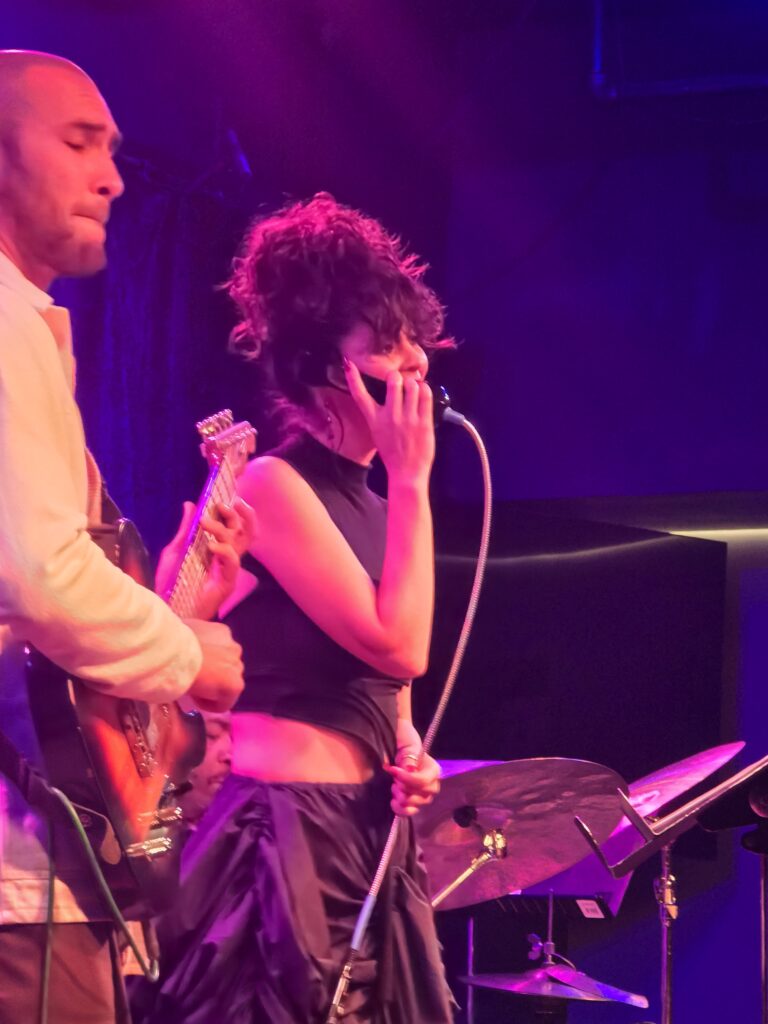
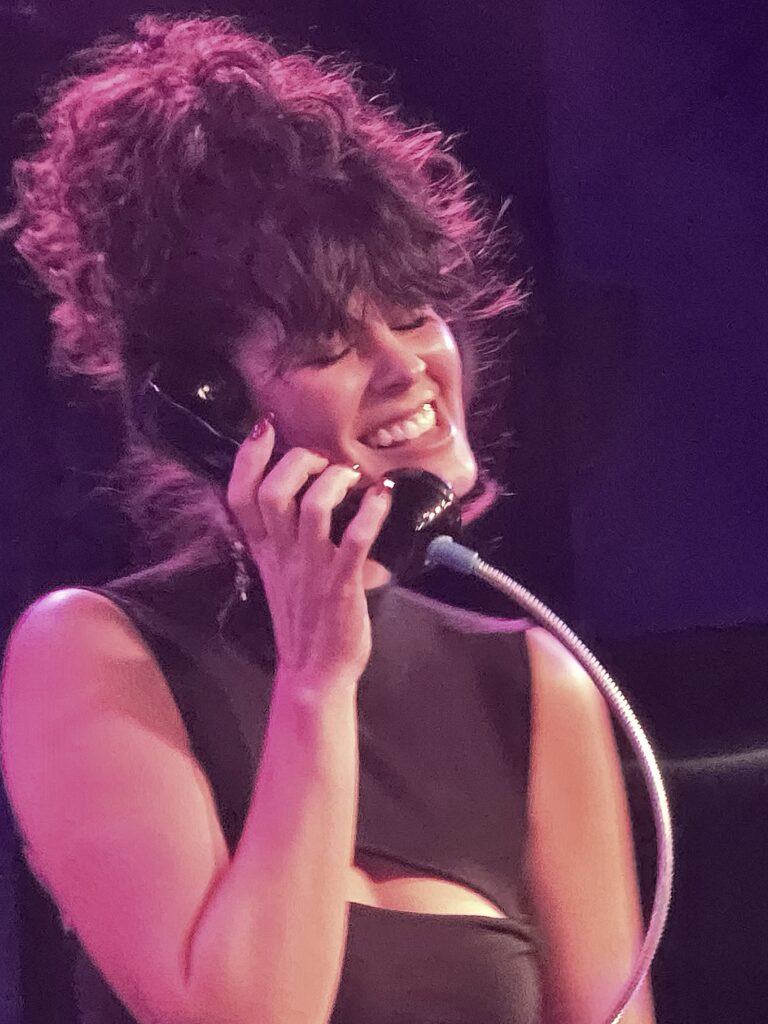
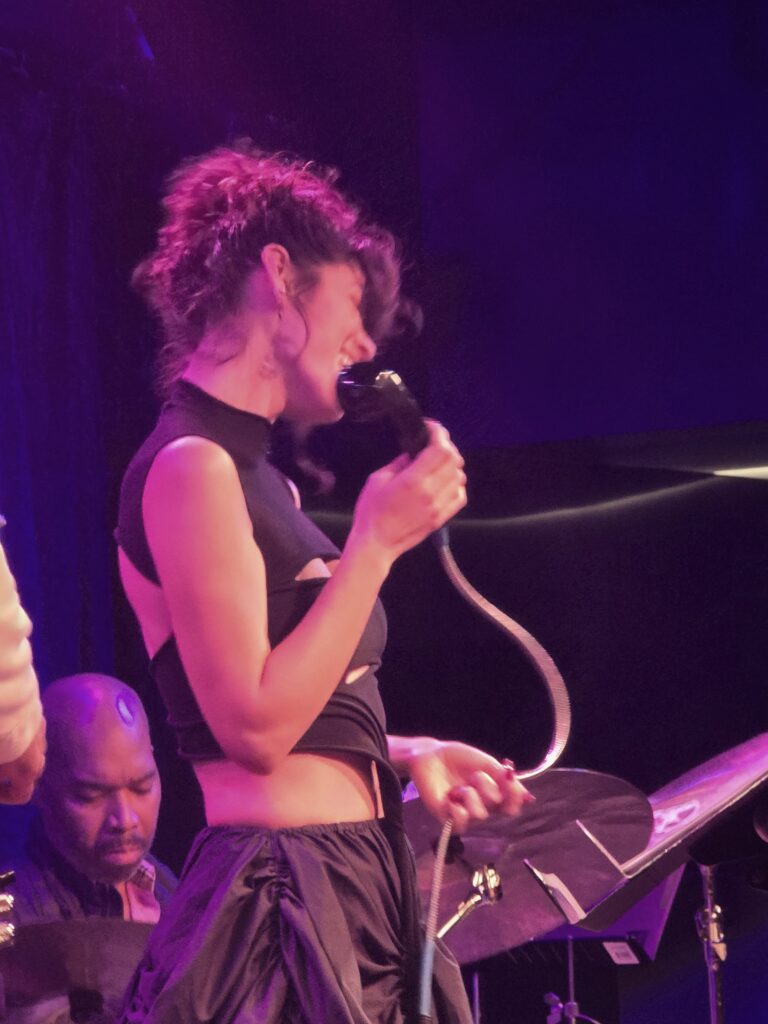
Cavassa turned the Mario Lanza hit “Be My Love” (Nicholas Brodsky/Sammy Cahn) inside out, singing it against a single droning guitar note, created with a looper, and at nearly a dirge pace for several minutes. The single note continued before gradually easing into an ethereal progression, in turn morphing into a truly oddball “Raindrops Keep Fallin’ on My Head” (Burt Bacharach/Hal David). Here, Cavassa used an old-fashioned telephone handset attached to a mic cord as her hand mic, holding it to her face to sing as if she were having a conversation on a landline wall phone in 1985. With some technology assist, it had the sound of someone calling into a radio station back in the day. She was only literally “phoning it in,” and it was a fascinating take. After Cavassa sang the trumpet notes from the original “Raindrops” recording, an actual trumpet player, Andrew Stephens, appeared out of nowhere. This became the beginning of the best and most interesting part of the set.
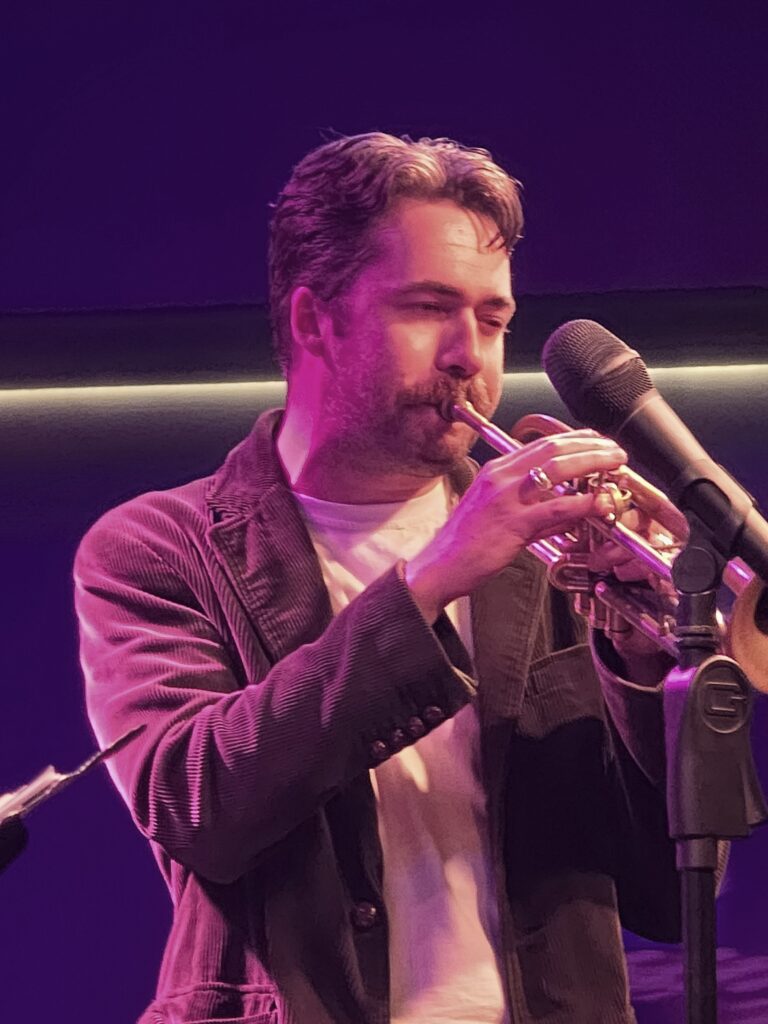
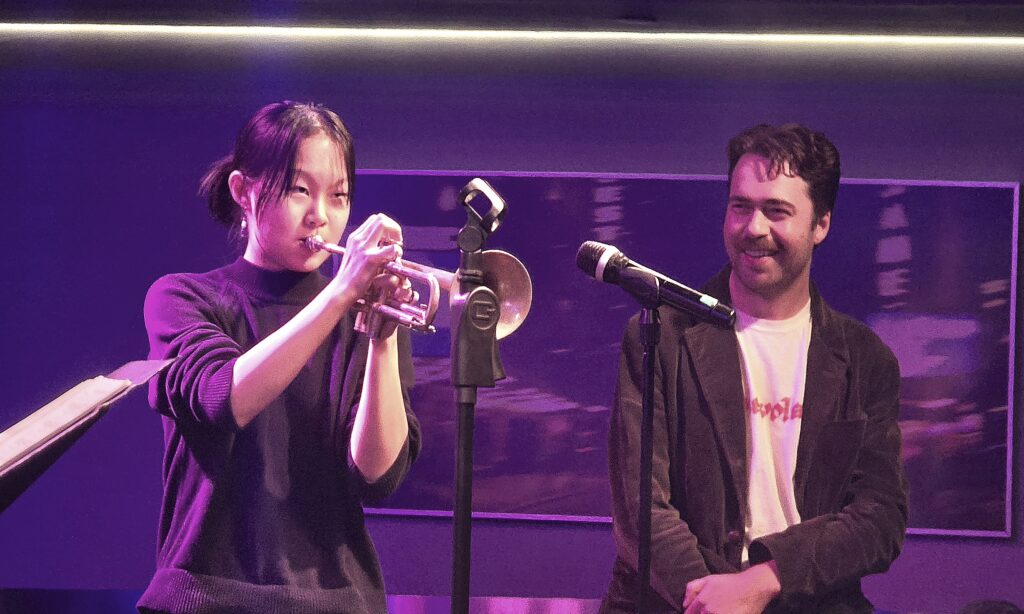
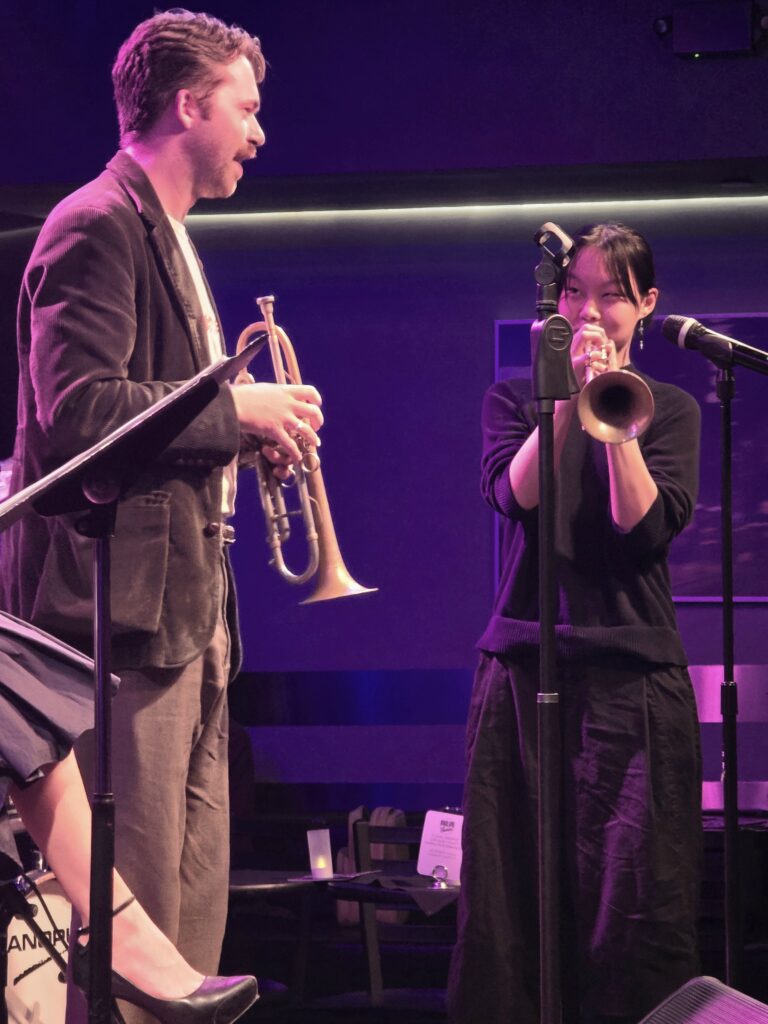
For a spectacular finale, Cavassa turned to her New Orleans influences with an overtly sexual and sapphic “dirty” blues song she wrote, “Blues for Elaine.” It came with a warning advising the more prudish patrons to pay their bill and leave. For this number, with Michael still at the bandstand, she called up another guest trumpeter who was in the audience, Skylar Tang. The two trumpeters took turns soloing and eventually evolved into a sensational full-fledged call and response.
Cavassa should be on anyone’s radar. Forbes calls her “the next major force in jazz.” They might be right.
For more information about Gabrielle Cavassa, visit https://gabriellecavassa.com.
Gabrielle Cavassa’s performances took place on May 1, 2 and 3 at Birdland Theater, 315 West 44th Street, NYC (www.birdlandjazz.com).
Photos: Andrew Poretz