
By Carol Rocamora…
Director Robert Icke dazzles us again with an urgent new adaptation of an immortal classic
Last week in London at the Harold Pinter Theatre, I witnessed a shattering moment in Shakespeare’s Romeo & Juliet that I’d never seen dramatized before in decades of watching that classic performed. It shook me to my theatre-going core.
The moment occurred toward the play’s end, after Juliet takes the sleeping potion to avoid marrying Paris, biding time until Romeo can join her and they can escape Verona together. Seeing her lying in the family crypt, the devastated Romeo mistakes her for dead and takes poison himself. As he sinks down beside her to die, she awakens – and for one cataclysmic instant their eyes meet in shock and recognition, as their respective paths cross tragically between life and death.
Leave it to director/adapter Robert Icke to seize that remarkable sequence of events from Shakespeare’s original, excise it from the text, condense it –and turn it into the most stunning dramatic moment on the London stage this season.
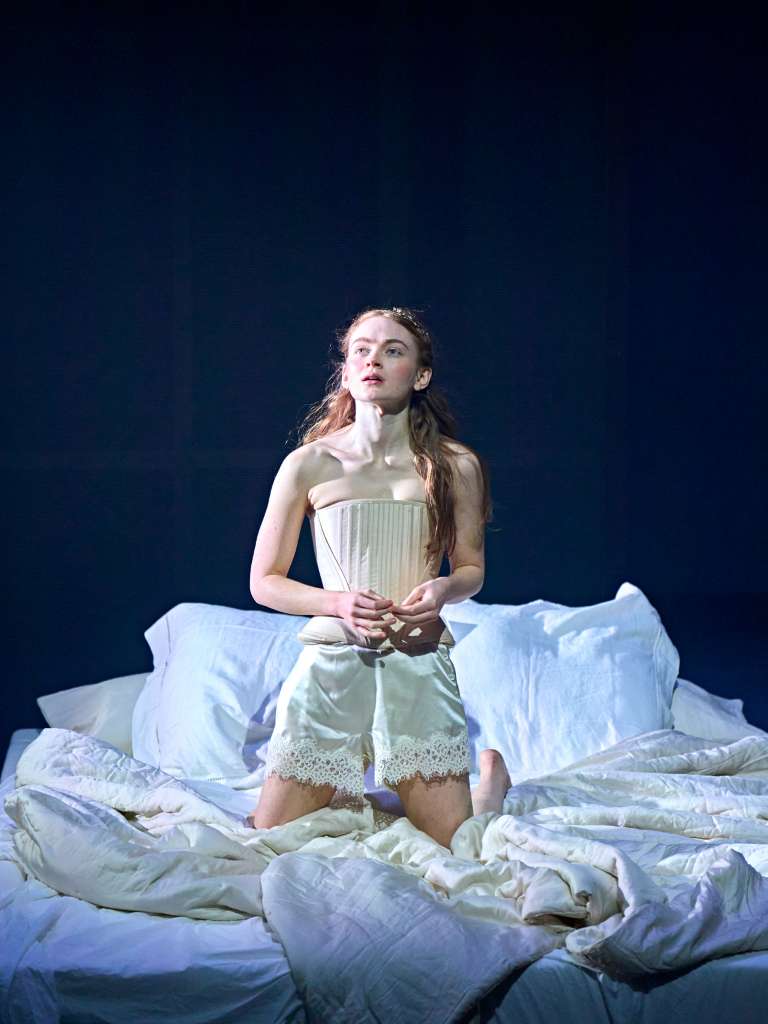
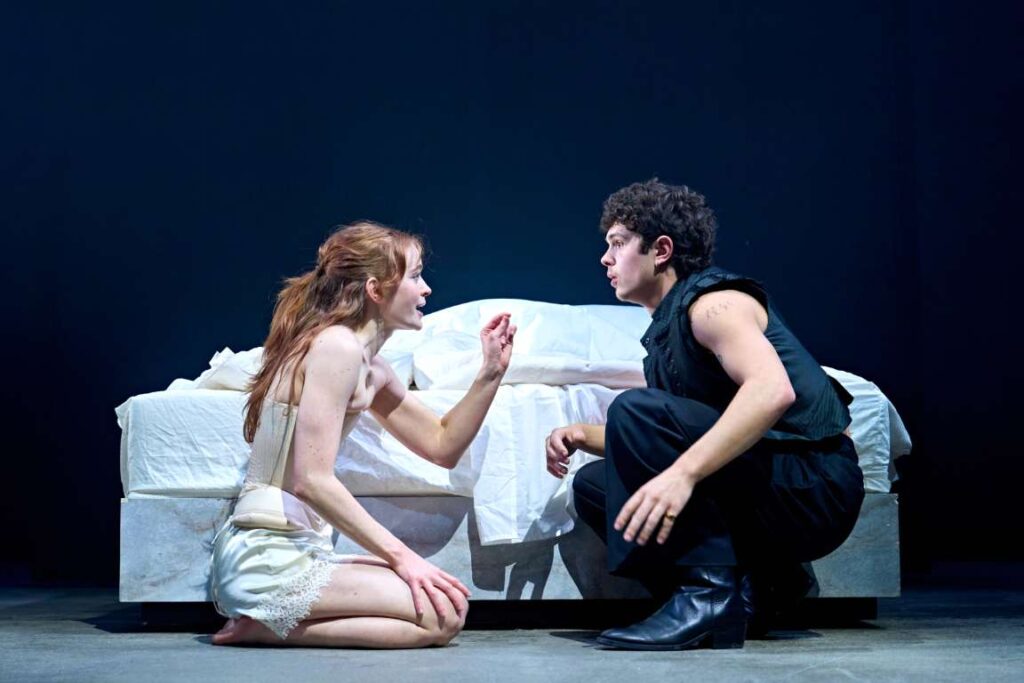
Arguably the most exciting young adapter of the classics in the new generation, Icke has ignited and enriched audiences with his adaptations of the Oresteia and most recently, the sensational Oedipus, playing on London’s West End and Broadway. Now, he gives us a raw and riveting Romeo & Juliet, exploding with the same qualities of excitement, urgency and danger that he brought to the aforementioned classics. In doing so, he demonstrates the same reverence and respect for Shakespeare that he showed for Aeschylus and Sophocles. In this case specifically, he appears to be revitalizing Shakespeare for a new generation. Indeed, his Romeo & Juliet matches the energy, youthfulness, and vitality of West Side Story – without the music, of course!
Everything about the direction and design is arresting, and that’s the way Icke likes it – beginning with the prominent digital clock announcing the timeline of the tragic story (Icke used that design element in Oedipus too, to great effect, heightening the suspense). Most of the action plays out on an enormous bed in Hildegard Bechtler’s innovative design, from which characters emerge in dramatic moments. When it’s removed, the stage is filled with violent confrontations between the young Montagues and Capulets (the thrilling fight choreography is by Kev McCurdy). The lighting shifts between sudden bursts from above and on-stage flash lights on a pitch-black stage, accompanied by crashing sounds (designed by Giles Thomas) -heightening the sense of suspense and danger.
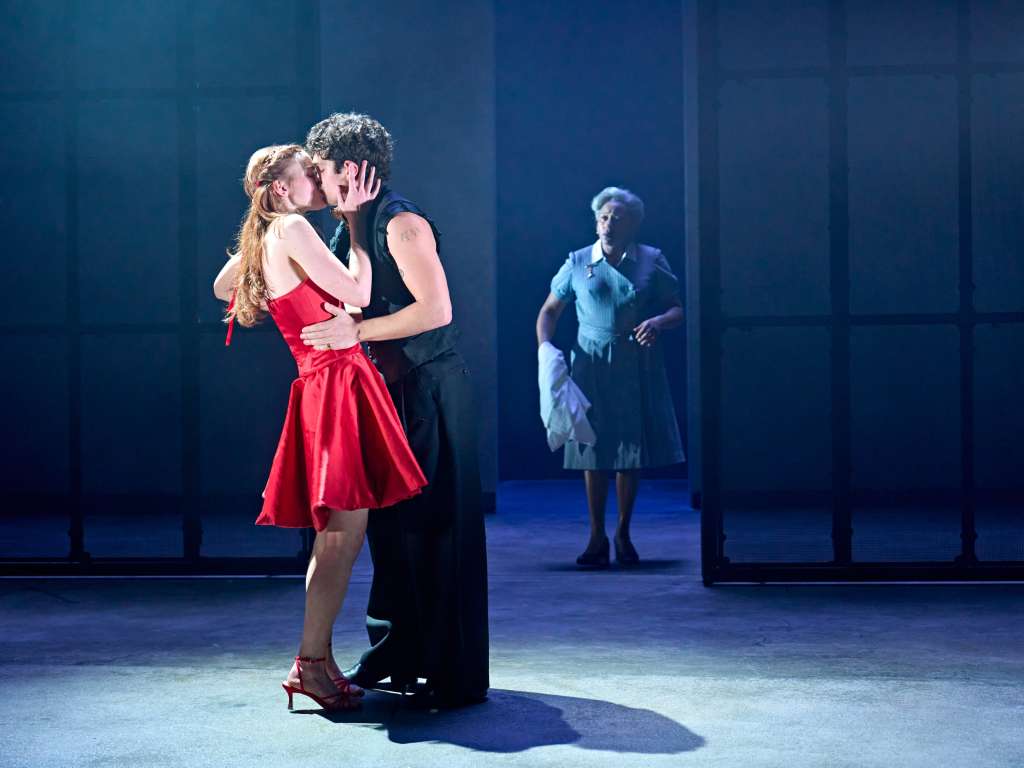
The cast is bursting with youthful vitality. Noah Jupe (Hamnet) is a charming, winning Romeo. Sadie Sink (John Proctor is The Villain) is a surprisingly strong-willed, strong-minded, and unsentimental Juliet. Together, they come across as a touching pair of adolescent lovers (among the youngest I’ve seen in these roles), making their ultimate fate more painful than ever. (Their first exchange in Act I, scene iv – “let lips do what hands do” – is heart-melting.). Other standouts include an outrageously mischievous Mercutio (Kasper Hilton-Hille) and a lively, robust nurse (Clare Perkins). They both provide surprising comic relief… until they can’t, as the story rushes relentlessly towards its tragic end.
Icke injects some startling directorial choices, as is his custom. He overlaps the first two scenes in Shakespeare’s Act III so that you witness Juliet delivering her “Gallop apace, you fiery footed steeds” speech at the same time you watch Romeo avenge Mercutio’s death by killing Tybalt in full view. But these innovative choices do not detract from the relentless plot that catapults ever forward.
Some may be greatly surprised by the completely unexpected coda that Icke has added at the play’s tragic end (no spoiler alert – it’s yours to discover). In my view, though innovative, imaginative, and ultimately moving, it wasn’t necessary. The moment I referred to above – of Romeo and Juliet passing each other between life and death – alone will suffice to provide one of the most stunning theatrical discoveries in a lifetime of theatre.
It’s a Romeo and Juliet for a new generation.
Romeo and Juliet by William Shakespeare, directed by Robert Icke, at the Harold Pinter Theatre, London, now until June 20
Photos by Manual Harlan