
By Carol Rocamora…
What is it about these intimate, small-cast plays that are stealing our hearts this season?
On Broadway, there is Little Bear Ridge Road, which features a lonely aunt and a homeless nephew in remote Idaho, creating one of the most moving family units we’ve seen in years. Also on Broadway is Two Strangers (Carry a Cake Across New York), an enchanting musical featuring two souls whose paths cross in the most unlikely circumstances, and who help each other in a life-changing way.
And now there’s Gruesome Playground Injuries at the Lucille Lortel Theatre, featuring a thirty-year-long relationship of an extraordinary kind between two childhood friends named Doug (Nicholas Braun) and Kayleen (Kara Young). Playwright Rajiv Joseph tells their moving story in a unique structure, featuring eight scenes that jump back and forth in time, from when they first meet at eight years of age until they are thirty-eight. (Each successive scene jumps forward fifteen years, or backwards ten years).
When we first meet Doug and Kayleen, they are in the nurse’s office of Sister Mary Margaret School. Doug (age eight) has dragged his bicycle up a tree and onto the school roof, where – attempting to reenact “Evil Knievel” – he drove off the roof, crashed to the ground, and split open his face. Kayleen (age eight) has a sensitive stomach that is prone to frequent upset. She’s fascinated by his cut and asks to touch it.
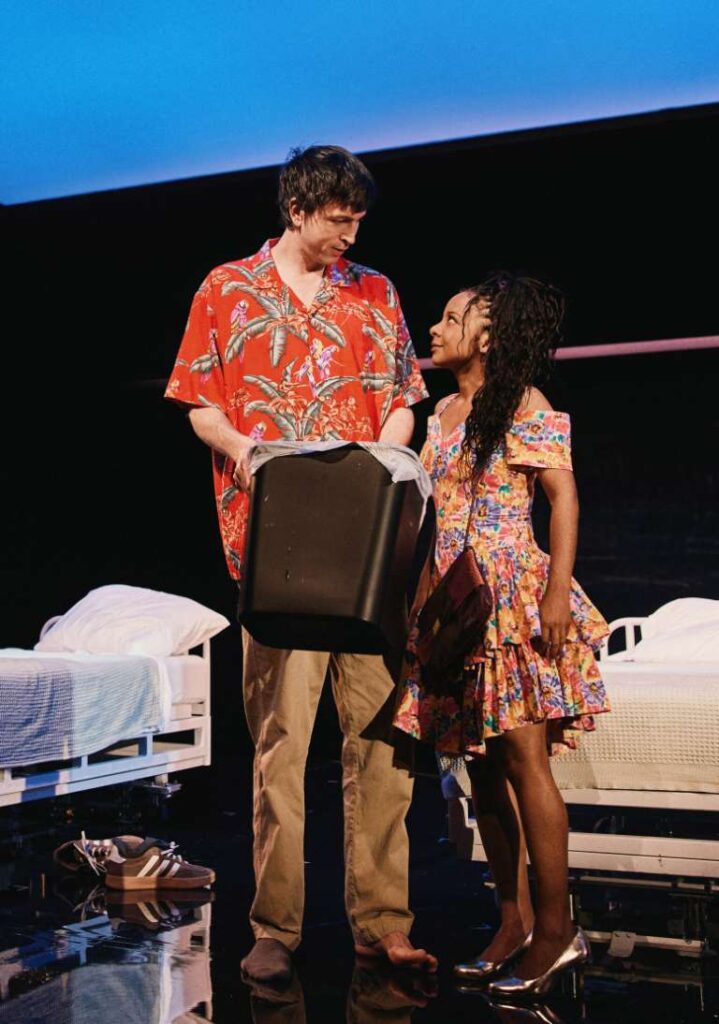
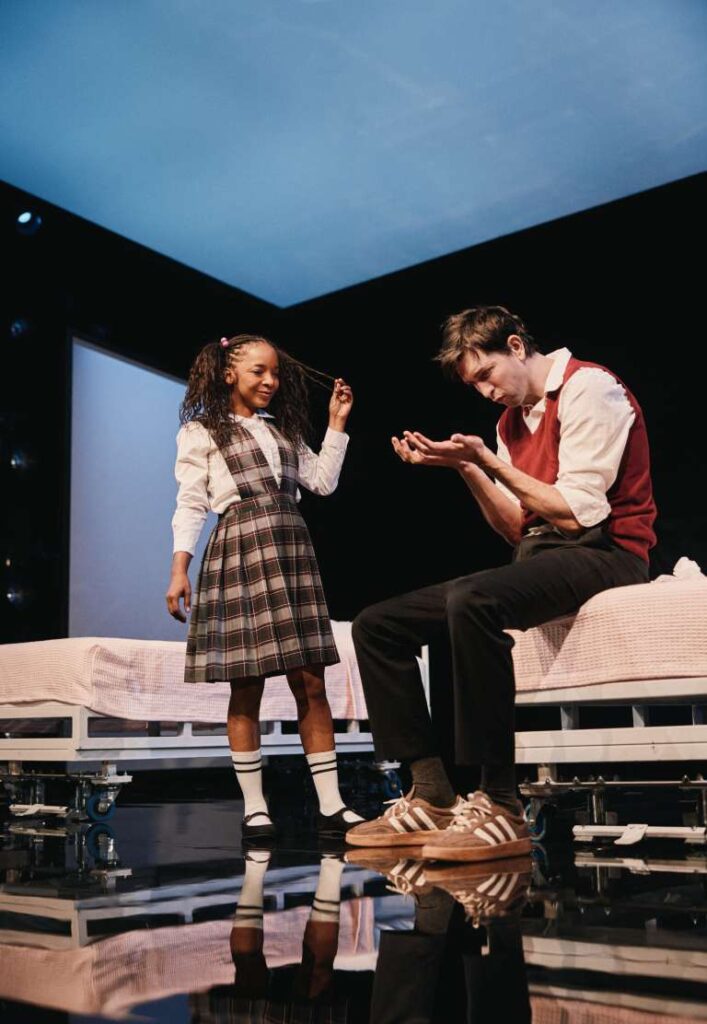
The circumstances of that first encounter and the bond they form over pain and healing will continue over the next seven scenes and thirty years – in the nurse’s office, and (after graduation) at various hospital and health care settings. “I’m accident prone,” Doug explains on the eve of their eighth-grade dance (at age thirteen) after he’s hurt his ankle (that already had received ten stitches from a previous escapade). They meet again in a hospital when they are twenty-three, after he lost a tooth and almost blew out his eye from fireworks – and again when he is twenty-eight when he was struck by lightning.
Kayleen hasn’t fared any better. Tortured by a cruel father, she has become a self-harmer; at the age of eighteen, she shows Doug the cuts she has made on her own legs. At thirty-three, he visits her in a health facility, after she’s literally tried to cut out her own stomach. Doug insists that she cut him too, so that he can share the pain she feels. “I’m not someone else,” he insists. I’m you.”
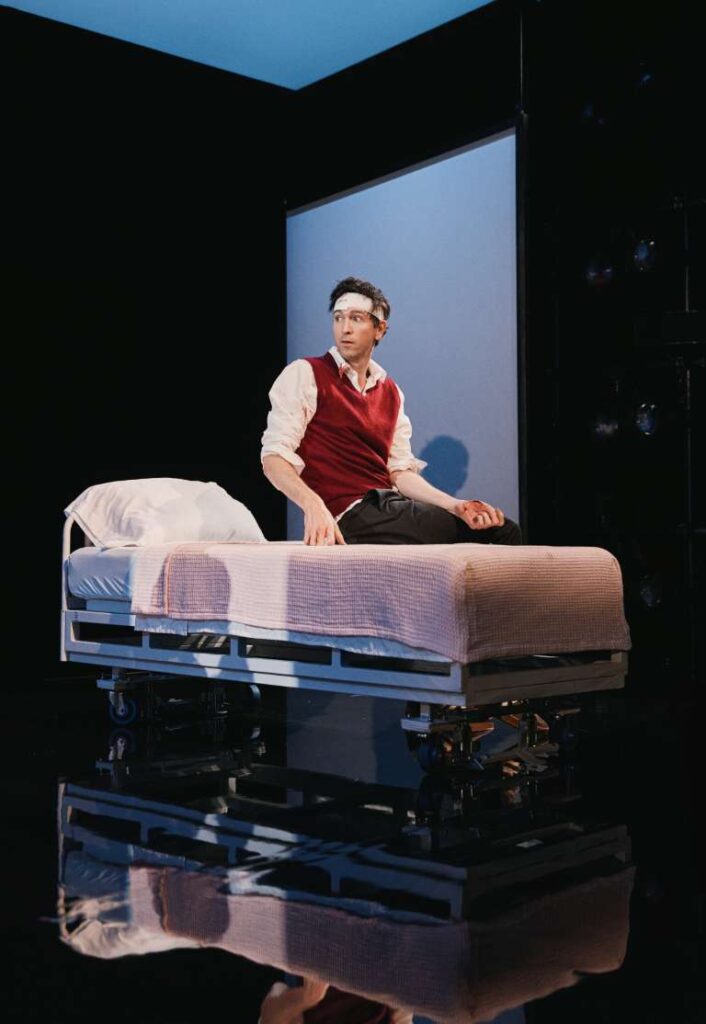
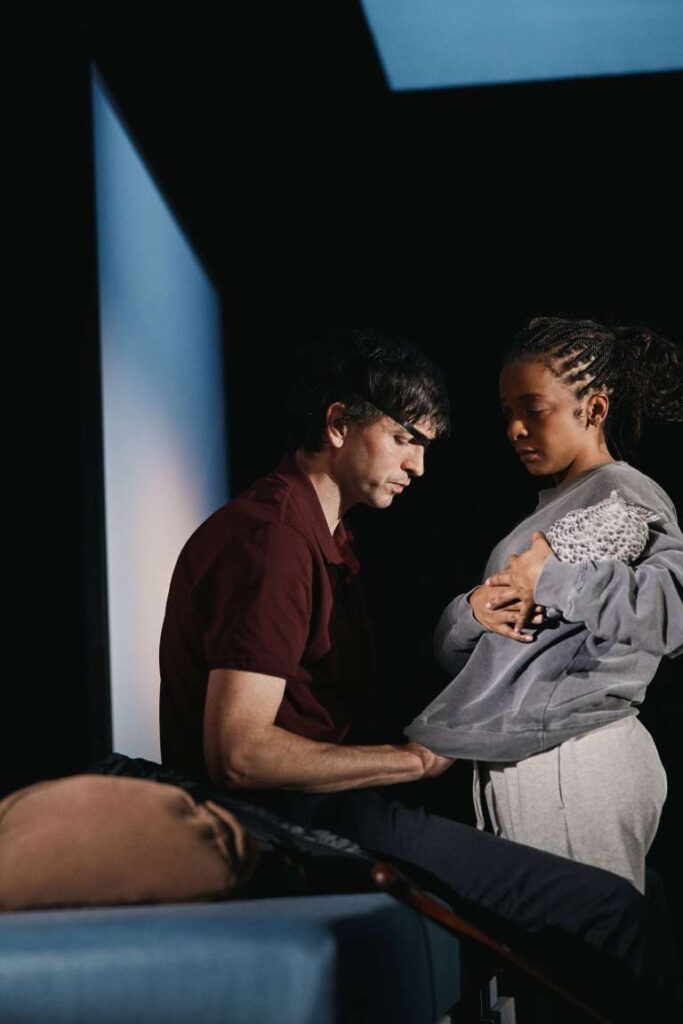
Over these thirty years of self-inflicted accidents (Doug) and self-harming (Kayleen), they appear at moments of each other’s pain, offering that same gesture of touching each other’s wounds. “You came and healed me,” Doug tells her when they are thirty-three, after he’s become an insurance claims adjuster and fell through their school roof while inspecting it and broke his leg in three places. “You raised me from the dead. You were there.”
But there were also happy moments together – like a “practice kiss” they tried at thirteen, and the dance they share together in two other encounters.
The excellent Neil Pepe has staged this moving story with clarity, simplicity and grace. Arnulfo Maldonado’s spare set consists of two hospital beds, which the actors themselves move around the stage between scenes, changing their clothes behind screens on the sides in full view of the audience (costumes are by Sarah Laux). The effect is poetic and symbolic of passing time.
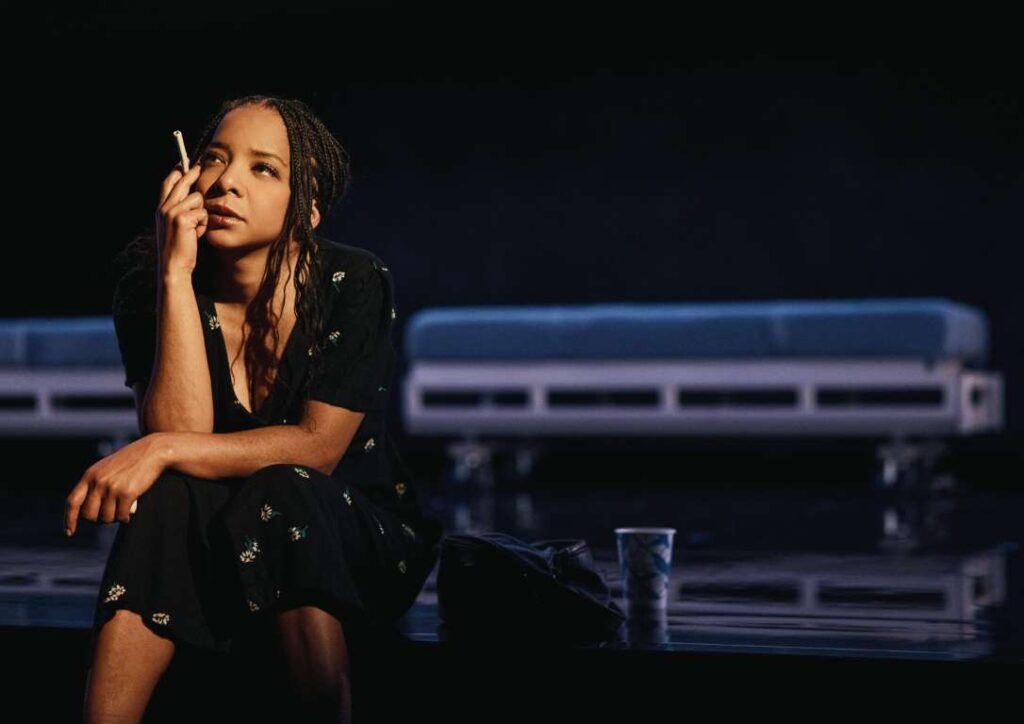
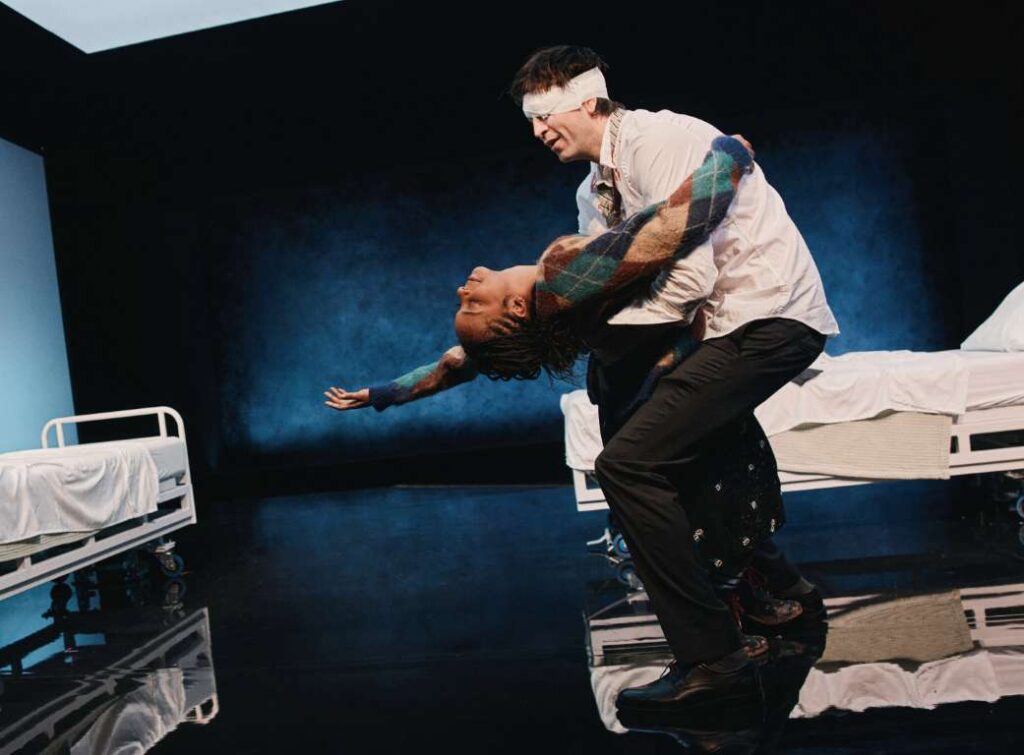
This pas de deux is performed beautifully by these skilled, impassioned actors. Tony Award-winning Kara Young gives an agile performance, as she ages from scene to scene in an instant. In the role of the suffering Kayleen, she does not ask for our sympathy – making her performance all the more moving. Though of petite stature, her character is as powerful as Nicholas Braun, who stands a good foot taller than she. Known for his amusing portrayal of “Cousin Gregg” in the TV series Succession, Braun is a moving and convincing stage presence, humorous and ultimately heart-breaking in his vulnerability. Together, they are wonderful.
In the end, these “gruesome playground injuries” are more metaphorical than literal. Rajiv’s play is a story of a loving and enduring friendship that can heal any pain. Rather than offering a resolution, it ends with a scene when they meet at age thirty-eight (he’s in a wheelchair, wearing an eye patch). “I’m sorry for our whole life,” Kayleen says. “You gave me every chance.” But in that scene’s final moment, they share a positive playground memory – a swing ride. It’s a lasting, uplifting memory has kept that them together throughout life.
Gruesome Playground Injuries by Rajiv Joseph, directed by Neil Pepe, at the Lucille Lortel Theatre, now through December 28.
Photo credit: Emilio Madrid